


Instruments Tambourine article
The Ultimate Guide to Instruments Tambourine
From ancient frame drum to folk-rock icon: a complete look at what a tambourine is, how it's built, and where it still turns up today.
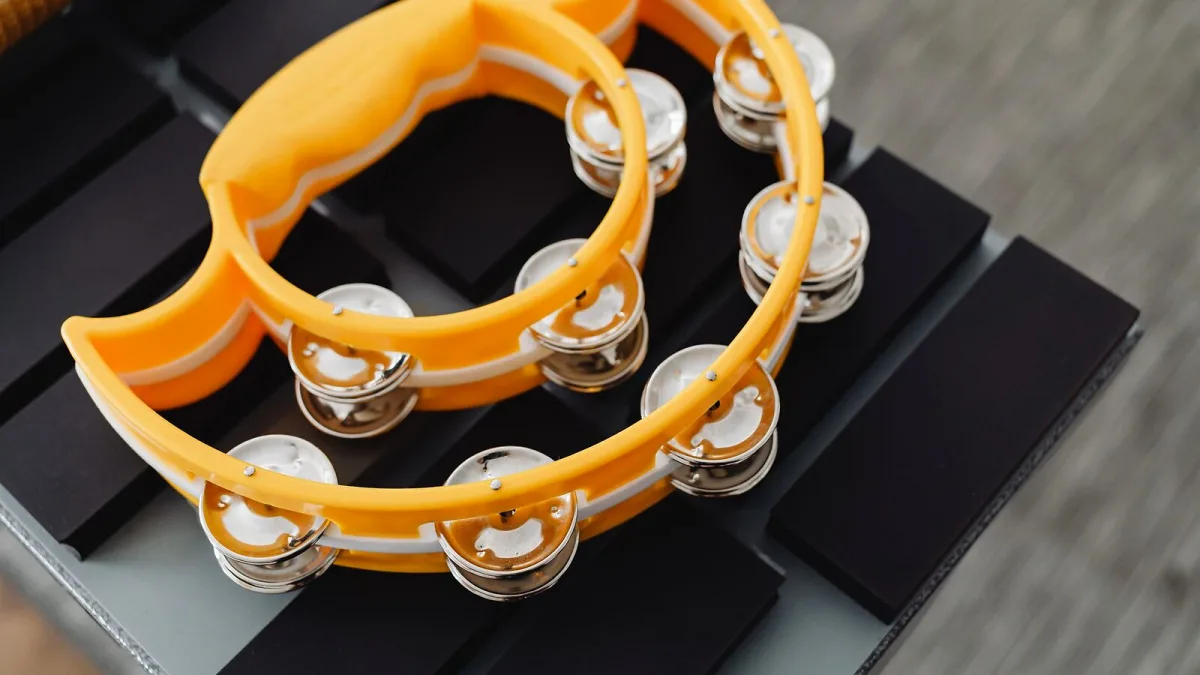
Pick up a tambourine and shake it once, and you already understand ninety per cent of the instrument. But there is more going on inside that shallow wooden ring than most players ever stop to consider — from the metal discs that give it a voice to the centuries of design tweaks that shaped the version you will find in a music shop today. This guide takes the instrument apart, in the nicest possible way, and explains what it is, how it works, and why it has stuck around in orchestras, folk sessions and pop records alike.
What Exactly Is a Tambourine?
Strip away the folklore and a tambourine is a simple piece of engineering: a shallow circular shell, one or more rows of paired metal discs called jingles (sometimes called zils, from the Turkish word), and, on many models, a drumhead stretched across one face. Shake it, strike it, or roll a thumb around the head, and the jingles clatter against each other and the frame.
- Shell: the circular body, usually wood, plastic or a composite, that holds everything together.
- Jingles: paired metal discs set into slots around the rim, doing most of the actual sound-making.
- Head: a natural skin or synthetic membrane on headed models, giving a drum tone alongside the jingle sound.
- Bearing edge: the rim that supports the head, on instruments that have one.
That combination — frame, jingles, and sometimes a head — puts it firmly in the wider frame drum family, alongside relatives such as the bodhran and the riq. What sets it apart is those jingles; take them away and you are left with something closer to a plain hand drum.
A Frame Drum With a Very Long Memory
Nobody can point to a single moment when the tambourine was invented. Instruments built on the same idea — a shallow frame with jingling or rattling attachments — turn up in archaeological and artistic records from Egypt, the wider Near East, Greece, Rome, India and China, with references stretching back roughly 3,700 years. Rather than one clean origin story, it looks like several parallel traditions that eventually converged.
In Europe it became closely tied to folk music, dance and religious processions, before composers began writing it into the concert hall for colour and rhythmic punch. By the eighteenth and nineteenth centuries it had earned a regular seat in the orchestra, appearing in works by composers including Hector Berlioz and, later, Igor Stravinsky.
Headed or Headless: Two Different Instruments
Not every tambourine has a drumhead, and the two types behave quite differently in a mix or an ensemble.
| Type | Sound character | Typically found in |
|---|---|---|
| Headed | Jingle plus a genuine drum tone; supports rolls and rim strokes | Orchestral, gospel, folk and hand-percussion playing |
| Headless | Brighter, more immediate jingle with no drum body | Pop, rock, studio overdubs and marching contexts |
| Mounted | Fixed to a stand or drum-kit hardware for hands-free playing | Drum kits, orchestral percussion rigs, recording |
| Handheld | Built for continuous shaking and close hand control | Folk, church, Latin and world-music settings |
If you are trying to work out which of these actually suits you, our tambourine buyer's guide goes through the trade-offs in more depth.
What the Jingles Are Made Of — and Why It Matters
The metal used for the jingles has a real, if not absolute, effect on tone.
- Steel: generally bright and immediate, cutting through a busy mix.
- Brass: usually warmer and a touch softer than steel.
- Bronze: often the darkest and most sustained of the three.
These are tendencies rather than guarantees — shell material, jingle shape and how hard you play all shift the result too. A well-built brass model can still sound brighter than a poorly voiced steel one.
How the Instrument Found Its Way Into Pop and Rock
It had already spent centuries in folk and religious music before it became a defining texture of 1960s pop. Its high-frequency jingle could make a backbeat feel busier and brighter without needing a louder drum kit, and producers of the era leaned on it heavily.
The Byrds' 1965 recording of Bob Dylan's Mr. Tambourine Man is the song most associated with the instrument's name, even though the lyric is a surreal, poetic image rather than a literal description of someone playing one. Around the same period, similarly bright parts helped define the sound of The Mamas & the Papas' California Dreamin' and The Monkees' Last Train to Clarksville, while The Lemon Pipers put it front and centre in the title of their 1967 hit Green Tambourine.
Where You'll Still Hear One Today
Its range is genuinely wide. Orchestral percussionists use a carefully voiced headed model for precise, notated parts. Gospel and worship bands lean on bright, sustaining jingles that sit above a full band. Folk and Latin players favour a handheld model built for continuous shaking. And in a modern studio, an engineer might reach for a dry, muted headless model specifically because it won't fight for space with cymbals and vocals.
That versatility is really the whole story of the tambourine: a simple design that has been quietly reshaped, generation after generation, to fit whatever room it happens to be playing in.
Getting Started With Your Own
If this has left you wanting to actually play one, our beginner's guide to the tambourine is the gentlest place to start, and our step-by-step setup guide covers grip, angle and basic strokes once you have one in hand. And once you know the instrument, it's worth reading through our list of common tambourine mistakes — most of them are avoidable, and knowing them in advance will save you some awkward first sessions.




Comments