


Marimba roundup
Marimba: A Complete Buyer's Guide
A marimba is a big, long-term purchase, so let's work through what genuinely matters before you spend a penny of your budget.
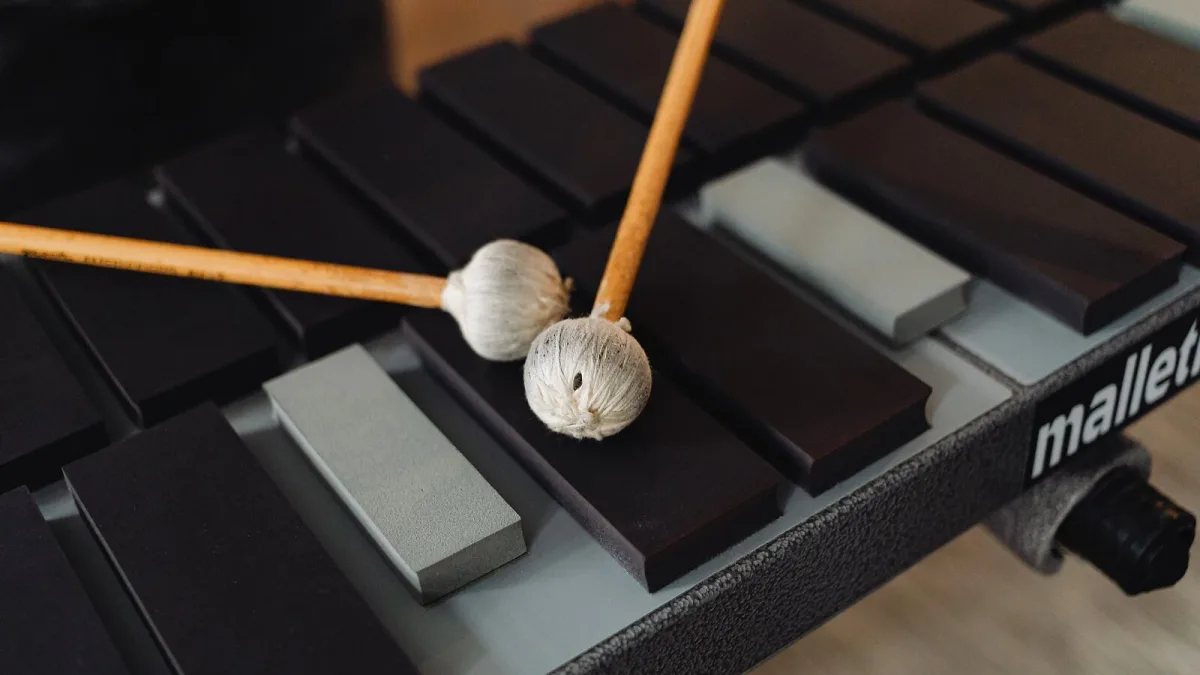
Buying a marimba is not like buying most instruments — it is a serious piece of furniture as much as it is a musical tool, and getting the wrong one costs you in space, money and frustration for years afterwards. Here is what actually matters, in the order you should check it, with the padding left out.
Start With Range: How Many Octaves Do You Need?
Range decides everything else about the instrument, so settle it first. A marimba's range is measured in octaves from its lowest note to its highest, and the four common configurations are:
| Range | Notes | Typical use |
|---|---|---|
| 4.0 octaves | C3–C7 | School and entry-level ensemble |
| 4.3 octaves | A2–C7 | General ensemble and study |
| 4.5 octaves | F2–C7 | Advancing player, wider repertoire |
| 5.0 octaves | C2–C7 | Solo and professional concert work |
Do not buy more range than the repertoire you actually need. A five-octave marimba carries 61 bars and 61 resonators, and it is a genuinely large, heavy instrument to house and move. If nothing in your playing reaches down to C2, a 4.3 or 4.5-octave model will serve you better day to day.
Bar Material: Rosewood, Padauk or Synthetic?
The bars are the instrument's voice, and the three common materials trade off differently:
- Rosewood — the traditional choice, valued for a dense, warm tone, but more sensitive to humidity and temperature swings.
- Padauk — a related hardwood some makers use for extra stability at a similar tonal character.
- Synthetic composite — far more resistant to climate changes, a sound argument for a rehearsal room or a touring instrument, though some players prefer wood's tone.
Test all three in person before you decide. There is no universally "best" material here — only trade-offs between tone, durability and your own budget and touring needs.
Resonators and Tuning: What to Listen For
Each bar sits above a tuned resonator tube, usually aluminium on a modern instrument, and the pairing matters as much as the bar itself. Play up and down the full range slowly and listen for:
- Even volume from the lowest bar to the highest, with no obviously weak or "dead" notes.
- Consistent projection — a poorly matched resonator will sound thin even on a well-tuned bar.
- A clean attack with no rattling from loose fittings or dented tubes.
If you can, bring your own mallets so you are judging the instrument, not a shop demo mallet you would never actually use.
Frame, Portability and Storage
This is where buyers most often get caught out. Before you order, check:
- Height adjustment — especially important if more than one player will use it.
- Locking casters for safe movement around a rehearsal space.
- Folding or detachable sections, including removable resonators, if it needs to travel.
- A protective transport case or cover, if not already included.
- Doorways, lifts, storage rooms and vehicle capacity at the destination — measure these before ordering, not after delivery.
A brilliant-sounding five-octave marimba that cannot get through your rehearsal room door is not a good purchase, however good the tone.
How to Test a Marimba Before You Commit
Never buy a marimba you have not heard played in person, if you can possibly arrange it. A short showroom test tells you far more than any specification sheet. Work through this before you sign anything:
- Play slowly from the lowest bar to the highest, listening for any note that sounds noticeably weaker than its neighbours.
- Strike each bar in roughly the same spot, near the centre, so you are comparing like with like rather than technique.
- Check the frame at full height and lowest height for wobble, and run the casters across the floor to make sure they lock properly.
- Ask to see the resonators up close for dents, corrosion or loose mounting brackets.
- If buying rosewood, ask how the instrument has been stored, since humidity history affects long-term stability more than most buyers expect.
If a dealer will not let you test an instrument properly before paying, treat that as useful information in itself.
Mallets, Covers and Hidden Costs
The marimba itself is only the start of the bill. Budget for a proper set of mallets across hardnesses, since one pair will not suit both registers, plus a dust cover, and delivery and assembly if the retailer does not include it. Ask specifically about replacement-bar availability and manufacturer support before you buy from a smaller or less established maker; it matters far more once something needs repair than it does on day one.
New vs Used, and Where to Buy
A used marimba from a reputable source can be excellent value, provided you check the bars for cracks, the resonators for dents and the frame for stable, undamaged fittings. Buy from a specialist percussion dealer or directly from an established manufacturer such as Yamaha, Adams, Malletech or Marimba One where possible, rather than an unfamiliar general marketplace listing, so there is somewhere to turn if a bar needs replacing later.
Warranty, Servicing and Long-Term Support
A marimba is a long-term purchase, so ask what happens when something eventually needs attention. Confirm the warranty length and what it actually covers — bars, resonators and frame hardware are not always treated the same way. Ask whether replacement bars are readily available for the specific model, and whether the manufacturer or a local specialist can retune or service it in future. A slightly higher price from a maker with proper UK support is often better value over a decade than a cheaper import with no aftercare at all.
Common Buying Mistakes to Avoid
- Buying maximum range "to be safe" without checking it actually fits the room.
- Skipping an in-person test because a demo video sounded fine.
- Forgetting mallets, a cover and delivery costs when comparing prices.
- Ignoring humidity control for a rosewood instrument kept near a radiator or window.
The Bottom Line
Decide your range first, test bar materials and resonator response in person, and take the frame and transport logistics as seriously as the sound. Get those right and a well-chosen marimba will serve you reliably for decades. If you are still deciding whether the instrument suits you at all, our overview of how a marimba actually works is worth a read first, and our guide to marimbas by budget tier is the natural next step once your range and material choices are settled.




Comments