


Djembes Drums article
The Ultimate Guide to Djembes Drums
A clear, practical rundown of the djembe: where it comes from, how it's built, and the three distinct sounds it's designed to make.
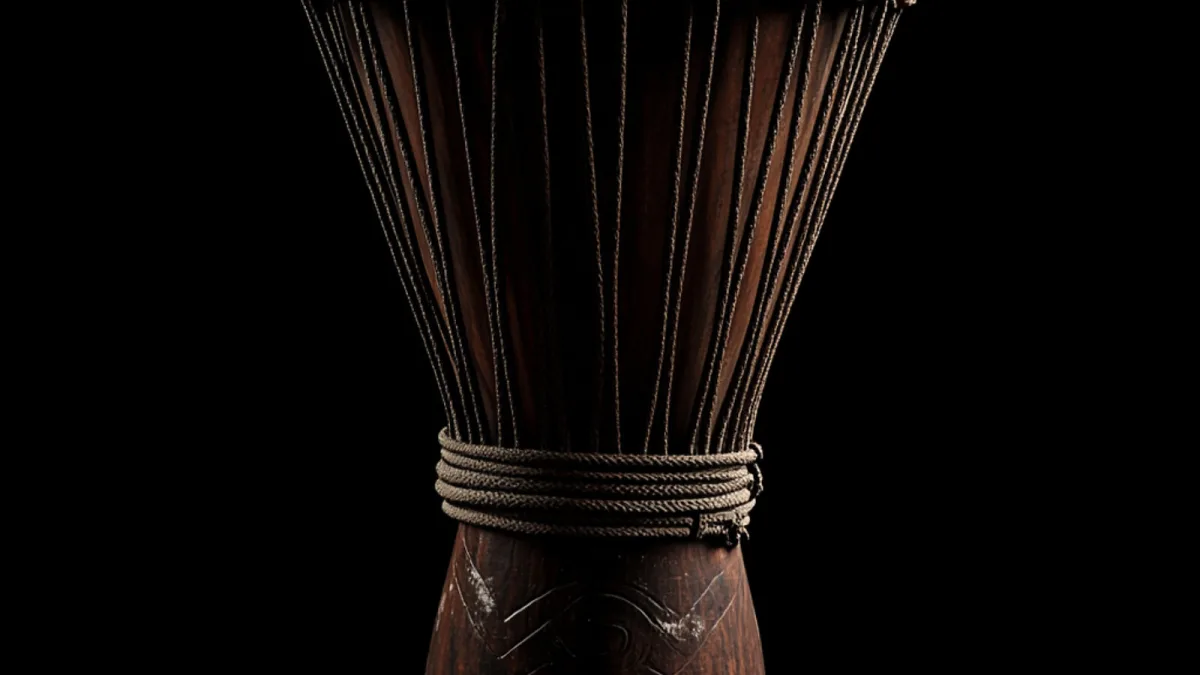
Ask ten drummers to name the most recognisable hand drum in the world and most of them will say the same thing: the djembe. That goblet-shaped drum turns up in drum circles, world-music ensembles, school music rooms and university percussion departments alike. Here's a clear, no-nonsense rundown of what it actually is, where it comes from, how it's built, and the sounds it's designed to make.
What Is a Djembe?
It's a goblet-shaped hand drum, traditionally carved from a single piece of hardwood with a goatskin head stretched over the top and tensioned with rope. The shape does real acoustic work: the wide bowl gives the low end its resonance, while the narrower waist and open foot help project the sound outward. It's played with bare hands rather than sticks, and a good one is capable of a surprising range of tone from a single skin.
Where the Djembe Comes From
It is associated with the Mandé cultural region of West Africa, covering parts of present-day Mali, Guinea, Côte d'Ivoire, Burkina Faso and Senegal. Oral tradition connects its development to the Numu, a hereditary blacksmith caste, with roots often placed around the 12th century — though it's worth being honest that this is a traditional estimate rather than a firmly dated archaeological fact. What's better established is the instrument's role: for generations it has featured in dances, celebrations and community gatherings across the Mandé world, with the specific repertoire and social meaning varying by region and lineage.
Through the 20th century, touring musicians, recordings and cultural exchange carried it well beyond West Africa, into drum circles, world-music ensembles, dance classes and university percussion programmes worldwide. That global reach is a genuine good news story, though it's also worth knowing that a generic "African drumming" class doesn't always teach the specific musical language or context the instrument comes from — something worth bearing in mind if you're studying it seriously rather than just picking one up for fun.
Built for Three Distinct Sounds
Where a lot of hand drums are limited to one or two basic tones, a well-built djembe is designed around three clearly different sounds, all produced on the same head:
- Bass — struck near the centre with a relaxed, slightly cupped hand, giving a deep, rounded low note.
- Tone — struck nearer the edge with the fingers held together, producing a clear, mid-pitched note.
- Slap — also struck near the edge, but with the fingers spread slightly, giving a sharp, cutting attack.
Getting a clean contrast between all three is really a question of hand position and rebound rather than brute force — hitting harder doesn't automatically produce a better slap. If you're just starting out, our beginner's guide walks through the basic technique in more depth.
Anatomy of the Drum
| Part | What it does |
|---|---|
| Shell | The carved, hollow body that shapes the drum's resonance and projection. |
| Bearing edge | The rim the head rests on; its shape strongly affects both comfort and tone. |
| Head | Traditionally goatskin; synthetic heads are common on commercial models. |
| Hoops | A pair of metal rings that hold and tension the head. |
| Rope | Runs between the hoops and lets the tension be adjusted by hand. |
| Foot | The open base, which affects bass response and projection. |
Traditional Build Versus Modern Alternatives
A traditionally built djembe uses a carved hardwood shell — lenké, iroko and similar hardwoods are commonly cited — with a goatskin head and rope tensioning, sometimes reinforced with extra horizontal lacing called a Mali weave to even out the tone. It's a genuinely lively-sounding instrument, but goatskin is sensitive to humidity and temperature, and it needs proper care.
Modern manufacturers including Remo, Meinl, Toca and LP also produce synthetic-shell, synthetic-head versions aimed at schools, drum circles and outdoor use. These trade a little of that acoustic complexity for consistency: they're far less bothered by weather, need less maintenance, and hold their tuning more reliably. Neither approach is objectively "better" — it depends entirely on what you need the drum to do. Our buyer's guide goes into the trade-offs properly if you're choosing between them.
How It Fits Into a Wider Ensemble
The djembe rarely works entirely alone in its traditional context. It's often paired with the dundun family of bass drums, which are generally played with sticks, to build the layered rhythmic base under West African percussion ensembles. It's also frequently confused with other goblet or hand drums it superficially resembles — the ashiko, the hourglass-shaped talking drum, and the Afro-Cuban conga all look related at a glance but come from different traditions, with different construction and playing conventions.
A Note on Spelling and Names
You'll see this instrument's name written a few different ways — djembe, jembe and djembé all refer to the same drum, with the variation coming down to language and regional transliteration rather than different instruments. Some sellers and teachers also use the term djembefola, meaning a master player of the djembe, to describe a highly skilled performer or teacher rather than just anyone who owns one. It's a useful word to recognise if you come across it in course descriptions or artist credits.
The Bottom Line
A djembe is a deceptively sophisticated instrument disguised as a simple carved drum: three distinct voices from one head, a genuine West African lineage, and a build that rewards decent care. Whether you end up with a traditional hardwood-and-goatskin drum or a durable synthetic one really comes down to how and where you'll play it. For the specific pitfalls to watch for once you own one, see our piece on common djembe mistakes to avoid, and if you want recommendations by use case, our round-up of the best options for different players is worth a look.




Comments