


Djembes Drums article
Djembes Drums for Beginners: A Complete Guide
The honest first steps for anyone new to the djembe: how to sit, the three sounds one at a time, a simple practice routine, and looking after your hands.
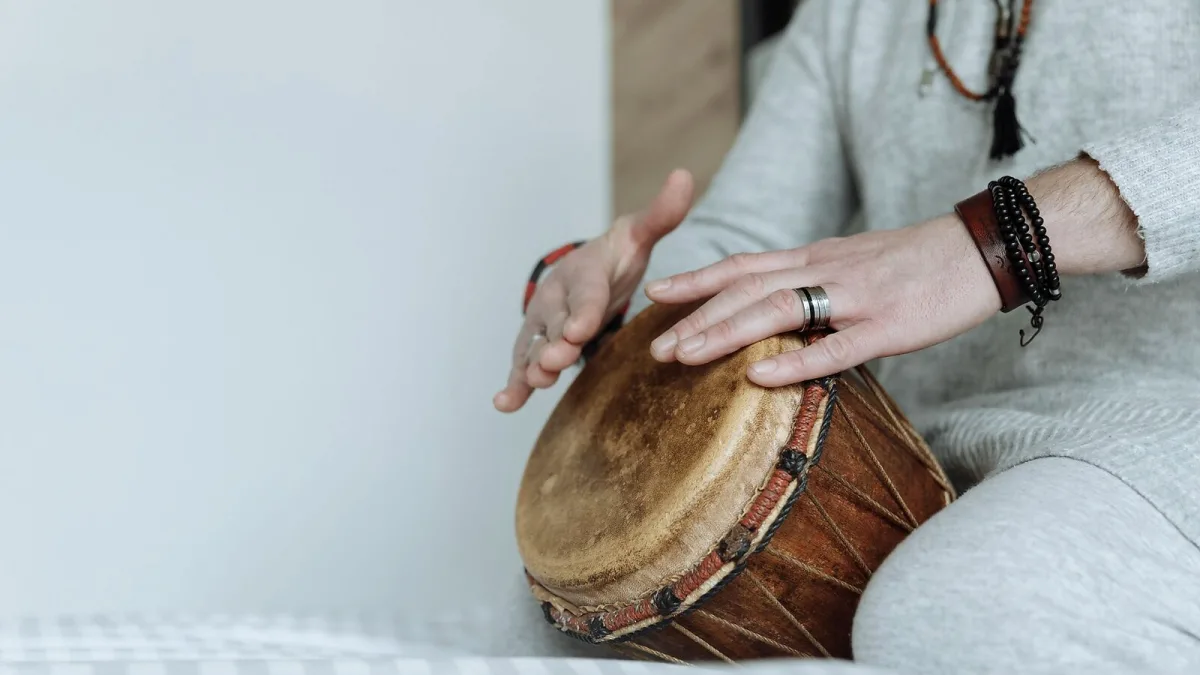
Right, so you've got yourself a djembe and you're not entirely sure where to start. Fair enough — it looks straightforward from the outside, but there's a proper technique underneath the simple carved shape, and getting the basics right early saves you from picking up bad habits later. No jargon, no pressure, just the honest first steps.
Getting Comfortable With the Djembe
Before you play a single note, get the djembe positioned properly. Sit on a chair at roughly the right height, tilt it slightly away from your body, and grip it gently between your knees so it can't tip. This isn't fussy technique for its own sake — a djembe that's wobbling around or sitting flat on the floor won't project properly and is genuinely harder to play well.
- Sit on a sturdy chair without arms, at a height where your knees sit roughly level with your hips.
- Tilt the drum forward slightly, resting the bottom rim on the floor between your feet.
- Grip the shell gently between your knees to keep it stable and stop it rocking.
- Let your hands rest lightly on the head, relaxed rather than tense, ready to strike.
Once that feels natural on your djembe, you're ready to actually make some noise.
The Three Sounds, Taken One at a Time
Don't try to learn bass, tone and slap on your djembe all at once. Take them individually, slowly, and let your hands learn each one properly before you string them together.
- Bass first. Strike the centre of the head with a relaxed, slightly cupped hand, and let your hand bounce straight back off. You're after a deep, rounded thud, not a slap.
- Then tone. Move your hand nearer the edge, fingers held together, and strike with a firm but relaxed motion. This should ring out clearer and higher than the bass.
- Then slap. Same area near the edge, but spread your fingers slightly. Don't hit harder — the sharper sound comes from hand shape and a quick, light contact, not force.
It's completely normal for slap to be the trickiest of the three at first. Most beginners get a usable bass and tone within the first session or two, and a clean, cutting slap takes noticeably longer. Be patient with yourself here.
A Simple First Practice Routine
You don't need a complicated plan. Ten to fifteen minutes, a few times a week, will get you further than one long, frustrating session on a Sunday. Try this shape:
- A couple of minutes of bass only, focusing purely on a consistent, relaxed sound.
- A couple of minutes of tone only, listening for a clear pitch each time.
- A couple of minutes of slap only, not worrying if it sounds thin at first.
- Finish by alternating bass and tone slowly, just to get your hands used to switching between them.
Once the individual sounds feel steady, our complete guide to the instrument is a good next stop — it covers the anatomy and background that'll help everything click into place.
Protecting Your Hands
A bit of soreness in the first couple of weeks is completely normal as your hands adjust. Sharp pain, numbness or swelling isn't, and it usually means you're gripping too hard, holding your wrists rigid, or hammering the slap instead of letting your hand rebound naturally. Slow down, relax your shoulders and wrists, and build up your djembe practice gradually rather than pushing through discomfort.
Looking After a New Djembe
If yours has a goatskin head, keep it away from direct heat and never leave it in a hot car — it can stretch, loosen or even split. Store it somewhere dry with reasonably stable temperature, and if the tuning feels loose after a change in weather, that's normal and fixable rather than a sign anything's wrong. A synthetic-headed djembe is far more forgiving of all this if you'd rather not think about it too much while you're just starting out.
Do You Need to Tune It Yourself Yet?
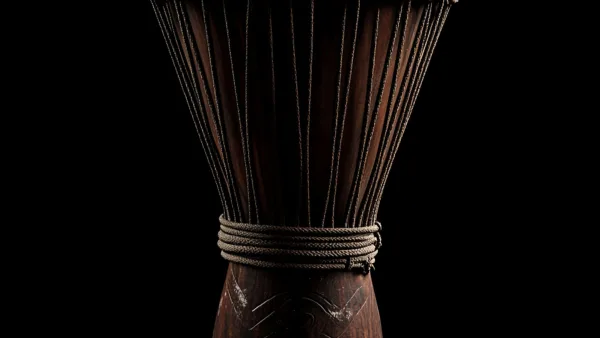
Not straight away, no. As a beginner, it's fine to leave proper rope tuning until you've got a feel for how your djembe is supposed to sound. What's worth learning early is simply recognising when something's off: a dull, lifeless bass, an inconsistent tone from one side of the head to the other, or ropes that feel noticeably looser than when you got it. If you notice any of that, ask a teacher or an experienced player to show you rather than guessing, since over-tightening a djembe too quickly is one of the easiest ways to damage a head.
Finding a Teacher or a Class
You can absolutely teach yourself the basics from video and practice alone, but a proper teacher, ideally one connected to a real playing tradition, will spot small technique problems in your hand position long before they become habits. Community centres, local drum circles and university or college percussion departments are all reasonable places to look, and most teachers are happy to let a nervous beginner sit in on a session before committing to anything. Playing alongside other people, even briefly, also teaches you far more about rhythm and timing than practising alone ever quite manages.
You Don't Need to Rush
Nobody sounds brilliant on a djembe in their first month, and that's fine. Focus on clean, relaxed technique over speed or volume, and the rest genuinely follows in time. Once you're comfortable with the basics, take a look at our piece on common mistakes to avoid so you don't pick up habits you'll need to unlearn later.



Comments