


Pearl Tom Toms article
Pearl Tom Toms for Beginners: A Complete Guide
No jargon panic, no rushing — a calm, encouraging introduction to Pearl tom toms for anyone just starting out.

If the idea of "tuning your toms" already sounds like a chore you'll never quite manage, take a breath — you will get there, and it's much simpler than it looks from the outside. This guide walks through learning Pearl tom toms gently, one small step at a time, without assuming you already know the jargon.
Start With What You Already Have
You don't need every size or the top of the range to start learning properly. Whatever Pearl toms came with your kit — even a single rack tom and a floor tom — are enough to build real skill on. Get comfortable with those two before you even think about adding more. There's no rush, and no prize for owning the biggest setup first.
Little and Often Beats Long and Rare
Ten unhurried minutes most days will get you further than one long, frustrated session at the weekend. Tuning is a physical skill as much as a listening one — your ear and your hands both improve with small, regular repetition. If a session isn't going well, it's fine to stop, walk away, and come back to it tomorrow with fresh ears.
The Names, Without the Panic
A few terms come up constantly, so let's take them slowly:
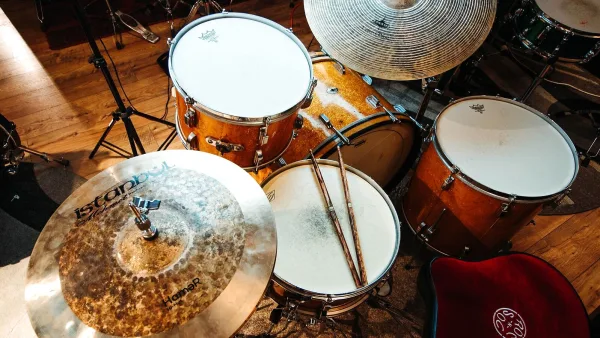
- Rack tom — the smaller tom (or toms) mounted above the bass drum.
- Floor tom — the larger tom standing on its own legs beside you.
- Shell — the cylindrical body of the drum itself.
- Batter head — the drumhead you actually strike.
- Resonant head — the head on the underside, which you don't hit but which shapes the sustain.
- Tension rod — the small bolts round the rim you turn with a drum key to change the pitch.
That's genuinely most of the vocabulary you need for a good while. Everything else builds on those six words, and you'll find yourself using them without thinking within a few sessions.
Getting Comfortable with the Drum Key
The drum key looks fiddly the first time you pick one up, but it only really does one job: turning a tension rod clockwise tightens that part of the head, and anticlockwise loosens it. Hold it lightly, turn in small quarter-turns rather than big sweeps, and stop the moment you're unsure — you can always come back for another small turn once you've listened.
Your First Tuning Session
Don't aim for a perfect pitch the first time — aim for even. Finger-tighten every tension rod first, then bring them up gradually using your drum key, working in opposite pairs rather than round in a circle. Tap gently near each rod as you go; you're listening for the note to sound roughly the same all the way round, not for any particular pitch. That evenness is the real skill, and it comes with repetition, not talent.
Building Confidence on the Kit
Once your toms are sitting evenly, spend time simply moving between them at a comfortable, unhurried pace — snare to small tom, small tom to floor tom, and back. Speed and flashy fills come much later. What matters early on is that each hit feels controlled and each tom rings the way you expect it to. If something sounds "off," it is far more likely to be the setup than your playing, so it's worth reading our step-by-step guide to setting up Pearl tom toms alongside your practice.
Signs You're Making Real Progress
You don't need a teacher in the room to know it's working. Listen for the pitch settling into place faster each time you tune, for your fills feeling less like a scramble and more like a sentence, and for your hands relaxing rather than gripping the sticks tighter as you move round the kit. Those quiet signs matter more than speed, and they show up long before anything flashy does.
Common Worries, Answered Gently
- "My tuning never sounds as good as recordings." Recorded drums are usually close-miked and processed. A well-tuned tom in your room is doing its job even if it sounds different to what you hear on a record.
- "I don't know what size to add next." You don't need to decide yet. Learn what you have first — our overview of Pearl tom toms explains the common sizes clearly whenever you're ready to think about it.
- "I'm worried about damaging the drum by tuning it wrong." Within a normal playing range, you genuinely can't. The worst outcome of a wrong turn is an odd sound, easily corrected with the same key.
- "I can't tell if it actually sounds good." That ear develops with time and exposure, not overnight. Trust evenness over everything else while you're learning; a pleasing pitch comes later, once even tuning is second nature.
When You're Ready to Learn More
There's no deadline for any of this. When you're comfortable with what you have, our buyer's guide will help if you're thinking about adding a tom, and it's worth glancing at common mistakes to avoid early, simply so you recognise the warning signs before they become habits.
You've Got This
Every drummer who now tunes toms without thinking started exactly where you are — unsure which rod to turn first. Go slowly, listen more than you adjust, and trust that the skill builds quietly in the background every time you sit down. Pearl tom toms are a genuinely forgiving place to learn; there's very little you can do that a patient re-tune won't fix.




Comments