


Cowbell article
Cowbell Explained: Features, Types and Tips
How a cowbell is built, why clapperless changed everything, and how it travelled from grazing fields to famous rock records.
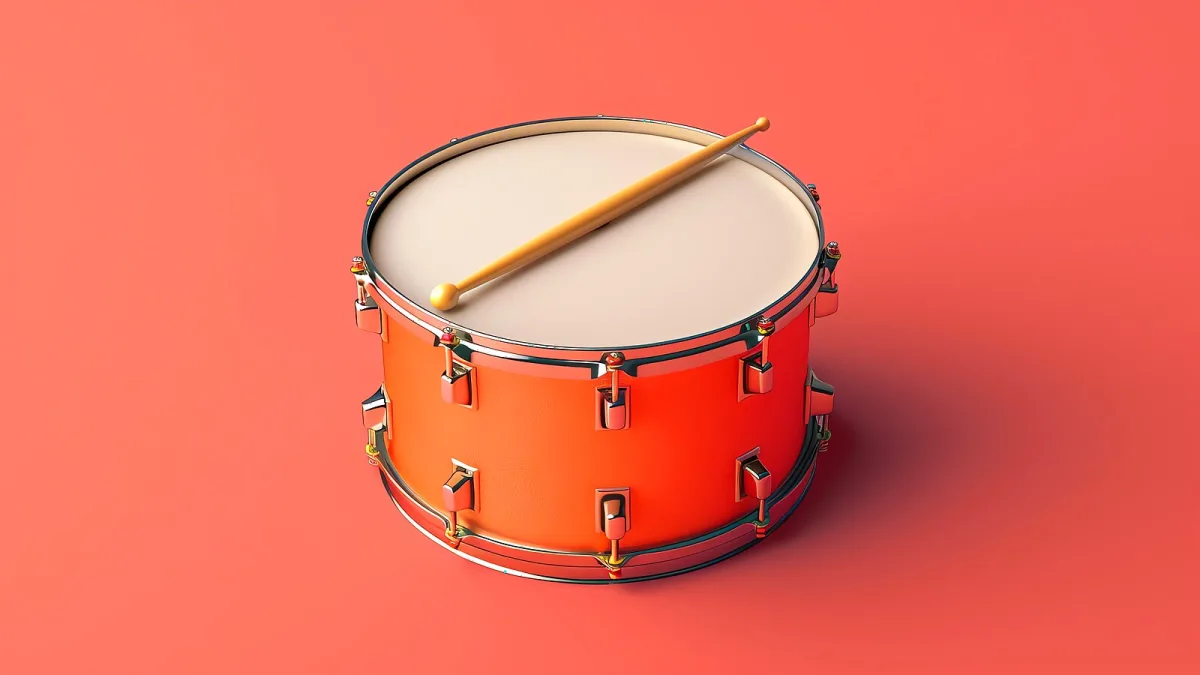
It's one of the smallest, cheapest bits of kit in percussion, and one of the most instantly recognisable. A cowbell can carry an entire groove, define a famous record, or sit quietly in an orchestra evoking a distant mountainside. Here's what it actually is, how it's built, and where it turns up.
What Is a Cowbell?
A cowbell is an idiophone — an instrument that produces sound through the vibration of its own body, rather than a stretched skin or a string. Musical versions are typically a hollow, roughly trapezoidal metal or synthetic shell with a flared opening, struck with a stick rather than shaken or rung.
The name gives away its origin: it descends directly from bells worn by grazing livestock, designed to help herders locate an animal by sound.
Clappered vs Clapperless: The Key Distinction
A traditional livestock bell usually has an internal clapper that swings and strikes the shell as the animal moves. Almost every musical version used in rock, pop, jazz and Latin music is clapperless — the clapper is removed, and a player strikes the shell externally with a drumstick or mallet instead. That single change is what turned a farming tool into a genuine rhythm instrument, giving players precise control over timing, accent and dynamics that a swinging clapper never could.
How Size and Material Shape the Sound
| Factor | Typical effect |
|---|---|
| Small shell | Higher, brighter, more pointed attack |
| Large shell | Lower, broader, heavier sound |
| Metal construction | Cutting, resonant, more overtones |
| Synthetic construction | More controlled overtones, often more durable |
These are tendencies rather than fixed rules; the shape, thickness and how it's played all matter just as much as raw size.
From Herding Tool to Concert Hall
These bells found their way into formal composition surprisingly early. Gustav Mahler used them in his Symphony No. 6, and Richard Strauss scored them into An Alpine Symphony, both around 1904, using their distant, clanking quality to evoke a pastoral, mountainous setting rather than a rhythmic pulse.
Popular music took the instrument somewhere completely different. Once clapperless and stick-played, it became a precise rhythmic tool rather than a colouristic effect, opening the door to the driving patterns heard in Latin, funk and rock records ever since.
The Cowbell in Latin Music: Meet the Campana
In Afro-Cuban-derived styles like mambo and salsa, the cowbell is usually called the campana and often sits alongside congas, bongos and timbales. It's worth being precise here: the campana is an instrument, while clave is a separate rhythmic organising principle. A bell pattern might reinforce the clave, sit against it, or do something else entirely — the two terms aren't interchangeable, even though they're closely related in practice.
Cowbell in Rock and Pop: A Few Famous Parts
A handful of recordings turned it into a genuine pop-culture icon: Blue Öyster Cult's "(Don't Fear) The Reaper", War's "Low Rider", The Rolling Stones' "Honky Tonk Women" and The Beatles' "Drive My Car" are all frequently cited examples. Blue Öyster Cult's part became so famous it inspired the well-known Saturday Night Live "More Cowbell" sketch — a joke about the instrument's prominence, not the reason it became important in the first place.
Acoustic vs Electronic: The 808 Cowbell
Drum machines and electronic modules commonly include one, and the Roland TR-808's version in particular became hugely influential in hip-hop, electro and techno production. It's worth knowing that it's not a recording of a real bell at all — it's a synthesised approximation with its own distinct, pitched, metallic character, closer to a cousin of the acoustic instrument than an imitation of it.
If you're now thinking about picking one up yourself, our buyer's guide covers exactly what to check before you buy, and our beginner's guide will get your first patterns sounding solid.
The Bottom Line
The cowbell's story runs from muddy fields to symphony orchestras to some of the most famous rhythm parts in popular music, all from a deceptively simple hollow shell. Once you know what you're listening for — clappered or clapperless, metal or synthetic, campana or drum-kit accent — it's genuinely hard to hear a cowbell part the same way again.





Comments