


Elektron article
Elektron Explained: Features, Types and Tips
Hold a step, twist a knob, and only that step changes — that's the Elektron idea in a nutshell, and it's genuinely hard to go back once it clicks.
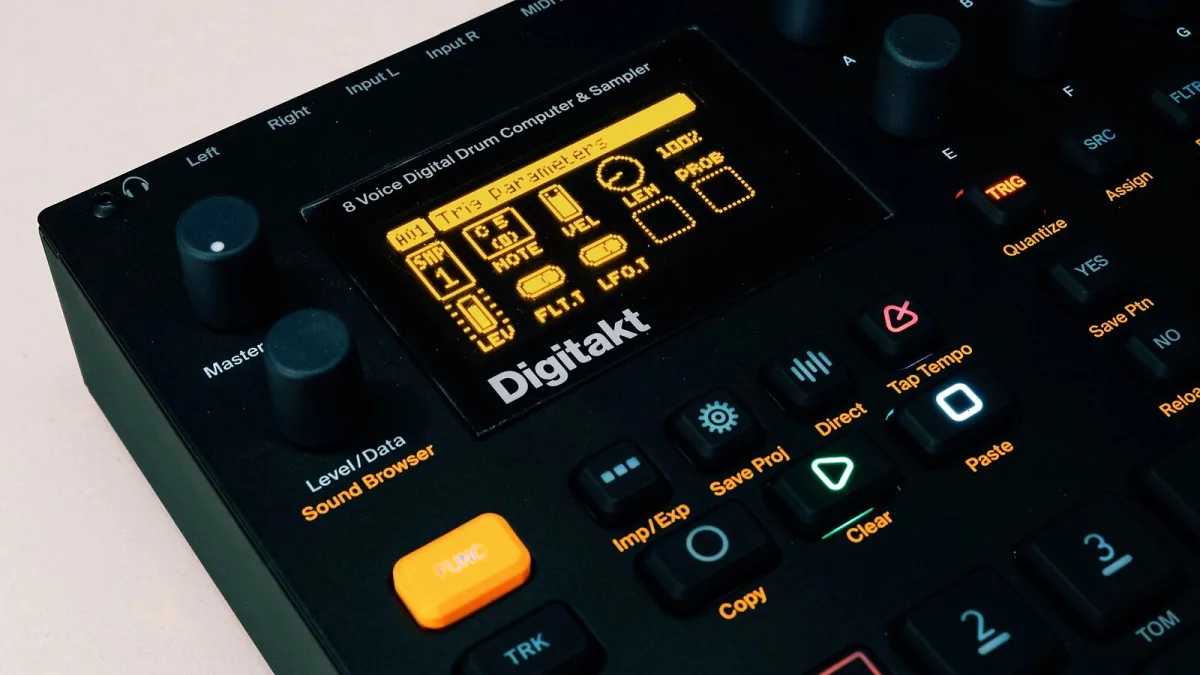
There's a specific moment every Elektron owner remembers: the first time you hold down a step, twist a knob, and realise that change only happened on that one step. Suddenly a four-bar loop isn't a loop anymore — it's a living thing that changes every time round. That's the whole Elektron idea in one moment, and once it clicks, it's genuinely hard to go back to a plain step sequencer.
What Makes Elektron Different
Elektron is a Swedish music-technology company, and its instruments blur the usual lines between synthesizer, drum machine and sequencer. On most Elektron gear, a single track is simultaneously a sound source, a sequencer lane, and a place to store performance changes. The signature feature behind this is the parameter lock, or "p-lock" — a way of storing a different value for almost any parameter on one specific step, rather than applying that change across the whole pattern. Hold a step, twist a filter knob, and only that step gets the new filter setting. It sounds small. In practice, it's the difference between a static loop and one that keeps evolving.
The Current Range at a Glance
| Instrument | What it's built for |
|---|---|
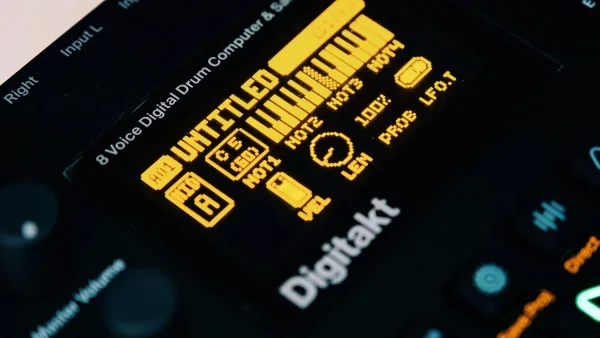
| Digitakt II | Digital drum machine and sampler |
| Digitone II | FM-based digital synthesizer |
| Syntakt | Hybrid analog/digital drum computer and synth, 12 tracks |
| Octatrack MKII | Sampler, live looper and performance sequencer, 8 audio + 8 MIDI tracks |
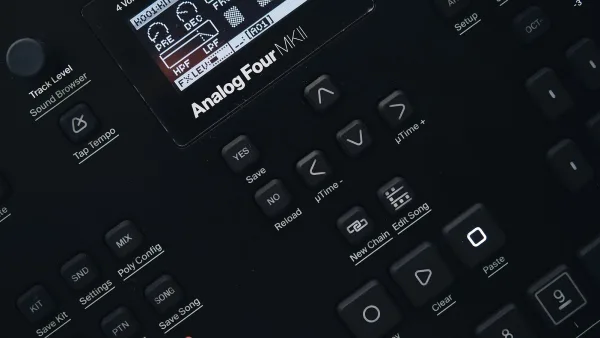
| Analog Four MKII | Four-voice analog synthesizer |
| Analog Rytm MKII | Analog drum machine with sample layering |
| Model:Cycles | Compact FM-based drum machine and synth |
| Model:Samples | Compact sample-based sequencer |
| Analog Heat +FX | Analog distortion and effects processor |
Key Elektron Terms Explained
The jargon is the first real hurdle, so here's the essential vocabulary in plain English:
- Trig — an event placed on a sequencer step; it can hold a note, a sample trigger, a parameter change or a condition.
- Parameter lock (p-lock) — a value stored on one specific trig only, not the whole pattern.
- Conditional trig — a rule for whether a trig plays, such as "only every second cycle", which stops loops sounding identical every time round.
- Microtiming — nudging a trig slightly early or late off the strict grid, useful for swing and groove.
- Retrig — repeating a note or sample within a single step, handy for rolls, ratchets and glitchy fills.
- Kit — a group of sounds and track settings tied to a pattern on some instruments.
- Overbridge — Elektron's system for integrating supported hardware with a computer DAW.
Parameter Locks in Action
Once the concept clicks, the practical uses pile up fast: a closed hi-hat that opens only on the fourth repeat, a bass note with a different filter cutoff than the rest of the pattern, a sample that starts from a different point on each trig, or a snare that only picks up a delay send at the end of a phrase. None of that needs a second pattern or a separate track — it all lives inside the same loop, one step at a time.
From a Pattern to a Track
A single Elektron pattern is rarely the whole song — the workflow is built to grow a short loop into something longer. Mute and unmute tracks to introduce elements gradually, save a few pattern variations before making a big change, and use conditional trigs for the occasional fill or ghost note rather than something that plays every cycle. Chain patterns together in song mode once the individual pieces feel right, and don't be afraid to record a genuinely expressive hands-on performance straight into a DAW if it turns out better than anything you could build by manually editing steps afterwards.
Who Elektron Gear Actually Suits
This is instrument territory that rewards techno, IDM, hip-hop, ambient and experimental producers especially well, along with anyone performing live rather than only working in the studio. The trade-off is a genuine learning curve: menu diving and key-combination shortcuts are part of daily use, and the Octatrack in particular has a steeper climb thanks to its flexible audio routing and sampling architecture. Nobody masters an Elektron box in an afternoon, but the depth is exactly why people stick with them for years.
Where to Go From Here
That's the shape of the idea — parameter locks, a shared vocabulary, and a range that spans sampling, synthesis and analog drums. If you're working out which specific box to buy, our Elektron buyer's guide walks through the decision properly. Brand new to hardware sequencing? Our beginner's guide keeps the first session manageable. And if you want a straight recommendation by use case, see the best Elektrons for the money.



Comments