


Elektron article
Common Elektron Mistakes to Avoid
Not because the gear's no good — a handful of avoidable habits trip almost everyone up in their first fortnight with Elektron. Here's how to skip them.
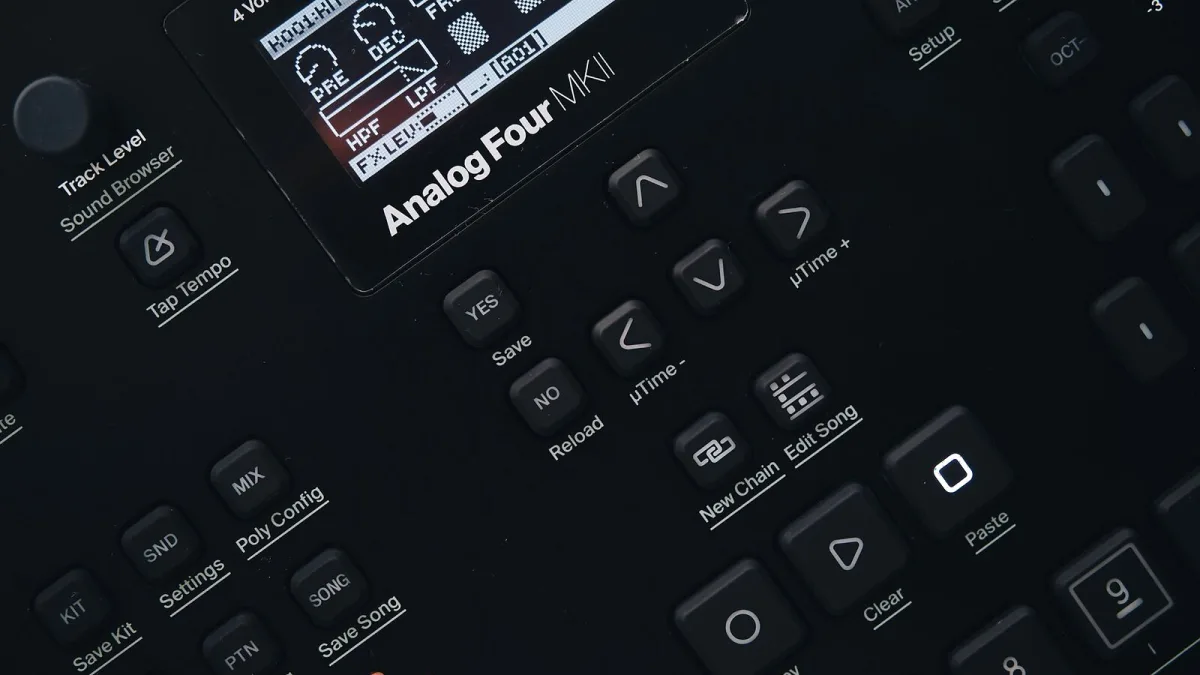
I've watched a fair few people buy into Elektron off the back of a hyped-up demo video, only to end up frustrated a fortnight later — not because the gear's no good, but because of a handful of avoidable habits that trip almost everyone up early on. None of them are complicated to fix once you know they're happening.
Buying Elektron Gear by Hype Without Deciding What You Actually Need
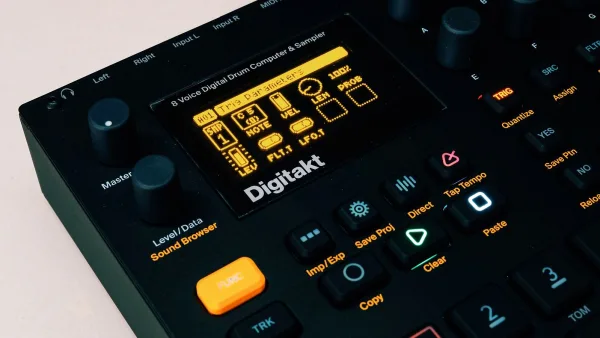
The classic one. Someone watches an Octatrack performance video and buys an Octatrack, when what they actually make is sample-based drum tracks that Digitakt II would have handled far more directly. Work out whether you're sampling, synthesising, drumming or performing live before you buy anything, and pick the instrument built for that job specifically, not the one that looked most impressive online.
Fighting the Elektron Menus Instead of Learning Them
Every Elektron instrument leans on menu diving and key-combination shortcuts rather than a knob for every function, and trying to avoid that reality just slows you down. The shortcuts genuinely do become second nature with regular use — fighting them, or hunting for a workaround that avoids learning them at all, just delays the point where the instrument starts feeling natural.
Overusing Parameter Locks on Every Single Step
Parameter locks are the whole appeal, sure, but locking a different value on every step of every track fast becomes noise rather than music. The strongest patterns usually change one or two things per repetition, not everything at once. Restraint here does more for a pattern's groove than piling on modulation ever will.
Ignoring Conditional Trigs and Doing Everything Manually
A lot of newer users skip conditional trigs entirely and instead build out separate, nearly identical patterns just to get the occasional fill or variation. Conditional trigs — rules like "only play every second cycle" — do that job automatically, inside one pattern, and they're exactly what stops a short loop sounding robotic on repeat. Learn them early rather than working around not knowing them.
Never Saving Pattern Variations Before Big Changes
You'll eventually wreck a pattern you liked while chasing an idea that didn't pan out, and without a saved version to fall back on, that's just gone. Get into the habit of saving a variation before any big change — a new kit, a major parameter overhaul, a structural rework. It costs seconds and saves genuine heartbreak.
Treating It Like a DAW Replacement Rather Than a Companion
Elektron gear is a phenomenal pattern and loop generator, but full song arrangement — long-form structure, detailed mixing, extensive automation — is often still genuinely faster in a DAW for a lot of people. Fighting the hardware to do a DAW's job, rather than recording your best hardware performances into a DAW afterwards, is a common way to end up frustrated with a tool that's actually doing exactly what it's meant to.
Ignoring Firmware Updates for Months
Elektron regularly pushes firmware updates that add genuinely useful features — new sequencer modes, workflow improvements, bug fixes — and it's easy to buy a unit, never check for an update, and quietly miss out on features the instrument now actually has. It's not urgent enough to interrupt a session over, but it's worth a quick check every so often rather than never at all.
Assuming Every "Similar" Model Works Identically
Original, MKII and "II" generations of the same product name can differ meaningfully in specification and features. Following an old tutorial or forum thread written for a different generation than the one you own is a quick route to confusion — always check your specific model's current manual rather than assuming advice for "an Elektron box" applies universally.
Getting It Right From Here
Most of this comes down to slowing down, matching the instrument to the actual job, and learning the menus rather than resenting them. If you'd like the fundamentals explained properly, our Elektron overview covers parameter locks and terminology in full, and our buyer's guide helps you match the right instrument to your workflow. Still finding your feet? Our beginner's guide keeps the first sessions manageable, and if you're weighing up a second unit, have a look at the best Elektrons for the money.



Comments