


Elektron roundup
Elektron: A Complete Buyer's Guide
Get the wrong Elektron box for how you actually make music and you'll spend months fighting the workflow. Here's how to actually decide.

Buying into Elektron isn't like buying a synth or a drum machine off a spec sheet — it's buying into a way of working. Get the wrong box for how you actually make music and you'll spend months fighting a workflow instead of using it. Here's how to actually decide.
Decide What You're Making First, Not What Looks Coolest
Before specs, be honest about your actual sessions. Are you chopping and sequencing samples? Building basslines and pads from scratch? Programming drums? Performing live rather than working purely in a studio? Elektron's range splits fairly cleanly along those lines, and the right answer for a techno producer building analog basslines is not the right answer for someone chopping breaks and one-shots.
Reading an Elektron Spec Sheet
| Instrument | Core job |
|---|---|
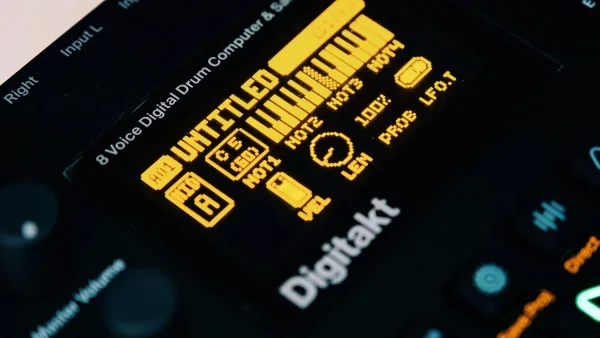
| Digitakt II | Sample-based drums, chops and one-shots with MIDI sequencing |
| Digitone II | FM-based digital synthesis for basses, keys and melodic parts |
| Syntakt | Integrated analog-and-digital drum and synth machine in one box |
| Octatrack MKII | Advanced sampling, live looping, resampling and performance manipulation |
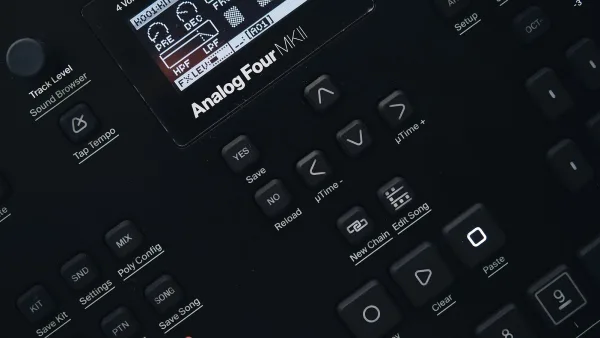
| Analog Four MKII | Analog basses, leads and pads with deep sequenced modulation |
| Analog Rytm MKII | Analog percussion with sample layering and drum-performance control |
| Model:Cycles / Model:Samples | A more direct entry point into Elektron sequencing |
Digital vs Analog Elektron
This split matters more than it might look on paper. Digitakt, Digitone and Syntakt lean digital — precise, flexible, and generally more affordable to expand and maintain. Analog Four and Analog Rytm bring genuine analog voice circuitry, which brings a different character and a different relationship with modulation and drift. Neither is objectively better; it's a genuine sonic and workflow choice, not just a price bracket.
The Learning Curve Question
Every Elektron instrument leans on menu diving and key-combination shortcuts rather than one knob per function, and that's worth being honest with yourself about before buying. The Octatrack asks the most of a new owner because of its flexible audio routing and sampling architecture — it's an extraordinary performance tool once it clicks, but it doesn't click quickly. If you want something that gets you making finished patterns sooner, Digitakt or Model:Cycles ask far less of you on day one.
Overbridge and DAW Integration
If your workflow already lives partly in a DAW, check how the model you're considering integrates via Overbridge, Elektron's system for routing supported hardware into a computer for multitrack audio or parameter control. Support and depth vary by instrument and generation, so don't assume every Elektron box behaves identically here — confirm it for the specific model and current firmware before you commit, particularly if hybrid hardware-and-DAW production is central to how you work.
New or Second-Hand?
The used market for this gear is healthy, and a well-kept second-hand unit is often a sensible way in, since these instruments tend to hold up structurally over years of use. Check encoders and buttons for wear, ask about firmware update history, and factor in that original, MKII and "II" generations of the same product name can differ meaningfully in specification — don't assume a listing photo tells you which generation you're actually looking at. Ask the seller directly and, where possible, confirm against the model's current official specification page before agreeing a price.
Practical Checklist Before You Buy
- Name the actual task — sampling, synthesis, drums, live performance — before comparing specific models.
- Decide digital or analog based on the sound and workflow you want, not just the price.
- Be realistic about how much menu-diving you're prepared to tolerate early on.
- Check Overbridge support if DAW integration matters to your setup.
- Confirm you're comparing the current generation — original, MKII and "II" models can differ meaningfully in spec.
- Budget time, not just money — an Elektron instrument rewards weeks of use far more than an afternoon.
If you want the fuller picture of how the sequencing concept actually works before deciding, our Elektron overview covers parameter locks, trigs and conditions properly. Completely new to hardware sequencing? Our beginner's guide keeps the first session manageable, and if you want a direct recommendation by use case, see the best Elektrons for the money.
The Bottom Line
Buy for the workflow you'll actually use every week, not the spec sheet that impresses you in the shop. Once you already own a unit, it's worth reading our piece on common Elektron mistakes to avoid before you dive too deep into the menus.



Comments