


DJ Turntable article
Dj Turntable Explained: Features, Types and Tips
A DJ turntable is built to be handled — grabbed, nudged, and adjusted mid-play. Understanding how direct drive, torque and pitch control work makes everything else make sense.
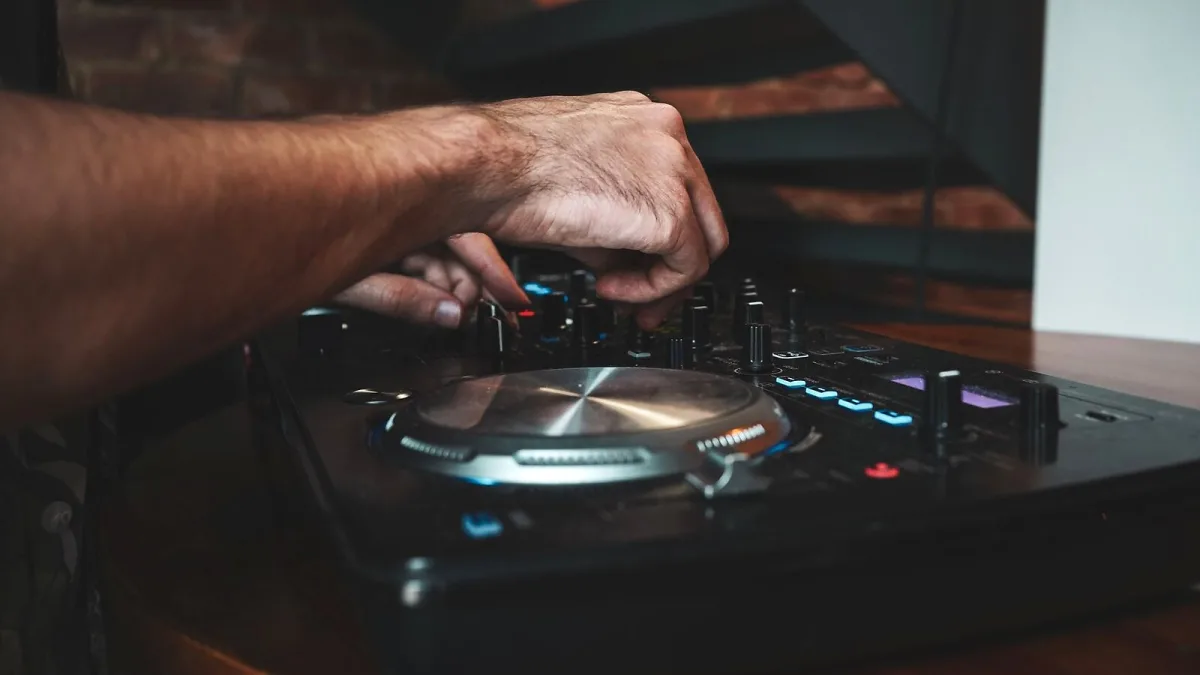
Not all record players are built for the same job. A hi-fi deck is designed to sit still and play records with as little interference as possible. A DJ turntable is designed to be grabbed, nudged, spun backwards, and have its speed adjusted while a record is already playing. The engineering behind those two use cases goes in quite different directions, and understanding what makes a DJ deck work helps you make sense of what you're actually buying — or using — when you get one.
Direct Drive: The Engine That Made DJ Culture
The single most important feature of a DJ turntable is its drive system, and for performance DJing, that almost always means direct drive. In a direct-drive deck, the motor connects straight to the platter — there's nothing in between. That means the platter reaches full speed almost immediately when you press start, and when you apply pressure to slow or manipulate it, the motor pushes back with consistent torque.
Belt-drive turntables isolate the motor from the platter via a rubber belt, which can reduce vibration for home listening but causes slower start-up times and gives way under hand pressure. For beatmatching or scratching, that simply doesn't work. Direct drive is the standard for a reason: the Technics SL-1200 established the layout and engineering expectations decades ago, and modern DJ decks from Pioneer DJ, Audio-Technica, Rane and others are all built around the same core principle.
What Torque Actually Does
Torque — the rotational force of the motor — matters more than most spec-sheet features. High torque means the platter reaches playing speed quickly, resists being slowed down by hand pressure, and recovers promptly after manipulation. According to DJ TechReviews, roughly 1.6 kg/cm is a reasonable reference for mixing, while 3 kg/cm or above is the territory for serious scratching.
More torque isn't always better for every style. A smooth, slightly more compliant platter can feel more natural for certain mixing techniques. But if you're cutting, scratching or doing anything that involves rapid, repeated platter manipulation, higher torque will serve you better.
The Pitch Fader: Tempo in Your Hand
Beatmatching — the art of synchronizing two records so they play in time — relies on the pitch fader, a slider that raises or lowers playback speed by a percentage of the nominal speed. The range matters: ±8% is standard for most club mixing; ±16% gives more flexibility for records that are further apart in tempo; wider ranges (up to ±50% or even ±100% on some decks) are more about creative manipulation than everyday mixing.
What the spec sheet often doesn't tell you is that fader length, resolution and physical feel matter just as much as the range. A long, smooth fader with fine resolution makes precise adjustments easier than a short, cheap one with a headline percentage that sounds impressive.
Types of DJ Turntable
Modern DJ decks fall into a few broadly distinct categories:
- Standard vinyl decks — Direct drive, pitch fader, phono output. The workhorse format for club mixing and vinyl performance. Technics SL-1200MK7 and Pioneer DJ PLX-1000 are the most recognized current examples at the professional end.
- USB-equipped decks — Add a USB output for recording vinyl to a computer or digitizing a collection. The Audio-Technica AT-LP120XUSB is a well-known option. USB output and DVS compatibility are different things — don't confuse them.
- DVS-oriented decks — Designed or adapted to work with digital vinyl systems (DVS), where timecode records control digital files in software like Serato or Traktor. Most quality direct-drive decks can work with DVS given the right interface, but some are better suited than others.
- Motorized platter controllers — Products like the Rane Twelve MKII mimic the physical experience of a turntable but are purpose-built for digital control rather than vinyl playback.
Key Features Worth Understanding
Stroboscopic markings
Those dots or lines around the edge of the platter aren't decoration. Under the light of the strobe lamp, they appear stationary when the platter is running at exactly the right speed, and they drift visibly when it isn't. Useful for calibration and for spotting any instability during a set.
Tonearm and cartridge
The tonearm holds the cartridge and stylus in the record groove. For DJ use, you want an arm that allows adjustable tracking force (how firmly the stylus sits in the groove) and anti-skate (which prevents the arm from drifting toward the centre under lateral movement during scratching). The cartridge itself — particularly the stylus shape — affects tracking ability, sound quality and record wear. Standard DJ cartridges from Ortofon, Shure (via legacy products) and Audio-Technica are popular, with needle shape and compliance matched to the intended application.
Outputs and connections
Most DJ turntables produce a phono-level signal, which requires a phono preamp — either built into a DJ mixer or a separate unit. Some decks include a switchable line output that bypasses the need for a phono input. USB adds recording capability but doesn't replace a proper DJ interface for DVS work.
Practical Tips
- Always connect the ground wire when using a phono output. It eliminates a persistent electrical hum that you do not want at any volume level.
- Balance the tonearm and set tracking force carefully before use. Incorrect tracking force wears records faster and produces unreliable playback.
- Use a slipmat on the platter — typically felt or a thin mat — to allow the record to slide slightly while the platter continues to spin beneath it. Essential for scratching; useful for cueing.
- Keep the stylus clean. A dirty needle tracks poorly, sounds wrong and damages records.
For specific buying advice, the DJ turntable buyer's guide covers what to prioritize at each budget and experience level. If you're just starting out, the beginner's guide to DJ turntables walks through the essentials without the jargon overload. And if you want to know what trips people up early on, the guide to common turntable mistakes is worth a read before you start spending money.




Comments