


Piccolo Instrument article
Piccolo Instrument: A Complete Guide
How the smallest member of the flute family works, what it's made from, and why composers keep reaching for it.
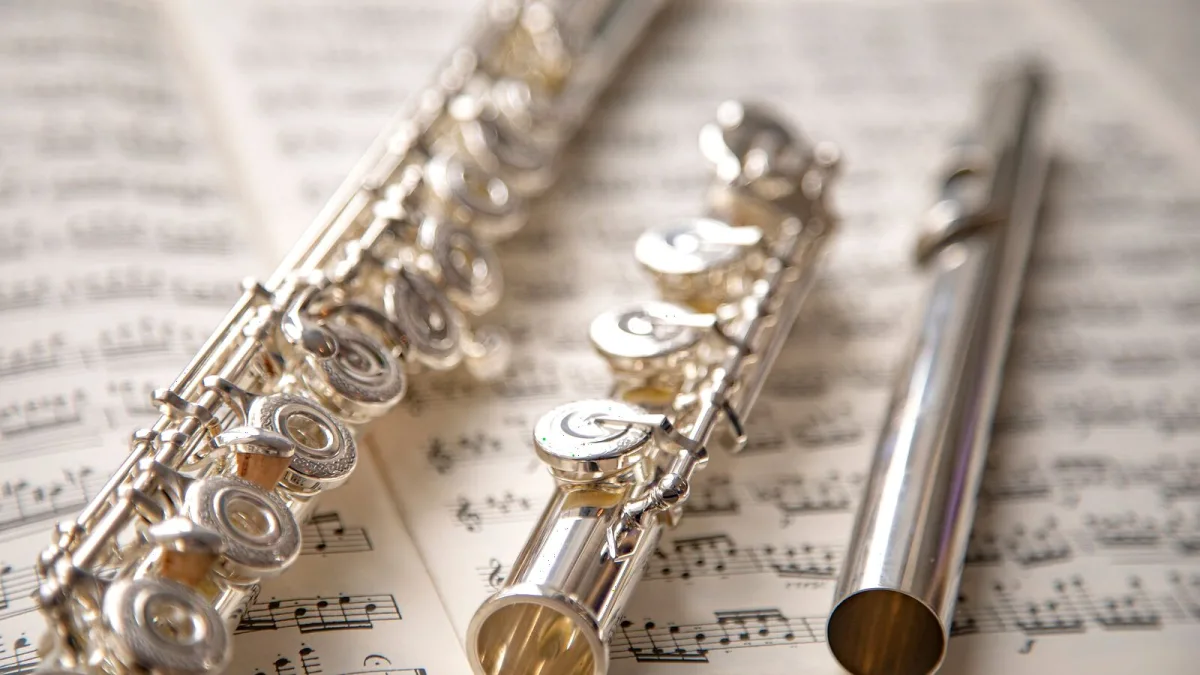
It's tiny, it's loud, and it can cut clean through a hundred other instruments without even trying — welcome to the piccolo, one of the orchestra's most misunderstood members. Whether you've just heard one soar over a full symphony or you're wondering whether it's worth taking up yourself, here's a proper, welcoming introduction to what this little instrument actually is and how it fits into the wider musical world.
What Is a Piccolo, Exactly?
A piccolo is the highest-pitched standard member of the flute family: a transverse (side-blown) woodwind, roughly half the length of a full-size concert flute. That smaller size is precisely why it sounds so much higher, and why its bright, penetrating tone can project clean over a full orchestra or wind band without any amplification at all.
How It Actually Works
Like its bigger sibling, it's an edge-blown instrument: the player directs a fast, focused stream of air across a hole cut into the headjoint, and that stream splits and vibrates against the edge to create sound. Most modern instruments use just two sections — a headjoint and a body — and, unlike the concert flute, don't usually have a separate footjoint at all. The keywork itself is generally based on the Boehm system, the same fingering logic used across the wider flute family, which is one reason flute players tend to pick up the piccolo relatively quickly.
Range and That Octave Trick
Here's the detail that catches newcomers out: written music for this instrument sounds a full octave higher than it looks on the page. A typical modern instrument in C covers roughly D5 up to C8 — nearly three octaves, with that top C matching the very highest note on a standard piano. It's chromatic right across that range, though the middle register is generally the easiest to control and the most musically useful.
What a Piccolo Is Actually Made From
| Material | Typical use | Character |
|---|---|---|
| Wood (often grenadilla) | Professional orchestral playing | Complex, blended tone; needs humidity care |
| Plastic or resin | Students, marching bands, outdoor use | Durable and stable in changing conditions |
| Metal (often silver-plated) | Marching, military and some concert use | Strong projection |
No single material is objectively "best" — the right choice depends on climate, budget, ensemble and how the instrument will actually be used day to day.
Where You'll Actually Hear One
It earns its place in an orchestra by doing what nothing else quite can: reinforcing the top of the texture, doubling flutes or violins an octave up, and cutting through brass and percussion at full volume. Beethoven leaned on it for the finale of his Fifth Symphony and again in his Ninth; Berlioz, Tchaikovsky, Rimsky-Korsakov, Mahler, Shostakovich and Stravinsky all wrote demanding, exposed parts for it too. Beyond the concert hall, it's a fixture of concert bands, marching bands and military bands, largely for the same reason — that high, piercing sound simply travels.
A Brief History of the Piccolo
Its ancestry traces back to small transverse flutes and military fifes, instruments used for centuries to carry signals and rhythm across a battlefield or parade ground. Sources differ on an exact invention date; one account credits Johann Georg Tromlitz with an important development around 1791, though the fuller picture involves a much longer, gradual evolution alongside the flute itself. It found its way into formal concert writing during the 18th century, with early appearances in music associated with Handel and Vivaldi, before settling into the standardised modern C instrument played today.
Coming to the Piccolo From the Flute
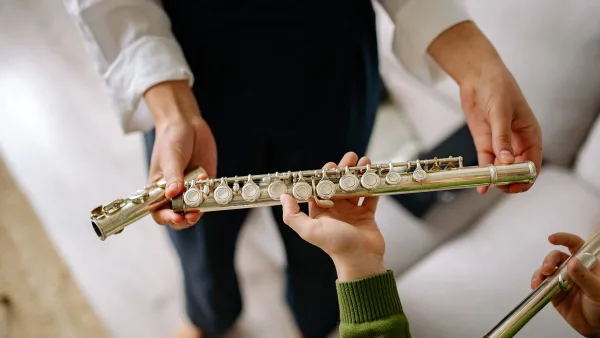
Most players meet the piccolo after already learning flute, and the transition isn't always as smooth as the shared fingerings suggest. It generally wants a smaller, more focused air stream and slightly different lip placement, so old flute habits sometimes need adjusting rather than simply transferring across. If that's the stage you're at, this beginner's guide walks through exactly what to expect, and how to set it up and get a first proper sound covers the practical first steps in detail.
Thinking About Getting One?
If you're weighing up an actual purchase, this complete buyer's guide covers exactly what to check before spending anything, and the best options for the money breaks the market down by budget and level.
The Bottom Line
The piccolo might be the smallest thing in the woodwind section, but it's never the least important. Once you understand the octave transposition, the material trade-offs and the technique it actually demands, the rest of what makes it such a distinctive instrument falls into place quickly.




Comments