


Rode Nt1 roundup
Rode Nt1: A Complete Buyer's Guide
Rode NT1 now means three different microphones. Here's how to work out which one actually suits your setup before you spend a penny.
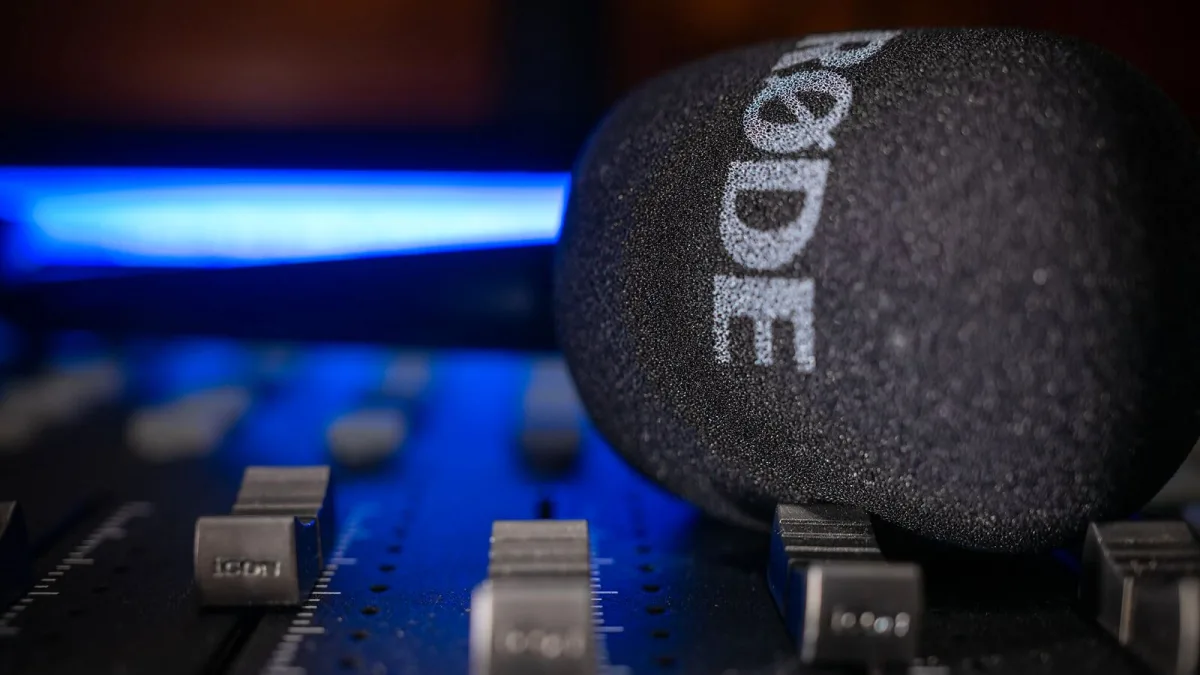
Right, so you've decided you want a Rode NT1. Good shout — it's one of the most sensible large-diaphragm condensers you can buy for home recording. But here's the bit nobody tells you upfront: "Rode NT1" isn't one product any more, it's three, and picking the wrong one means either overspending on features you'll never touch or missing out on something that would've genuinely helped. Let's sort out exactly what you need before you spend anything.
Decide Which NT1 You Actually Need First
There are three current models, and the differences aren't cosmetic:
- NT1 (standard) — XLR only, no digital features, the simplest and cheapest way into the range.
- NT1 5th Generation — XLR and USB-C, 32-bit float recording, onboard DSP (compression, gating, a high-pass filter and some Aphex processing). This is the one to buy if you record without an interface, or want the safety net of that extra digital headroom.
- NT1 Signature Series — XLR only, but built around the newer HF6 capsule, so it gets the improved 142 dB max SPL and lower self-noise of the 5th Gen without any of the USB or DSP stuff. Comes bundled with an SM6 shock mount.
If you're not sure, ask yourself one question: do you own, or plan to own, an audio interface? No interface and you want to record vocals or a podcast straight into a laptop — get the 5th Generation. Already running an interface and just want a great, honest analogue mic — the standard NT1 or the Signature Series will do the job, and the Signature edges it on raw spec.
What the Spec Sheet Actually Tells You
Every NT1 listing throws around the same numbers, so here's what to actually check rather than just skim past:
| Spec | What it means for you |
|---|---|
| Self-noise (dB(A)) | The mic's own background hiss. Lower is better — every NT1 sits around 4–4.5 dB(A), genuinely excellent for the price. |
| Max SPL | How loud a source it can handle before distorting. 132 dB on the standard NT1, 142 dB on the 5th Gen and Signature — only matters if you're close-miking something loud. |
| Polar pattern | Cardioid on every NT1, meaning it picks up mostly from the front and rejects the rear. Fine for most single-source recording. |
| Connection | XLR needs an interface with 48V phantom power. USB-C (5th Gen only) plugs straight into a computer. |
USB or XLR — Which Actually Suits Your Setup?
Don't buy the 5th Generation purely for the USB option if you already own a decent interface — you won't use it, and you're paying for capability that just sits there. Conversely, if your entire "studio" is a laptop and a pair of headphones, the 5th Gen's Dual Connect output removes a whole extra purchase from your shopping list, and the 32-bit float recording means you can set levels a bit loosely without ruining a take through clipping. Worth knowing though: it's not a cure-all. Point the mic somewhere daft or shout straight into the capsule and it'll still sound bad, just with more digital room to fix it in the edit.
Kit or Standalone?
The Signature Series comes with an SM6 shock mount, pop filter and a decent XLR cable in the box, which genuinely saves you buying those separately. The standard NT1 and 5th Generation are typically sold as the microphone alone, so budget for:
- A shock mount, to stop desk knocks and floor vibration reaching the capsule
- A pop filter, to tame plosive "p" and "b" sounds on vocals
- An XLR cable (unless you're going the USB route on the 5th Gen)
- An audio interface, if you don't already have one and aren't buying the 5th Gen
How the Rode NT1 Stacks Up Against Rivals
You'll see the NT1 mentioned alongside mics like the Audio-Technica AT2020 and the Lewitt LCT 440 Pure fairly often — they're all large-diaphragm condensers chasing the same "affordable, quiet, detailed" brief. There isn't a single objective winner here, and it comes down to how much you value the specific self-noise figures, the bundled accessories on the Signature, and whether the 5th Generation's USB option matters to your setup. If low self-noise is your priority above all else, this range is a genuinely strong pick regardless of which of the three you land on.
It's also worth thinking about resale and secondhand buying, since all three models turn up on the used market fairly regularly. Condenser capsules are delicate but not fragile in normal use, so a well-cared-for used mic is usually a fine purchase — just ask the seller to confirm which exact model it is, since visually the standard version and the Signature Series look very similar despite their different internals, and a mismatched description is an easy, honest mistake for a private seller to make.
Before You Check Out
To recap the actual decision: buy the standard NT1 if budget is tight and you already have an interface; buy the Signature if you want the newer capsule's improved specs without paying for USB features you won't use; buy the 5th Generation if you want the flexibility of both XLR and direct USB recording, or you're starting from scratch with no interface at all. For a broader look at what the whole NT1 family is and how it sounds, our Rode NT1 overview is worth a read, and if you're weighing up value across the range specifically, see which Rode NT1 gives the best value for money. First mic ever? Our beginner's guide is the gentler starting point, and once it's arrived, it's worth reading through the common mistakes people make before you unbox it.




Comments