


Microphone and Recorder roundup
Microphone and Recorder: A Complete Buyer's Guide
The right setup depends on what you're recording. Here's how to work through the decision and what to look for in each component.
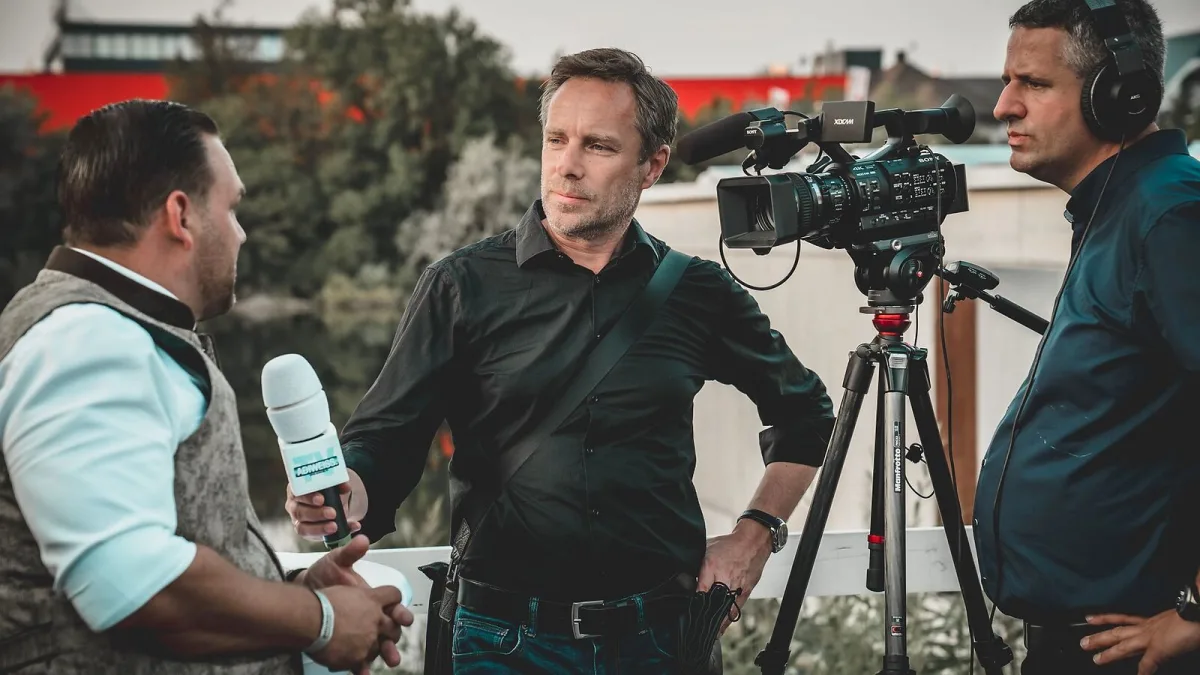
Buying a microphone and recorder setup is straightforward once you know what you're actually trying to record and in what circumstances. Getting that part right matters more than any spec sheet. Here's how to work through the decision.
Step One: Define What You're Recording
Different recording applications need different setups. Broadcast interviews need different tools to acoustic music recording, which needs different tools to wildlife field recording. Before comparing hardware, be honest about your primary use case — and your secondary ones, because most people want versatility even if they have one main application in mind.
- Interviews and spoken word: A portable recorder with XLR input and a dynamic handheld or lavalier. Dynamic microphones are less sensitive to handling noise and background sounds than condensers.
- Music and acoustic instruments: Built-in stereo XY capsules on a mid-range portable recorder, or a recorder with XLR plus a small-diaphragm condenser pair. Phantom power required for condenser microphones.
- Field and nature recording: Compact stereo recorder with good built-in mics, or an external binaural microphone pair for immersive results.
- Video production: Recorder with XLR input and a shotgun microphone, or a camera-mountable compact recorder.
All-in-One vs External Microphone
An all-in-one unit — a portable recorder with built-in capsules — is simpler, lighter and faster to deploy. The microphones are fixed, so you can't swap them for different situations, but modern built-in capsules on mid-range recorders are genuinely capable. For many applications, particularly general-purpose and travel use, the all-in-one route is the better choice.
An external microphone paired with a recorder gives more flexibility. You can choose a microphone precisely suited to the recording situation. The trade-off is cost (you're buying two components), complexity (one more piece to manage and connect) and the need to understand XLR cabling and phantom power.
What the Recorder Specifications Actually Mean
When reading recorder specs, focus on these:
- Preamp noise floor (self-noise): Lower is better. Stated in dBu EIN or similar. Below −129 dBu EIN is good; mid-range units often achieve −133 or lower. This matters for quiet sources like distant wildlife or soft acoustic instruments.
- Maximum input level before clipping: Higher gives more safety margin when recording loud sources. Important for live music, close drums and events you can't control.
- Sample rate and bit depth: 24-bit/96kHz is the current standard for professional work. 24-bit/44.1kHz is fine for most applications.
- Battery life: Relevant for extended field recording. AA batteries tend to be more practical than proprietary lithium cells in the field.
Key Brands and Product Lines
The portable recorder market is dominated by a handful of manufacturers:
- Zoom: H1n (ultra-compact), H4n Pro (XLR with phantom power, very popular), H6 (six inputs, modular capsule system).
- Tascam: DR-40X (XLR, phantom power, compact), DR-60D MkII (camera-mounting design).
- Sony: PCM series — professional-grade, correspondingly priced.
- Olympus/TASCAM: Compact voice recorders, suited to simple interview and dictation use.
For most people, the Zoom H4n Pro or Tascam DR-40X represent the best starting point with XLR inputs. The Zoom H1n is the entry option if you only need built-in mics.
Budget Allocation
If you're buying a microphone and recorder as two separate components, a sensible approach is to spend more on the recorder than the microphone at entry level. A better preamp does more for your recordings than a marginally better capsule when both are at budget prices. As you develop, upgrade the microphone first — since the recorder's preamp will then become the limiting factor.
Used Market
Field recorders hold their value reasonably well. Zoom H4n Pro units appear regularly on the used market at significant discounts from new pricing. Check for dead capsules (record a test and check both channels), battery compartment condition and physical damage to XLR connectors. These are durable devices and a clean used unit is a sensible choice.
For a full technical overview, see our guide to microphone and recorder setups. New to recording? The beginner's guide covers the full first-session setup.




Comments