


Microphone and Recorder article
A Guide to Microphone and Recorder
From all-in-one portable recorders to external mic-and-recorder combinations — here's a clear guide to how these setups work and what suits each application.
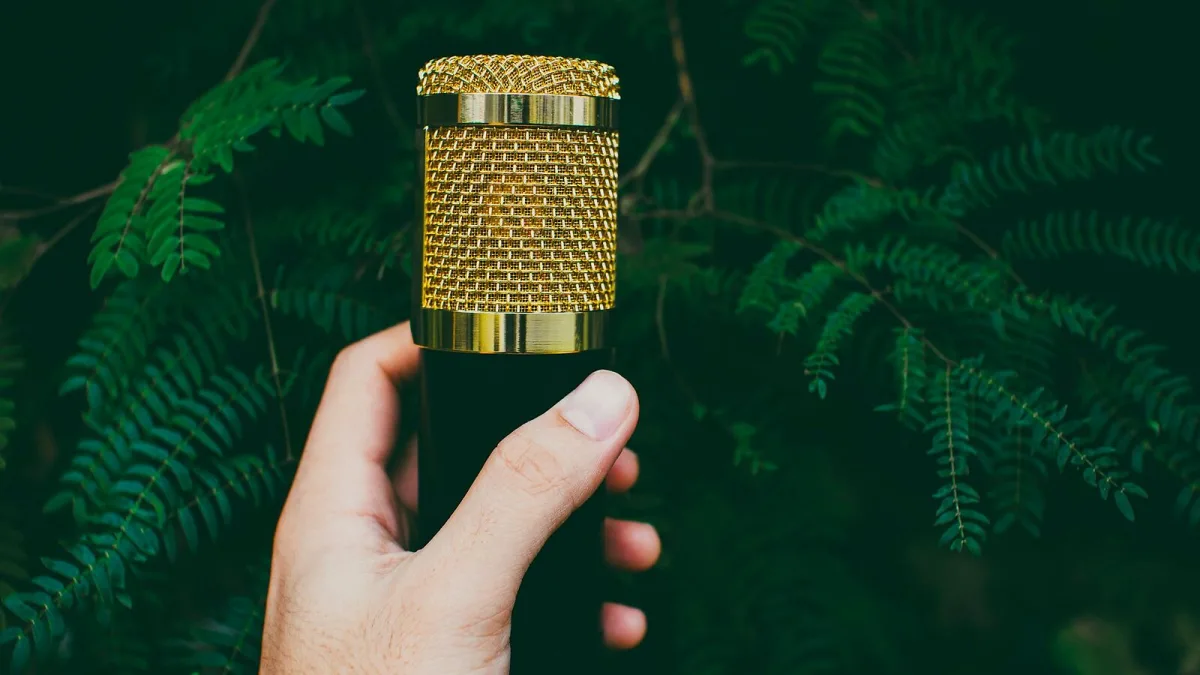
A microphone and recorder combination is one of the most versatile tools in audio — useful for field recording, journalism, podcasting, music demos, wildlife sound, interviews and a hundred other applications that need you to capture audio away from a fixed studio. Understanding how the two components work together, and what the options look like at each level, makes it much easier to choose what's right for your specific use.
The Two Main Approaches
There are two distinct ways to build a microphone and recorder setup. The first is an all-in-one portable recorder — a device with built-in microphones already attached, like the Zoom H series or Tascam DR series. You take it out, press record and it captures everything through the mics on the unit itself.
The second approach uses an external microphone connected to a handheld recorder via XLR. The recorder provides phantom power if needed, preamplification and the recording media. The microphone is chosen separately to suit the recording situation — a directional shotgun mic for interviews, a condenser for acoustic instruments, a lavalier clipped to a presenter's lapel.
Both approaches have their place. The all-in-one route is faster to deploy, more portable and better suited to general-purpose use. External microphones add flexibility and potential quality improvements, particularly in demanding situations where the built-in capsules on a handheld recorder aren't quite enough.
Microphone Types and Their Uses
The type of microphone you pair with a recorder depends on what you're recording:
- Directional/hypercardioid capsules: Built into most portable recorders. Good for general use, instruments, dialogue at close range.
- Shotgun microphone (supercardioid or lobar): Highly directional, rejects off-axis sound. Useful for interviews, film dialogue and wildlife recording where the source is at a distance.
- Lavalier microphone: Clips to clothing. Used in broadcast, interviews and presentations where a handheld or visible microphone is impractical.
- Condenser microphone (large or small diaphragm): High sensitivity, accurate. Suited to studio recordings, acoustic instruments and critical listening applications.
What Recorders Provide
A handheld recorder handles the signal chain between the microphone and the storage medium. It contains a preamplifier (which amplifies the mic signal to a usable level), an analogue-to-digital converter and a storage system — SD card in most modern devices. Better recorders offer cleaner preamps with lower self-noise, higher maximum recording levels before clipping and more flexible gain control. For most applications, a mid-range unit gives you more preamp quality than the microphone's capsule can reveal anyway.
Most portable recorders record to WAV files at 24-bit/96kHz or better. The bit depth and sample rate are worth understanding: 24-bit gives you considerably more headroom for recording loud sources safely than 16-bit, and 44.1kHz or 48kHz is sufficient for almost all applications.
Phantom Power
Many condenser microphones require phantom power — typically 48V DC supplied through the XLR cable from the recorder. Most portable recorders with XLR inputs provide it. If you're planning to use a condenser mic externally, check that the recorder supports phantom power before buying. Dynamic microphones and most lavaliers don't require it.
Common Use Cases
| Application | Recommended setup |
|---|---|
| Journalism / interviews | Portable recorder + handheld dynamic or lavalier |
| Acoustic music recording | Recorder with XLR + small-diaphragm condenser pair |
| Field / nature recording | Stereo recorder with built-in XY capsules or external binaural pair |
| Podcasting on the move | Portable recorder + cardioid dynamic or lavalier |
| Film / video production | Recorder with XLR + shotgun mic |
Connectivity: What to Look For
The difference between a budget and mid-range microphone and recorder unit often comes down to inputs and connectivity. XLR inputs with phantom power unlock external microphone use. A headphone output for monitoring is essential for critical recording. Line inputs let you record from mixers or instruments directly. Some recorders include a USB interface mode, allowing direct computer recording with the same hardware.
The Workflow
Once recorded, files transfer via SD card reader or USB to a computer for editing. Most recorders produce standard WAV or AIFF files that open in any audio software. Post-processing for voice recordings typically involves noise reduction, gentle EQ and limiting. For music, the path is into a digital audio workstation (DAW) for mixing.
Ready to buy? Our buyer's guide covers the full decision. New to recording? The beginner's guide walks you through your first setup step by step.




Comments