


Violin Lessons article
The Ultimate Guide to Violin Lessons
The violin asks more of a beginner than most instruments. Here's what proper lessons should cover, from choosing a teacher to building a practice routine.
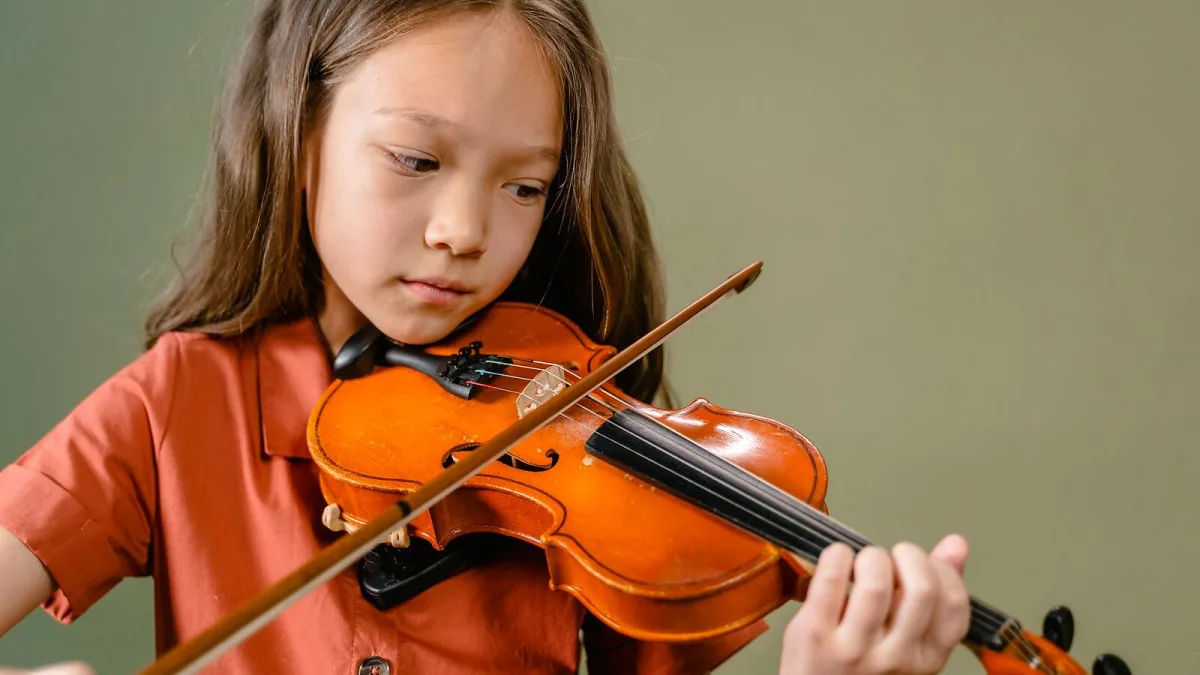
The violin asks more of a beginner than most instruments. There are no frets to mark where a note sits, and the bow has to be coaxed rather than simply pressed, so early progress depends far more on good habits than on how many tunes you can already limp through. This guide sets out what proper violin lessons should cover, how to choose an instrument and a teacher, and how to build a practice routine that actually moves you forward.
Finding the Right Teacher
A good teacher will hear tension in your shoulder or a flattening pitch long before an app or video ever could, which is why regular, in-person instruction still forms the backbone of most successful violin lessons. When you are choosing one, look for someone who:
- Has verifiable training or substantial performing and teaching experience.
- Teaches beginners regularly, not just advanced players.
- Explains technique clearly rather than simply demonstrating and hoping you copy it.
- Is happy to work towards your own goals, whether that is orchestral playing, folk fiddling or jazz improvisation.
- Sets specific, achievable practice assignments after every session.
- Is upfront about lesson length, fees, cancellations and any recital expectations.
Tell a prospective teacher what you actually want from the instrument before you commit. A curriculum built entirely around orchestral repertoire will not serve someone whose real ambition is Irish fiddle tunes, however excellent the teacher.
Choosing, or Renting, Your First Violin
A cheap, poorly set-up violin is genuinely harder to learn on, not just less attractive to look at. Renting from a reputable violin shop is usually the wiser route for a first instrument, since it guarantees correct sizing, professional setup, and an easy exchange as a child's arm grows. Before you commit to any instrument, whether rented or bought, check that:
- The bridge stands straight, with feet that fit the top of the violin properly.
- The pegs turn smoothly and actually hold their pitch.
- The fine tuners work without sticking.
- The strings sit at a comfortable height above the fingerboard, not painfully high.
- The bow is straight, or correctly cambered, with even horsehair and a functioning screw.
- There are no open seams, cracks or loose fittings.
Sizing matters just as much as setup, especially for children. As a rough guide, an arm length of around 18.5–20 inches usually suits a ¼-size instrument, 20–22 inches a ½-size, and 22–23 inches a ¾-size — though a teacher or specialist should always confirm the final fit in person.
What a Lesson Actually Teaches, Stage by Stage
Violin lessons tend to build in a fairly consistent order, because each stage depends on the one before it holding steady:
- Orientation and setup — learning the instrument's parts, safe carrying and storage, tuning the open strings (G–D–A–E, low to high), and finding a comfortable playing position.
- Open strings and bowing — producing an even tone, keeping the bow roughly parallel to the bridge, and learning bow distribution without gripping or raising the shoulder.
- Left-hand fundamentals — accurate finger placement, a relaxed, curved hand shape, and early intonation built through listening rather than relying solely on tape or markers.
- Reading and musicianship — the treble clef, counting rhythm aloud or against a metronome, and basic ear training.
- Repertoire and technique — slurs, legato playing, string crossings and eventually vibrato, introduced only once the earlier movements feel secure.
Skipping ahead in this order rarely saves time. A student who reaches for vibrato before their left hand is settled usually has to unlearn tension later, which takes far longer than building it properly the first time.
Building a Practice Routine That Actually Works
Short, frequent sessions consistently outperform occasional marathon ones, particularly in the first months. A practical target for most beginners is fifteen to thirty minutes on most days, structured something like this:
| Time | Focus |
|---|---|
| 2–5 minutes | Tune, loosen the body, check posture |
| 5 minutes | Open strings and tone production |
| 5–10 minutes | Scales, finger patterns, intonation work |
| 10–15 minutes | Repertoire, isolating the difficult bars |
| 2 minutes | Play something musical through, and note what needs work |
Practice needs to be deliberate, not merely repeated. Slow, metronome-backed repetition, hands worked separately when needed, and the occasional recording of yourself will reveal problems that feel invisible while you are actually playing. Simply repeating a mistake at full speed only reinforces it more firmly. For a fuller look at the specific habits worth catching early, see our piece on common violin lessons mistakes to avoid.
Classical, Folk, Jazz or Something Else?
The core physical skills overlap across every style, but the emphasis shifts considerably depending on where you want to end up.
| Goal | What gets emphasised |
|---|---|
| Classical | Formal posture, sight-reading, tone, scales, ensemble and orchestral repertoire |
| Folk or fiddle | Rhythmic drive, ornamentation, playing by ear, regional repertoire |
| Jazz | Ear training, improvisation, swing feel, chord awareness |
| Pop, rock or studio work | Reliable intonation under amplification, effects, looping, recording technique |
Structured graded pathways, such as the Royal Conservatory syllabus or ABRSM exams, suit students who want a clear, externally measured sense of progress. Suzuki-style teaching, which leans heavily on listening, imitation and sequential repertoire, often suits younger children particularly well. Neither approach is objectively superior; the right choice depends on the student in front of the teacher.
How Long Does It Actually Take?
There is no fixed timeline that applies to every player, whatever a marketing claim might suggest. Progress depends on the quality of instruction, the quality of practice, physical comfort and how much of a musical background a student already has. What is consistent is this: regular violin lessons, a properly set-up instrument, and short, focused daily practice will get you there far faster than an expensive violin used inconsistently ever could.




Comments