


Simply Piano article
Common Simply Piano Mistakes to Avoid
The easy-to-fall-into habits that stop beginners getting the full benefit of Simply Piano, and how to fix each one.
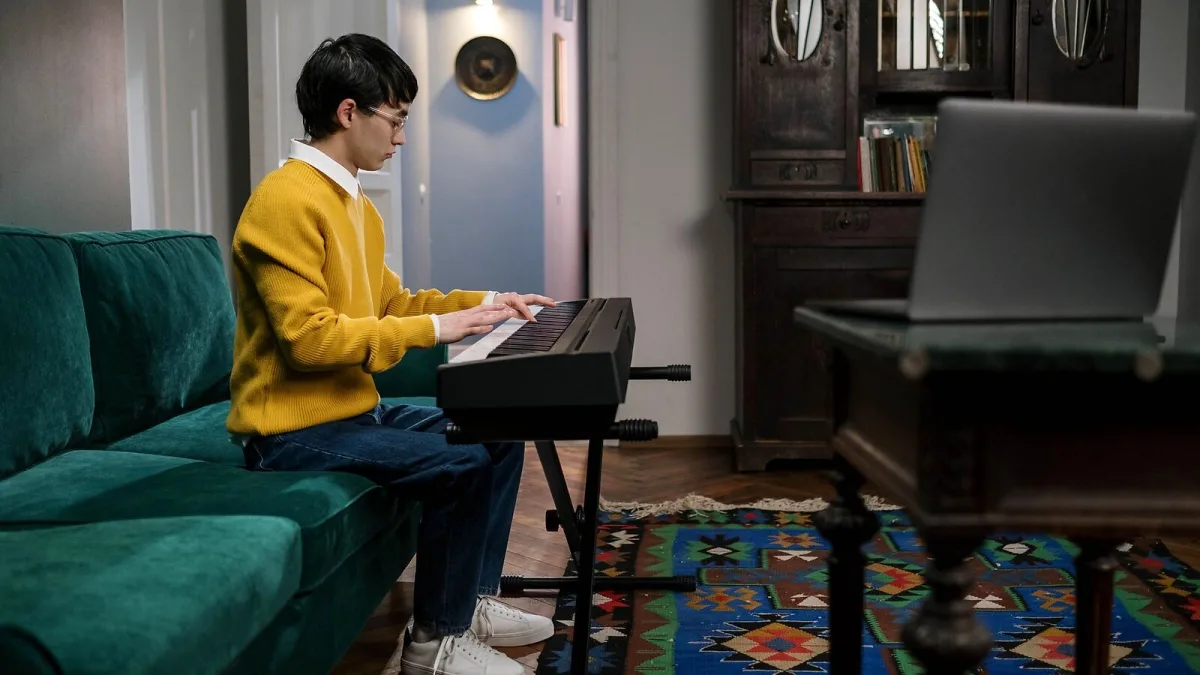
Simply Piano can genuinely get a beginner playing recognisable songs within a week, but a handful of easy-to-fall-into habits stop people getting the full benefit of it. None of these are complicated to fix once you know what to look for, so let's go through the ones I see most often.
Expecting Simply Piano to Replace a Teacher Entirely
Simply Piano is brilliant at telling you whether you played the right note, at the right time. What it can't do is watch your hand position, correct tension in your wrist, or shape the way a phrase actually breathes. If you're serious about technique long-term, treat it as a fantastic starting point and daily practice tool, not a full substitute for the occasional session with a real teacher.
Ignoring Your Playing Environment
Note recognition works by listening through your device's microphone, which means background noise, a badly placed phone, or a piano tucked in a noisy corner of the house can genuinely throw it off. Before you blame yourself for a string of "wrong note" flags, check that your device is positioned sensibly and the room is reasonably quiet. If you're on a digital piano or keyboard with a MIDI output, connecting directly tends to be far more reliable than relying on the microphone alone.
Skipping Piano Basics to Rush Into Songs
It's tempting to jump straight to a song you love, but the early Piano Basics material exists to build keyboard geography and reading skills that everything else depends on. Skip it, and you'll likely find yourself guessing at notes rather than genuinely reading them, which catches up with you as soon as the songs get slightly harder.
Not Checking the Free Trial or Subscription Terms Properly
Trial length and subscription pricing both vary by market, platform and whatever promotion happens to be running, so don't assume the number a friend or a review mentioned still applies to you. Check the current terms in your own account before you commit, and make a note of when any trial actually ends so you're not caught out by an unexpected renewal.
Chasing Correct Notes Without Learning Rhythm or Feel
It's entirely possible to hit every note correctly and still play something that sounds stiff or mechanical, because the app's feedback is mainly about pitch accuracy rather than musicality. Make a habit of listening back to yourself, or recording a short clip now and then, and ask whether it actually sounds like music rather than just a sequence of correct notes.
Practising in Long, Rare Sessions Instead of Short, Regular Ones
An hour once a week teaches your hands far less than fifteen focused minutes most days. Simply Piano's whole structure is built around short, frequent exercises for a reason — fighting that by cramming irregularly tends to leave you relearning the same ground each time rather than genuinely progressing.
Overlooking the Family Plan When Several People Are Learning
If more than one person in your house is working through lessons, sharing separate profiles under a family subscription is usually far better value than everyone buying their own. It's an easy thing to miss if you signed up in a hurry on your own account, so it's worth checking before you assume a second subscription is your only option.
Treating Every "Wrong Note" the Same Way
A flagged note might mean you genuinely played the wrong key, or it might just mean the microphone misheard you. Beginners sometimes spiral into frustration over what's actually a recognition hiccup rather than a real mistake. If something feels off, try replaying the same passage slowly and cleanly before assuming the fault is yours.
The Bottom Line
Most of these mistakes come down to treating the app as a finished solution rather than a genuinely good tool that still needs a bit of common sense around it: check your setup, don't skip the basics, and keep an ear on musicality rather than just correct notes. Get those habits right early, and you'll get a great deal more out of your practice time. For the fuller picture of what the app offers and who it suits best, our complete guide to Simply Piano is worth a read too.



Comments