


Sight Reading article
The Ultimate Guide to Sight Reading
Sight reading is the skill of performing music you have never seen before — and with the right approach, it is entirely learnable. This guide covers everything from the pre-reading scan to building a daily practice habit that actually works.
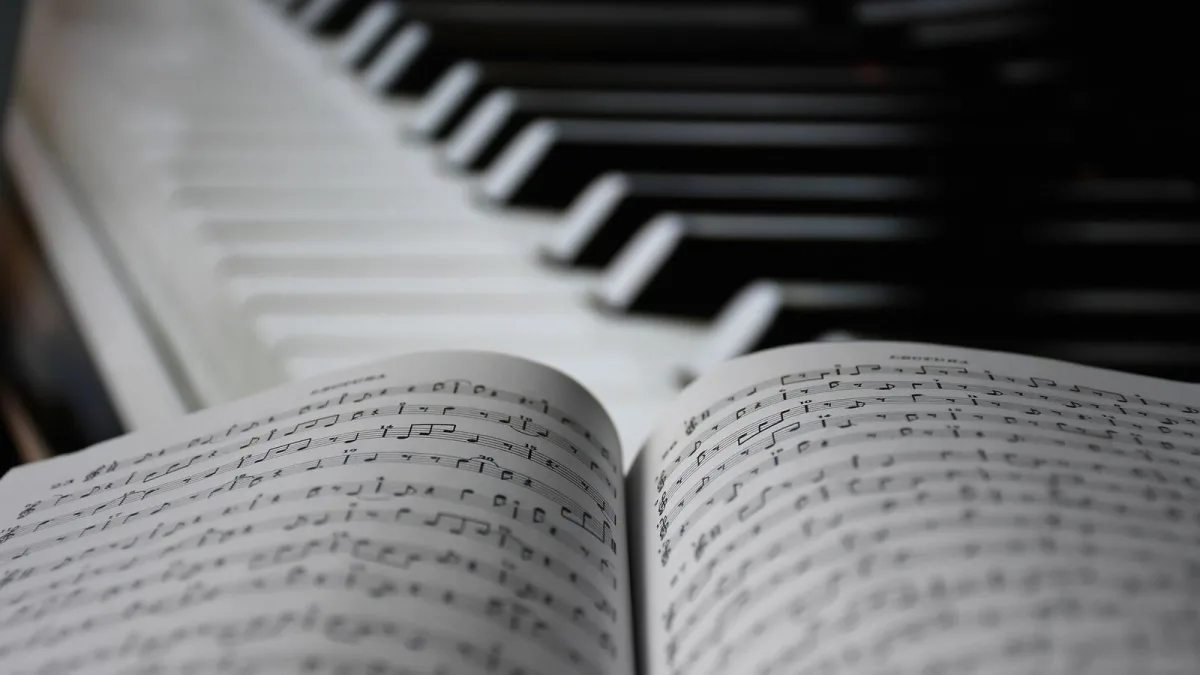
Sight reading is the ability to perform music you have never seen before — converting notation into sound in real time, without rehearsal, without stopping. It is one of the most useful skills a musician can develop, and one of the most consistently neglected. This guide takes you through what the skill actually involves, why some players find it easy and others find it daunting, and what a practical, effective approach to improving it looks like.
What Sight Reading Actually Means
Performing previously unseen music in real time is the essence of the skill. The defining feature is immediacy: you are decoding notation and producing sound simultaneously, without the chance to rehearse, fix mistakes, or rely on memory. MakeMusic, writing in 2025, describes it as interpreting "rhythms, pitches, dynamics, articulations, and stylistic markings" and delivering the music then and there.
It is worth distinguishing it from related but different skills. Score reading means analysing or understanding a piece — you might not play it at all. Memorised performance means reproducing something you have learned thoroughly. Rehearsal reading — working through new material in a lesson or practice session — allows stopping, repeating and correcting. This does not. The principle is: keep going.
What It Actually Requires
Sight reading is not one skill — it is several running in parallel. Understanding what those are helps enormously when deciding what to practise.
Visual recognition
The ability to read clefs, note values, rests, ties, accidentals, key signatures and the full vocabulary of notation. This is the foundation, but it is not the ceiling. Many musicians who can identify every symbol still read slowly because they are processing them one at a time.
Rhythmic fluency
Rhythm, rather than pitch, is the aspect that tends to break down first under sight-reading conditions. Identifying the metre, locating the beat, subdividing accurately and maintaining a steady pulse regardless of what is happening melodically — these are distinct skills that need deliberate attention. The University of Chicago advises prioritising rhythmic accuracy over pitch perfection from the outset.
Pattern recognition
Strong sight readers do not read note by note. They recognise scales, arpeggios, intervals, repeated rhythmic cells and familiar chord shapes as units. Research from the University of Nebraska–Lincoln describes this as chunking — grouping notes into meaningful patterns that reduce cognitive load and allow the performer to keep moving. A practised reader sees a descending G major scale; a slower one sees eight individual notes.
Audiation and anticipation
Audiation — the ability to internally hear music before or while playing it — is closely linked to fluency in reading music. The more vividly you can imagine the sound of what you are about to play, the less your eyes and fingers are working in isolation. Ear training and notation reading are not separate disciplines; they inform each other.
Look-ahead
Experienced readers keep their eyes slightly ahead of the note being played. This gives the hands, breath or voice a fraction of preparation time and smooths the constant decode-then-produce sequence. Developing look-ahead is partly a practised habit and partly a consequence of the other skills being secure enough to allow it.
Before You Play: The Pre-Reading Scan
Time spent scanning before the first note is never wasted. A reliable approach is to check:
- Key and time signatures
- Tempo marking
- Accidentals appearing through the piece
- Unusual rhythms, ties and syncopations
- Repeats, first and second endings, D.C. or D.S. markings
- Range — highest and lowest notes, and any awkward position changes
- Dynamics and articulation markings
- Style and character indications
A useful mnemonic from current pedagogical literature is S.T.A.R.S.: Signature, Tempo, Accidentals, Rhythm, Symbols and signs. It is not exhaustive, but it covers the elements most likely to ambush an unprepared reading.
During the Performance: The Core Rules
Several principles separate a functional approach from a note-learning approach dressed up as one:
- Set a tempo you can actually maintain. A slow, steady performance is always better than a fast, collapsing one. If the marked tempo is beyond your current ability, choose a slower one and keep it.
- Read in groups, not single notes. Aim for measures, beats or recognisable patterns as the unit of reading.
- Keep going after mistakes. The University of Chicago puts it plainly: this is "not the time for a perfectionist mindset." A missed note is far less damaging to a performance than stopping, correcting it and losing the pulse.
- Prioritise rhythm. If you must choose between pitch accuracy and rhythmic accuracy, preserve the rhythm. The underlying time structure of the music is more important to the overall effect than individual correct pitches.
- Observe dynamics and articulation where possible. They are not optional ornamentation — they are part of reading the music.
How to Practise Sight Reading Effectively
The most consistent finding across instructional guides is that brief, regular sessions beat infrequent intensive ones. Current recommendations cluster around 10–15 minutes daily. Rob Knopper, percussionist and author of an audition-focused guide, suggests as little as two to three minutes of daily reading as a meaningful habit — the principle being that consistent exposure to unfamiliar material is more valuable than occasional long bursts.
A practical 15-minute routine might look like this:
- Scan an unfamiliar excerpt (2 minutes). Do not play it yet.
- Clap, tap or speak the rhythm only (3 minutes). Isolate the rhythmic content before adding pitch.
- Perform it without stopping at a manageable tempo (7 minutes).
- Identify what went wrong (2 minutes). Not to fix it immediately, but to inform tomorrow's reading.
- Record one adjustment (1 minute). Choose a specific target for the next session.
Choosing the Right Material
This practice requires unfamiliar material. Once you have practised a piece enough to anticipate it, the exercise stops building fluency and becomes repertoire practice. Keep rotating material — use different keys, metres, styles and textures. Aim for material that is slightly easier than your maximum technical level: you want to be challenged by the reading, not by the technical demands of the piece itself.
Variety also matters. Reading only one style of music produces sight readers who are fluent within that style and lost outside it. Classical players benefit from reading simple lead sheets; jazz players from reading orchestral parts; choral singers from unfamiliar harmonic territory.
Instrument-Specific Considerations
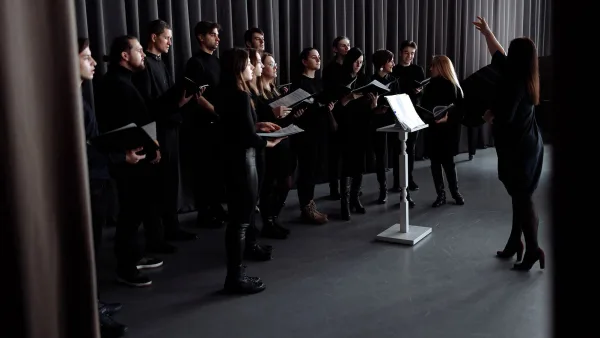
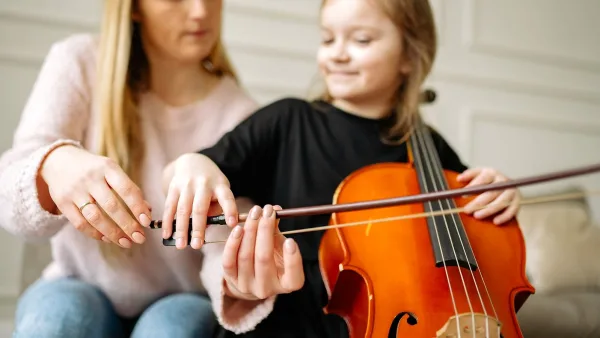
On piano, reading at sight requires processing two staves simultaneously, often in different clefs, with independent hands. Chord recognition and harmonic block reading are particularly important. On guitar, the same pitch can appear in multiple positions on the fretboard, which makes notation more demanding than on instruments with a single pitch-per-note layout. String players must coordinate bow direction, position changes and articulation with pitch and rhythm. Singers rely more heavily on audiation and interval recognition because there is no physical key to press or string to stop — the pitch must first exist in the inner ear. Wind players must factor in breath planning and phrase architecture as part of their pre-reading scan.
The underlying principles are consistent across instruments; the specific challenges differ by technique and notation.
Measuring Progress
Sight reading is harder to measure than most musical skills. A useful frame is not accuracy percentage but continuity: can you maintain the pulse and keep moving regardless of what happens? A reading that keeps going with a few missed notes often demonstrates stronger reading fluency than one that stops and corrects every error. Other useful measures include the ability to read in unfamiliar keys, handle complex rhythms and recover quickly after a stumble.
For a close look at the things that most reliably hold this skill back, the guide to common sight-reading mistakes covers the specific errors to avoid and how to address them.
The Bottom Line
Sight reading is a skill, not a talent — and like all skills, it responds to systematic practice. The foundations are rhythm fluency, pattern recognition, a consistent look-ahead habit and the discipline to keep playing when things go wrong. Fifteen minutes a day with fresh, varied material will produce measurable progress within weeks. Start with material that feels almost too easy, build the habit, and let the difficulty follow the confidence.



Comments