


Yamaha P225 article
The Ultimate Guide to Yamaha P225
A clear, honest look at the Yamaha P-225: what its GHC action and CFX voice really mean, and who this compact 88-key piano genuinely suits.
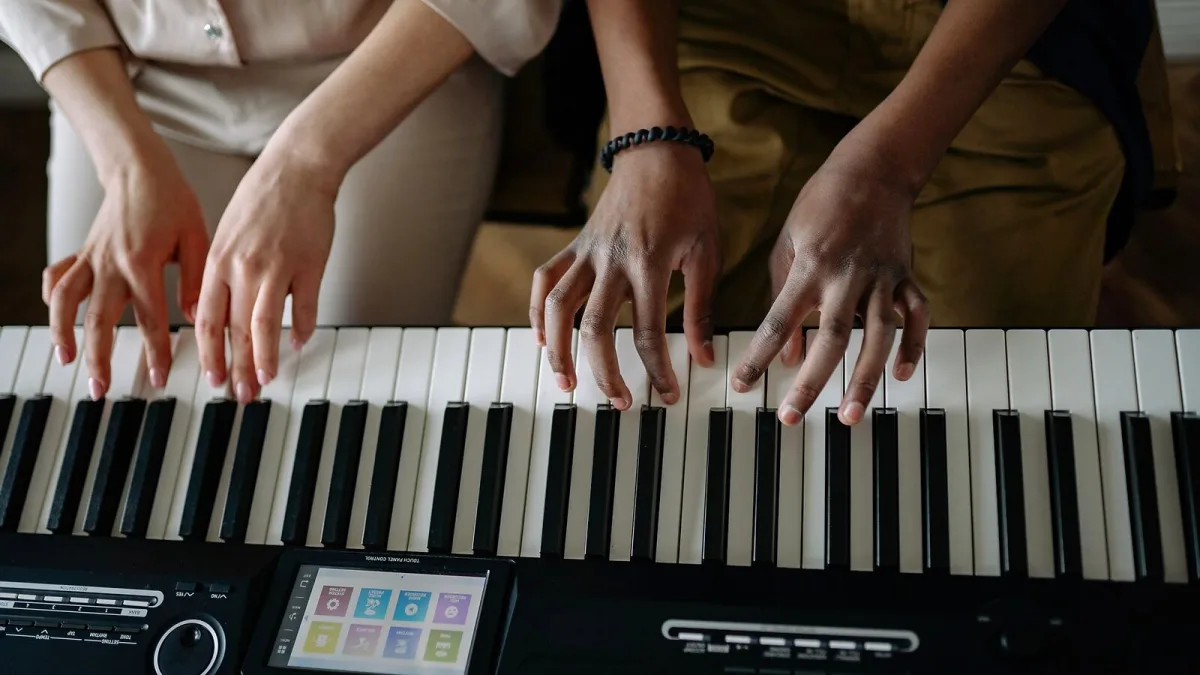
If you've been looking at portable digital pianos and keep seeing the same name pop up, there's a good reason: the Yamaha P-225 is one of the most sensibly built instruments in its price bracket right now. It's not flashy, and it doesn't try to be a synthesiser in disguise — it's a proper 88-key weighted piano that happens to fit on a desk. Here's exactly what you're getting.
What Is the P-225?
The Yamaha P-225 is an 88-key portable digital piano, sold in black (P-225B) and white (P-225WH) finishes. It sits in Yamaha's P-series, a family built around the idea of a genuine acoustic-piano playing experience in a slim, movable body — as opposed to Yamaha's furniture-style Arius or YDP ranges, which are designed to live permanently in one room.
Within that P-series, the P-225 sits above the simpler P-145 and below the more feature-rich P-515. Think of it as the "does everything a home pianist actually needs, without paying for things they don't" option.
Key Features at a Glance
- Graded Hammer Compact (GHC) action — a weighted key mechanism, heavier in the bass and lighter in the treble, like an acoustic piano.
- Yamaha CFX concert grand voice — the flagship piano sound, modelled on Yamaha's own CFX concert grand.
- 192-note polyphony and 24 built-in voices, including electric pianos, organs and strings.
- Bluetooth audio and USB audio/MIDI for streaming, recording and app control.
- 71 built-in songs — 21 voice demos and 50 preset classical pieces.
- Two 7-watt speakers plus dedicated stereo line outputs and two headphone jacks.
- Support for an optional three-pedal unit, alongside the standard sustain-pedal input.
How It Feels to Play: The GHC Action
The single biggest thing separating a "proper" digital piano from a keyboard is the action — how the keys feel and respond under your fingers. The P-225 uses Yamaha's Graded Hammer Compact, or GHC, action: a graded weighted mechanism, meaning the lower keys feel slightly heavier to press than the higher ones, echoing how a real piano's hammers behave.
It's worth being honest here: GHC is a compact mechanism designed to keep the instrument slim and light, so it isn't identical in feel to Yamaha's pricier GrandTouch actions found on higher-end models. What it does offer is four touch-sensitivity settings — Hard, Medium, Soft and Fixed — so you can match the keys' response to how firmly you naturally play.
The Sound: Yamaha's CFX Concert Grand Voice
The P-225's main piano voice is sampled from Yamaha's CFX concert grand, supported by what Yamaha calls VRM Lite — a resonance model that aims to recreate the way strings and soundboard interact on a real piano, rather than just playing back a flat recording. "CFX" describes where the sound comes from; it doesn't mean the instrument contains any of that grand piano's physical hammers or soundboard.
Beyond the main piano voice, there are 24 voices in total — electric pianos, organs, strings and bass among them — plus onboard processing like reverb, an Intelligent Acoustic Control setting and a Stereophonic Optimizer, which shape how the sound behaves through the speakers versus headphones.
Connectivity and Practice Tools
| Feature | What it's actually for |
|---|---|
| Bluetooth audio | Stream backing tracks or lesson videos through the piano's speakers. |
| USB to Host | Connect to a computer or tablet for MIDI and audio, useful for recording software. |
| Stereo line outputs | A full-bandwidth connection to an external amp, mixer or PA — better than relying on headphone out. |
| Two headphone jacks | Silent practice, or teacher-and-student sessions on the same instrument. |
| Smart Pianist app | Visual control over voices, recording and lesson features, instead of memorising button combinations. |
One thing worth flagging clearly: Bluetooth audio and Bluetooth MIDI are different things. The P-225 handles Bluetooth audio streaming, but Bluetooth MIDI generally isn't built in and may need a separate adapter if you want to control software wirelessly.
Portability and Everyday Use
At roughly 11.5 kg and about 129 mm high, the P-225 is genuinely easy to lift onto a table, carry between rooms, or pack into a car for a lesson or gig. Its shallow depth also makes it friendly to narrow desks where a full cabinet piano simply wouldn't fit. It still needs a stable stand — an inexpensive X-style stand works for casual use, while Yamaha's own furniture-style stand gives a more permanent, piano-like setup at home.
Where It Sits in Yamaha's Range
| Model | Positioning |
|---|---|
| Yamaha P-145 | Simpler, more basic entry point below the P-225. |
| Yamaha P-225 | Balanced mid-range: GHC action, CFX voice, better connectivity. |
| Yamaha P-515 | More voices, more advanced action and features, higher price point. |
Who the P-225 Suits Best
It's a strong match for beginners who want a genuine 88-key weighted instrument rather than a toy keyboard, for students stepping up from something unweighted, for home players short on space, for teachers who need something portable for lessons, and for gigging musicians whose main need is convincing acoustic and electric piano sounds rather than a wall of synth patches. If you want the full breakdown of what to check before buying, our complete P-225 buyer's guide goes through the checklist in detail, and if you're completely new to digital pianos, our beginner's guide walks through your first steps with it.
The Bottom Line
The Yamaha P-225 earns its reputation by doing the fundamentals properly: a genuinely weighted 88-key action, a well-regarded concert-grand piano voice, sensible connectivity, and a body light enough to actually move. It isn't trying to be an arranger keyboard or a synthesiser workstation, and that focus is exactly why it works so well as a first "real" piano. Before you buy, it's worth seeing where your money goes furthest — our guide to the best P-225 setups for the money breaks down the sensible ways to spend, and our list of common Yamaha P-225 mistakes to avoid is worth a read before you commit.




Comments