


Yamaha Digital Piano article
Yamaha Digital Piano Explained: Features, Types and Tips
A Yamaha digital piano recreates the sound and touch of an acoustic piano using weighted keys and sound modelling — here's what you need to know to choose the right one.
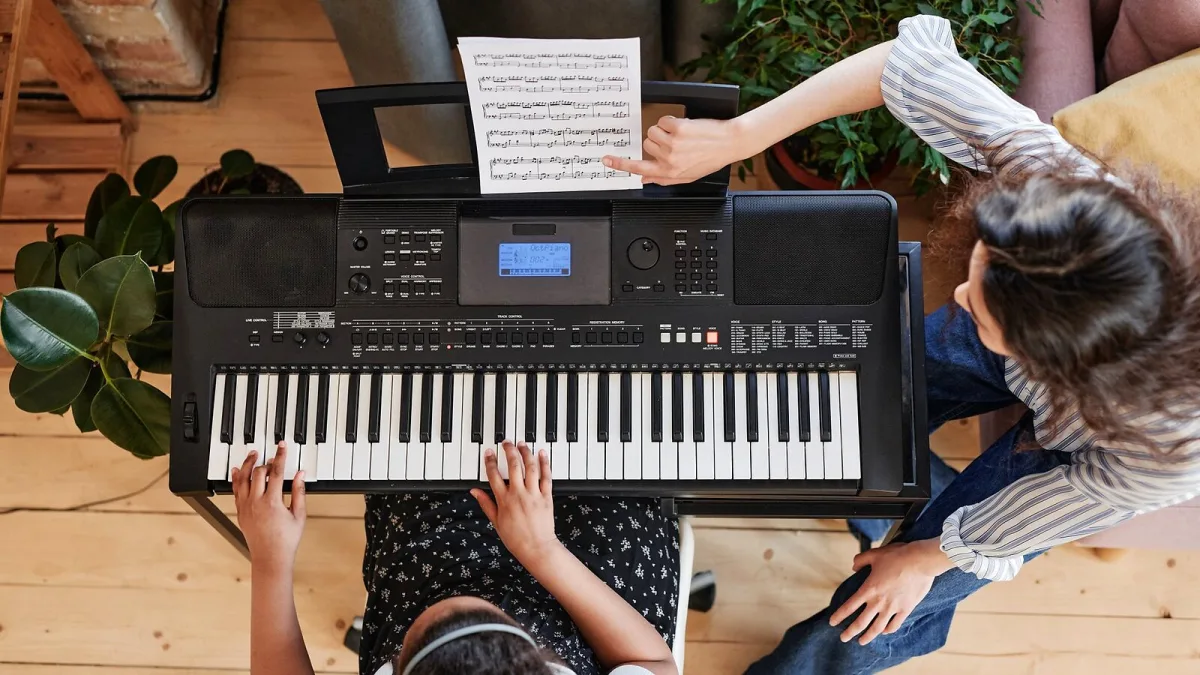
A Yamaha digital piano is a keyboard that recreates the sound, touch and appearance of an acoustic piano using samples, modelling and weighted keys. Whether you're learning, practising or performing, these instruments are one of the most respected choices worldwide — they've been in homes, studios, concert halls and music schools for over three decades. This guide explains what they are, what the different models do, and how to tell which one might suit you.
What Makes Yamaha Digital Pianos Different
The core of any digital piano is its sound engine — the technology that creates the piano sounds you hear. Yamaha uses two main approaches. The CFX Grand and Bösendorfer samples, which the company has recorded in exquisite detail since the 1980s, capture real pianos' tone. Their newer VRM Lite and VRM technology (Virtual Resonance Modeling) simulates how a real piano's wooden body and strings vibrate and interact — adding depth and sustain that sampling alone can't quite achieve.
The second critical element is the keyboard action. A weighted key mechanism mimics the resistance and weight of an acoustic piano's hammers, so your fingers develop the same muscle memory you'd use on a real instrument. Yamaha's GrandTouch-S action includes wooden keys with simulated ivory key tops and escapement — a subtle second "catch point" that happens in real pianos when the hammer separates from the key. For a learner, this matters more than most people realise: your technique is built on how the instrument feels under your hands.
The Product Range
Yamaha makes these instruments at several price levels, each with a different audience. Understanding where each sits helps.
Entry-Level Models
The P-series are portable, compact pianos aimed at students and home practitioners. The P-125 and P-225 (the P followed by a number roughly indicating the level) use standard wooden keys and good sampling. They're lightweight, require less space than a full-size keyboard stand, and cost a fraction of what a classroom piano would. A student upgrading from a small keyboard will notice the difference immediately — the weighted action teaches proper technique from day one.
Mid-Range Instruments
The DGX and Clavinova ranges begin to add more realism. The DGX series (now discontinued in favour of Yamaha's newer models) kept the P-series' portability while introducing better actions and expanded sound libraries. The Clavinova line — Yamaha's semi-professional range — uses weighted hammer actions, better speakers and deeper sound modelling. If you're serious about learning, teaching or performing regularly in modest venues, this is where the investment becomes worthwhile.
Professional Models
The CFX Grand and Bösendorfer replicate Yamaha's finest concert grands in cabinetry, action and sound. These are full-size, furniture-grade instruments used in recording studios, music schools, and concert halls. They cost £3,000–£10,000+ depending on the exact model and finish. They're bought by serious amateurs, professional musicians and institutions.
Key Features to Understand
Beyond brand, several features matter. The sound engine determines overall tone quality and expressiveness. Weighted keys versus standard keys is a genuine difference — weighted actions train proper technique; standard keys don't. Speaker quality and wattage matter if you're playing without headphones; thin speakers make even the best sound engine sound thin. Connectivity (USB, Bluetooth, MIDI) lets you record, control software or connect to a computer. And build quality affects how long the instrument lasts and how easily it tolerates being moved.
A Yamaha digital piano consistently delivers solid engineering across all these points. Entry-level Yamaha digital piano models have better actions than many competitors' mid-range instruments. Their sound sampling is deep and recorded with professional microphones. Their cabinetry (on the higher-end models) is genuinely beautiful and durable.
The Trade-off Between Acoustic and Digital
An acoustic piano teaches you to listen to and control subtle variations in tone you create. You have complete agency over the sound you make — pressing harder truly does produce a louder, slightly different tone because your hammer is moving faster. A lower-end digital piano model won't give you that feedback; the sound will change at a trigger point, not gradually.
But a Yamaha digital piano offers real advantages. They take up a fraction of the space. They stay in tune forever. You can practise quietly through headphones without disturbing anyone. They cost considerably less than a decent acoustic piano and don't deteriorate with humidity and temperature. For most learners, especially children or flat-dwellers, a quality instrument is not a compromise — it's the right tool.
Making Your Choice
Start by being honest about how much you'll use it and what your goal is. If you're a beginner aged 8–16 and you'll practise 30–45 minutes daily, a P-125 with its weighted keys and solid sampling is more than adequate; you'll outgrow the instrument long before it fails. If you're learning as an adult with serious intent, the Clavinova range's superior action and tone depth will reward you — the feedback is clearer, the sound more expressive, and the experience more rewarding.
Play before you buy if at all possible. The difference between a P-series and a Clavinova is obvious within seconds to anyone who sits down. Visit a dealer, try several models, and sit with your decision for a few minutes before deciding. This is a years-long commitment, and the right choice depends on your hands and your ears, not a spec sheet.
The Bottom Line
These instruments are sound investments. The company has been building them long enough that they've got the sound sampling and action engineering right. They're built to last, supported by a worldwide network of dealers and technicians, and genuinely respected by professional musicians. Whether you choose an entry-level P-series or a professional concert grand, you're buying something that will serve you well and never embarrass you.






Comments