


Yamaha Clavinova article
Yamaha Clavinova for Beginners: A Complete Guide
Three series, technical features, a big price tag — starting on a Yamaha Clavinova can feel daunting, but as a beginner you need to worry about far less than the spec sheet suggests.
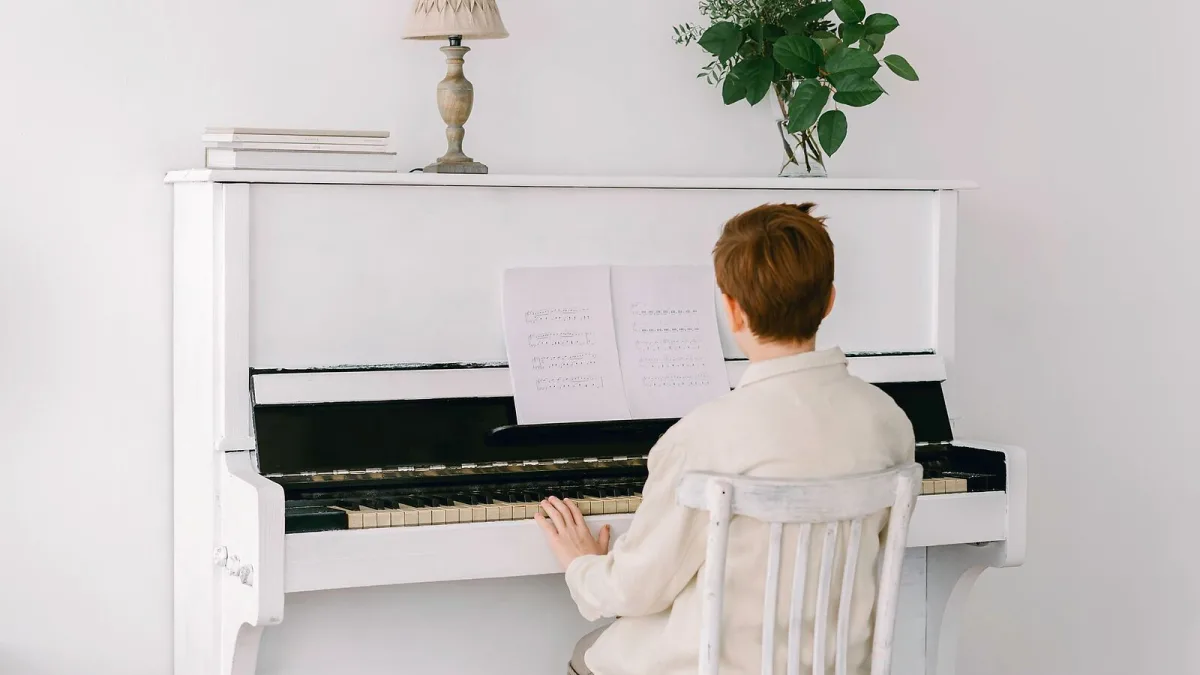
Starting out on a Yamaha Clavinova can feel a little daunting — three different series, technical-sounding features, a price tag that makes you want to get the decision right first time. Take a breath. As a beginner, you actually need to worry about far fewer things than the spec sheet suggests. This guide walks through exactly what matters and what you can safely set aside for later.
Is This the Right Kind of Instrument to Start On?
Yes, and here's why a Yamaha Clavinova is a genuinely good choice for a beginner rather than an intimidating one. Unlike a basic keyboard, it has full-size, weighted keys that respond like an acoustic piano, so the technique you build from day one transfers properly if you ever move to an acoustic instrument. And unlike an acoustic piano, you can practise silently through headphones without worrying about who's listening, which takes a lot of the self-consciousness out of the early, wobbly weeks.
Don't Agonise Over CLP, CSP or CVP Yet
The three series exist to serve different priorities, and as a beginner you genuinely can't go wrong with any of them, provided the keyboard feels comfortable under your hands. If structured, guided practice appeals to you, the CSP series with its Smart Pianist app and Stream Lights can be a gentle, encouraging way in. If you'd rather keep things simple and focus purely on playing, a straightforward CLP model does that job beautifully. Don't let this choice hold you up — it matters far less than actually starting.
What Actually Matters at This Stage
Weighted keys, so your fingers learn real piano touch from the start. Three pedals, even if you won't use the sostenuto or half-pedaling for a good while yet — they'll be there when you need them. A comfortable, adjustable bench at the right height, which is easy to overlook but makes a real difference to posture and hand position. Everything else on a Yamaha Clavinova — voice count, recording, accompaniment styles — is a bonus, not a requirement.
Your First Few Weeks
Little and often beats one long session at the weekend. Ten to fifteen minutes most days, focused on hand position and slow, careful repetition, will get you further than an hour of frustrated stop-start playing. Use the metronome from early on, even at a slow tempo — it feels awkward for about a week and then becomes second nature. And use the headphones freely; there's no shame in wanting to practise your scales without an audience.
Setting Up Your Practice Space
You don't need a dedicated music room. A quiet corner with room for a proper bench, away from a radiator or direct sunlight that could affect the cabinet over time, is genuinely enough. Keep the bench at a height where your forearms sit roughly level with the keys, and your feet flat on the floor — small posture habits formed now save real discomfort later. Most models also include a music rest, which is worth using from the start rather than propping sheet music against the lid.
Common Worries, Answered
Worried you've bought "too much instrument" for a beginner? You haven't. A well-built Yamaha Clavinova will still suit you perfectly as your playing improves over years, which is exactly the point of buying one built to last rather than something you'll outgrow in months. Worried about all the buttons and settings? Ignore nearly all of them at first. A beginner needs the keys, the pedals and perhaps the metronome — the rest can wait until curiosity, not necessity, brings you back to the manual.
Next Steps
Once the basics feel steady, our full explainer guide covers how the touch, tone and pedals are actually engineered, which is genuinely interesting once you're not trying to absorb it all on day one. Still deciding which model to buy? Our buyer's guide and round-up by budget will help, and our common mistakes to avoid is worth a quick read too. Be patient with yourself — every good pianist started exactly where you are now, and a Yamaha Clavinova will still be there to grow into.



Comments