


Upright Piano article
Upright Piano Explained: Features, Types and Tips
The upright piano is the instrument most of us grew up with — practical, space-efficient and genuinely expressive. This guide explains how it works, the types available, and what to know before choosing one.
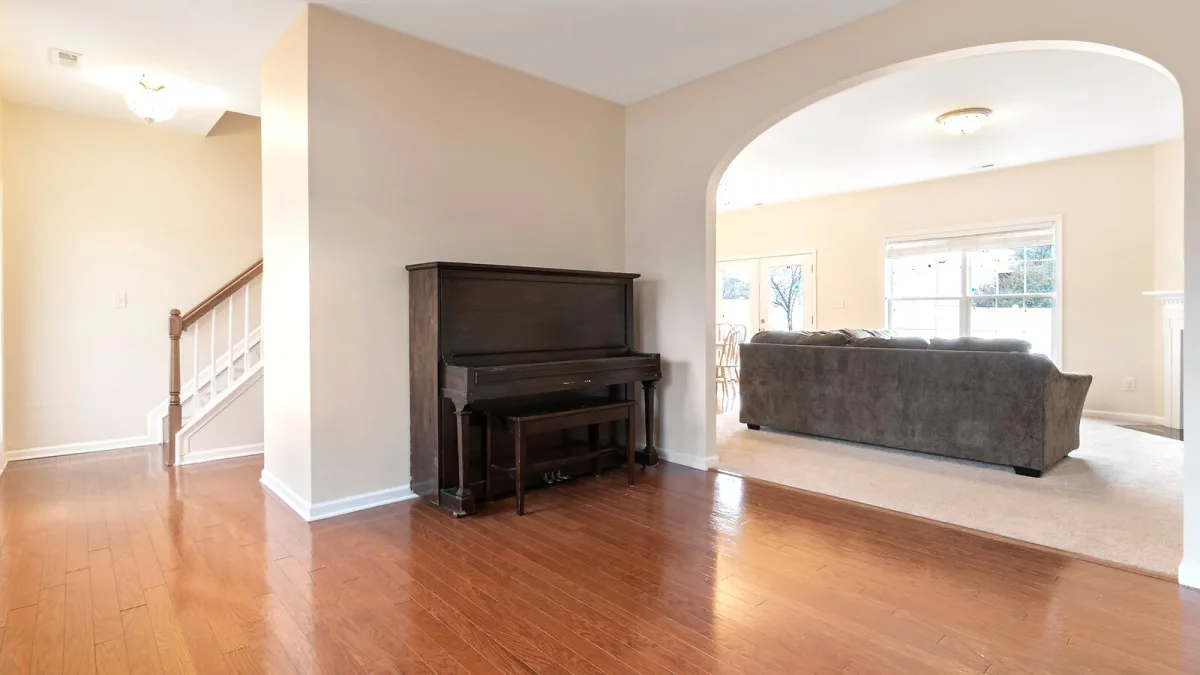
An upright piano is the instrument most people grew up with — the one in the school music room, in the living room of a grandparent's house, or tucked into the corner of a church hall. Practical, space-efficient and capable of a full, rich acoustic tone, it remains one of the best ways to learn and play the piano at home. If you're wondering what makes it different from other keyboard instruments, how it works, and what to know before choosing one, this guide covers it all.
What Is an Upright Piano?
An upright piano is an acoustic piano in which the strings and soundboard are oriented vertically rather than horizontally. This makes it far more compact than a grand piano, which requires floor space for the horizontal case and an open lid. The upright's vertical layout allows it to stand against a wall and fit comfortably in most rooms.
The mechanics are fundamentally the same as any acoustic piano: when you press a key, it triggers an action mechanism — a system of levers and felts — that drives a hammer against the strings. The vibrating strings excite the soundboard (a large wooden panel at the back of the instrument), which amplifies and projects the sound. The sustain pedal lifts the dampers away from the strings so they continue to vibrate after the key is released; the soft pedal on an upright moves the hammers closer to the strings, reducing volume.
The Main Types of Upright Piano
Not all models are the same size. Height directly affects the length of the strings and the size of the soundboard — and both influence tone and touch.
| Type | Height (approx.) | Character |
|---|---|---|
| Spinet | 36–40 inches | Very compact; limited tone; largely out of production |
| Console | 40–43 inches | Compact, furniture-friendly; decent tone for home use |
| Studio | 45–48 inches | Stronger tone; standard in schools and teaching studios |
| Full upright | 48–60 inches | Best tone of the vertical family; closest to a grand in response |
The spinet — popular from the 1930s to the 1970s — used a drop action mechanism that made it less reliable and harder to regulate than taller models. Very few manufacturers still produce them. If you see one for sale secondhand, approach with care. Console and studio uprights are the workhorses of the market today; full-size uprights offer the best performance in a vertical format.
How the Action Works
The action differs from a grand in one important way: because gravity acts vertically, the hammers must be returned to their rest position by springs rather than falling back under their own weight. This makes an upright action inherently less responsive than a grand at the extremes of touch — very fast repeated notes or very quiet playing requires more careful technique. A well-regulated action on a quality instrument is still highly expressive, but serious advanced players will generally prefer a grand once their technique demands it.
The action needs periodic regulation — adjustment of the moving parts to keep everything working consistently. A piano technician handles this, usually at the same time as a tuning. A well-regulated upright plays evenly across all 88 keys; an under-regulated one will have keys that feel inconsistent or unresponsive.
Tuning and Maintenance
Every acoustic piano goes out of tune. Temperature and humidity changes affect the tension of the steel strings, causing pitch drift. A standard recommendation is to tune it at least twice a year, ideally in spring and autumn when the heating comes on or off and the humidity shifts. A brand-new instrument will need tuning more frequently in its first year or two as the new strings stretch and settle.
Beyond tuning, the main maintenance concern is humidity. Wood swells and shrinks with changes in humidity, which affects both pitch stability and the structural integrity of the soundboard and pin block. Installing a piano humidity control system — such as those made by Dampp-Chaser — inside the piano case can significantly extend the instrument's life and reduce the frequency of tuning visits.
Hammer felt also wears over time, hardening with use and changing the tone toward brightness or harshness. A piano technician can reshape or replace the hammers through a process called voicing, restoring a warmer tone where needed.
Acoustic or Digital Piano?
The acoustic piano faces genuine competition from digital instruments and hybrid instruments. Digital models are cheaper to buy, silent (via headphones), never need tuning, and are far lighter to move. A good digital piano with a weighted, graded action can be an entirely appropriate learning tool, especially for beginners in flats or shared houses.
The acoustic upright, however, offers something a digital instrument cannot replicate: the real resonance of strings and soundboard, the natural decay of sound, and the tactile feedback of a genuine mechanical action. For anyone who plays regularly and has the space, the acoustic instrument remains the gold standard for home practice.
Ownership and Practical Care
- Weight: Even a smaller model weighs 150–250 kg. Always use professional piano movers.
- Position: Place the piano on an interior wall, away from radiators, external walls and windows. Avoid direct sunlight on the case or keys.
- Regular tuning: Budget for at least two tunings per year. A piano left untuned for years becomes harder (and more expensive) to restore to proper pitch.
- A good technician: Establish a relationship with a qualified piano tuner and technician. The Piano Tuners Association maintains a register of qualified professionals in the UK.
The Bottom Line
An upright piano is a long-term investment — in the instrument itself and in the practice and skill that it supports. Whether you're choosing one for a child just starting lessons or returning to the instrument as an adult, understanding how it works and what it needs helps you choose wisely and care for it well. When you're ready to start shopping, our complete buyer's guide takes you through every decision in detail. And if you want to know how to look after yours once you have it, the common mistakes to avoid is a great starting point.





Comments