


Modular Synthesizer article
Modular Synthesizer for Beginners: A Complete Guide
No jargon overload — a calm, step-by-step first patch and the beginner mix-ups cleared up, for anyone starting out with a modular synthesizer.
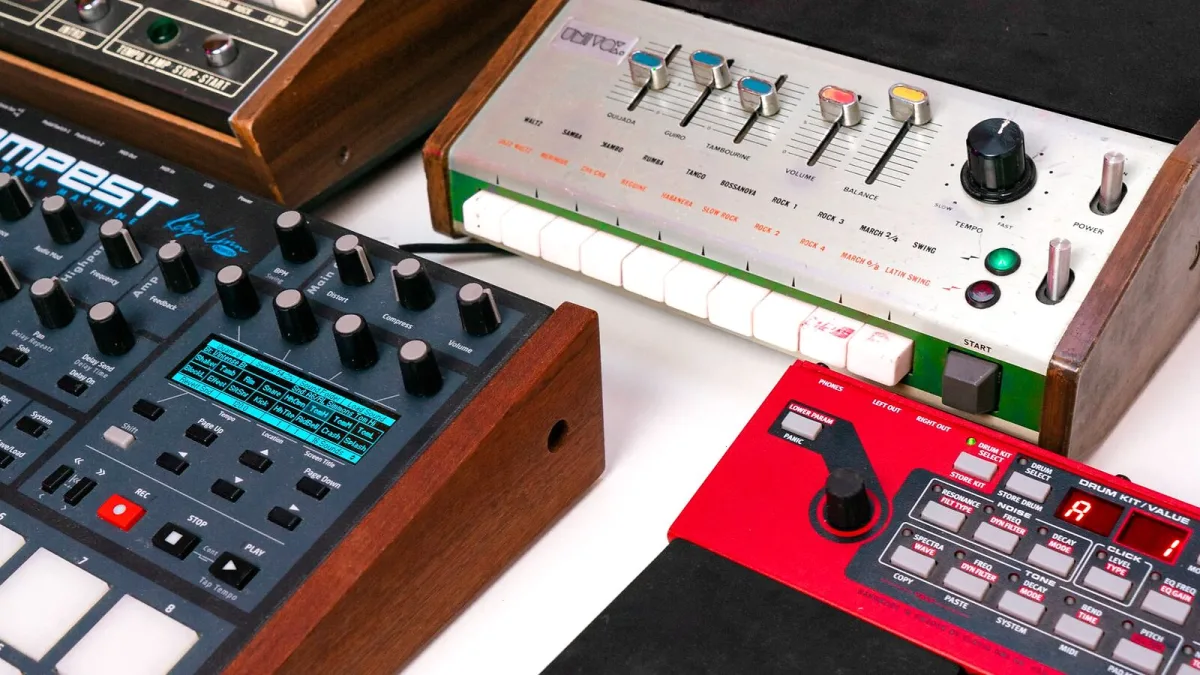
Right, so you've watched a few patching videos, your head's spinning slightly, and you're wondering if a modular synthesizer is actually approachable or just a very expensive way to make weird bleeping noises. Good news: it's genuinely learnable, and you really don't need to understand everything on day one. Let's take it from the top, no jargon overload, promise.
What You're Actually Looking At
Forget the wall of knobs for a second. Every patch is really just a handful of jobs: something to make a sound, something to shape it, something to control how loud it is, and something to make all of that change over time. Everything else — the sequencers, the weird modulation sources, the effects — builds on that same basic idea once you've got it.
Your First Patch, Step by Step
- Patch an oscillator straight to your output and listen to the raw waveform.
- Add a filter between the oscillator and the output, and slowly turn the cutoff knob.
- Insert a VCA after the filter, and patch an envelope generator to control it.
- Trigger the envelope manually or from a simple sequencer, and listen to the shape it creates.
- Add a slow LFO into the filter's cutoff input and hear the sound start to move on its own.
That's genuinely most of what a huge amount of modular synthesizer music is built from — the rest is just variations, additions and happy accidents on top of that same basic idea.
Common Beginner Mix-Ups, Cleared Up
"Isn't a VCA just a volume knob?" Sort of, but it's doing more — it's also how you shape modulation depth and control articulation, which matters far more once you start building real patches. "Do I need a keyboard?" Not necessarily; a sequencer, a MIDI-to-CV module, or even a simple manual trigger can all get a patch moving without one. "Why does the same patch sound different every time?" Because it probably is different — small changes in an LFO, a filter setting or an unpatched module can shift the result more than you'd expect, and that's part of the appeal rather than a fault.
Learning to Patch Without Overwhelming Yourself
Change one thing at a time rather than five, and actually listen to what each single change does before moving to the next one. It's tempting to chase a complex sound immediately, but a simple, well-understood patch teaches you more than an impressive-sounding one you can't explain afterwards. Keep a few working patches written down or photographed too — it's remarkably easy to forget exactly how you got a sound you liked.
Your First Modular Synthesizer Doesn't Need Every Module Yet
A small system with an oscillator, a filter, a VCA, an envelope and one modulation source will keep you genuinely busy for weeks. Resist buying the exotic granular processor or the complicated sequencer before that basic voice feels comfortable — those modules make far more sense once you understand exactly what you're feeding into them.
The Bottom Line
A modular synthesizer rewards patience far more than talent. Start small, patch one thing at a time, and let your curiosity — not a shopping list — decide what you add next. Once the basics click, our complete guide fills in the wider picture, and when you're ready to expand your system, see our buyer's guide and the best options for the money.




Comments