


Behringer Synthesizer article
Behringer Synthesizer for Beginners: A Complete Guide
That wall of knobs looks intimidating, but a Behringer synthesizer is far friendlier to learn on than it looks. Here is the gentle way to start.
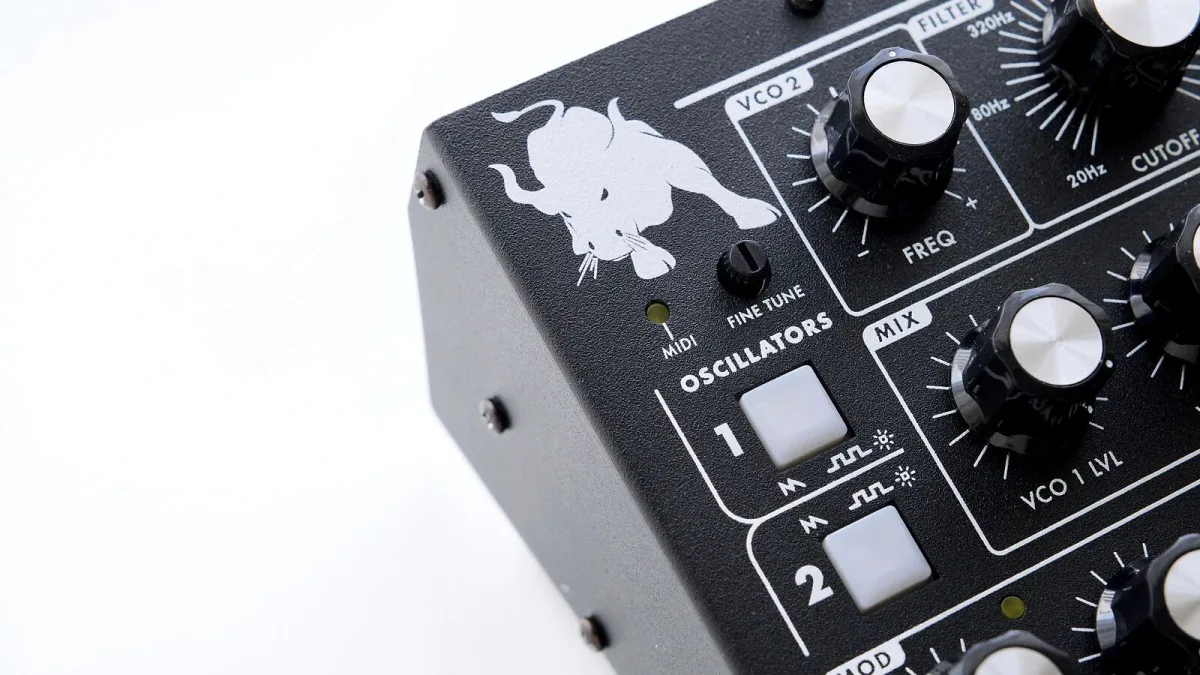
Every synth-curious beginner I talk to asks the same nervous question: is this going to be way too complicated for me? A Behringer synthesizer looks intimidating with all those knobs, but the actual learning curve is a lot gentler than the front panel suggests. Here's the version I wish someone had given me when I started.
You Don't Need to Understand Everything on Day One
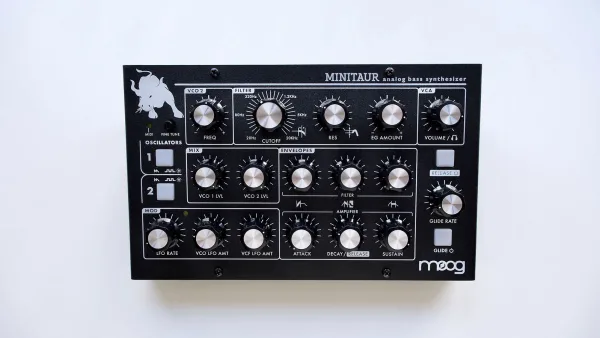
A synth front panel looks like a wall of controls, but most of them are variations on four ideas: something that makes a sound (the oscillator), something that shapes its tone (the filter), something that controls how loud it is over time (the envelope), and something that adds movement (modulation, usually an LFO). Learn those four jobs and the rest of the knobs are just different flavours of the same handful of ingredients.
Start on the Simplest Instrument You Can
Resist the pull towards the most feature-packed model in the range. A simple monophonic Behringer synthesizer — something like the Model D or the MS-1 — plays one note at a time and has a short, obvious signal path from oscillator to filter to output. That simplicity is exactly what makes it a genuinely good teacher: nothing complicated is hiding behind menus, so cause and effect are easy to hear.
Turning It On for the First Time: What to Actually Do
- Set every knob to a neutral, middle position and turn any effects off completely.
- Play a single note and listen to the raw oscillator with the filter fully open.
- Slowly close the filter cutoff and listen to how the tone darkens.
- Bring the resonance up gently and notice how it emphasises the frequency around the cutoff point.
- Adjust the envelope's attack and release and hear how the note's shape changes over time.
- Only once that feels familiar, bring in one modulation source, like an LFO on pitch for gentle vibrato.
Doing this slowly, one control at a time, teaches you far more than randomly twisting knobs until something sounds interesting.
Common Beginner Worries, Answered Honestly
- "What if I break it by pressing the wrong thing?" You genuinely can't. Every setting can be changed back, and there's no combination of knob positions that damages the instrument.
- "Do I need to understand music theory first?" No — plenty of great synth sound design is about texture and movement rather than melody or chords.
- "Is analog synthesis harder than a digital keyboard?" Different, not harder. You're shaping raw sound rather than picking from presets, which is actually more forgiving once you know the four basic building blocks.
Don't Feel Pressured Into the Fancier Models
It's easy to feel like the polyphonic or semi-modular instruments further up the range are the "proper" way to learn, but they're honestly better suited to once you're already comfortable. A patchable, semi-modular Behringer synthesizer or a full polysynth adds real depth, but it also adds decisions a beginner doesn't need yet. Give yourself permission to start simple.
How Long It Actually Takes to Feel Comfortable
Give yourself a few short sessions rather than one long one. Twenty focused minutes spent purely on the oscillator, filter and envelope, a few evenings in a row, will get you further than a single exhausted hour trying to absorb everything at once. Most beginners find the front panel stops feeling like a wall of unfamiliar knobs within a week or two of that kind of casual, regular practice — it's genuinely a fast instrument to get comfortable with once you stop expecting to understand it instantly.
It also helps to keep a note of settings you like as you go, even something as simple as a photo of the panel on your phone. Early on it's easy to stumble onto a sound you love and then lose it two knob-turns later, and having a record to return to keeps the learning process encouraging rather than frustrating.
Where to Go Once the Basics Click
Once oscillator, filter, envelope and modulation feel like old friends rather than a wall of knobs, you'll be ready to explore the wider range properly. Our Behringer synthesizer overview lays out the different synthesis types and model families, and the complete buyer's guide is there for when you're ready to think about your next purchase. If budget is the main question right now, our best-for-the-money guide breaks things down by price and skill level.
The Bottom Line
A Behringer synthesizer is far more approachable than its front panel makes it look, as long as you start simple and build up one control at a time. Give yourself permission to not understand everything immediately — that's normal, and it passes faster than you'd expect once you've actually spent an evening turning knobs and listening.



Comments