


Behringer Synthesizer article
Behringer Synthesizer Explained: Features, Types and Tips
From Minimoog-flavoured monosynths to Oberheim-inspired polysynths, the Behringer catalogue is a maze. Here is how the types and the history fit together.
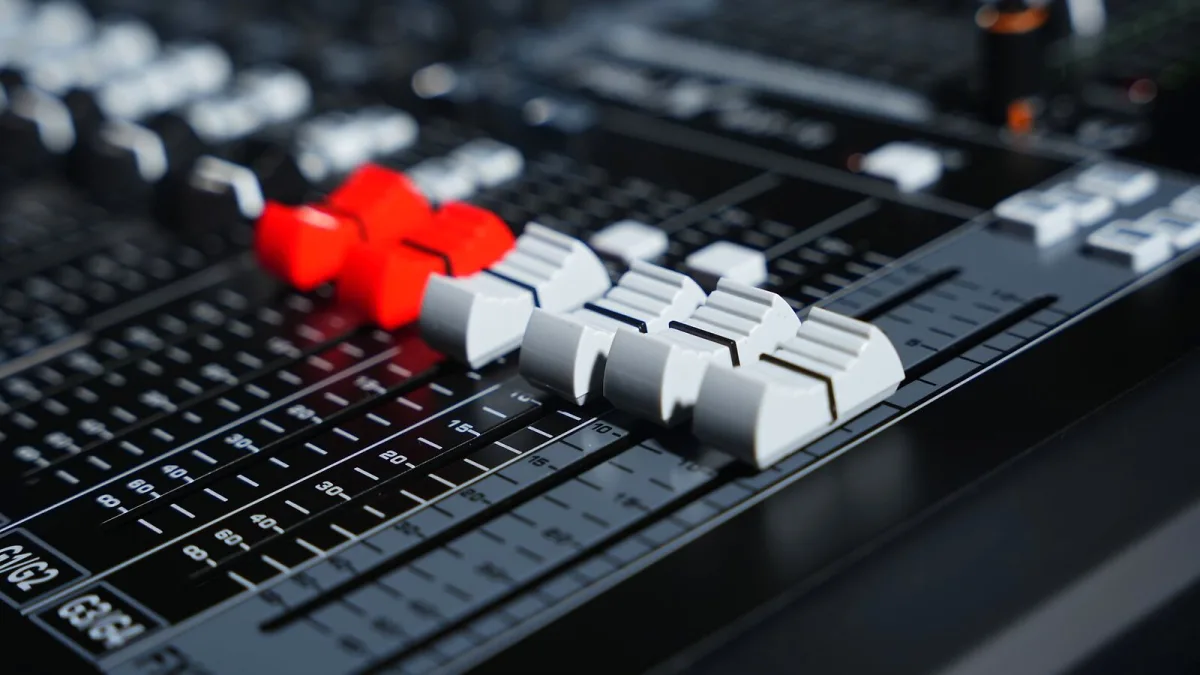
I'll be honest, the first time I properly dug into the Behringer catalogue it felt a bit like flicking through crates at a record fair where every sleeve is a reissue of something you already love. There's a Minimoog in there. A Roland SH-101. An Oberheim. A Sequential. Every classic synth architecture you've read about, rebuilt and sold at a fraction of the price. Here's what's actually going on, and how to make sense of the range.
The Basic Idea Behind a Behringer Synthesizer
Behringer's whole strategy rests on two things: recreating circuits and workflows from historically important synthesizers, then making them affordable and easy to get hold of. The Model D leans on Minimoog architecture, the Pro-1 nods to the Sequential Pro-One, the MS-1 borrows from the Roland SH-101, and the UB-Xa draws on Oberheim's OB-Xa. None of these are official collaborations with the original makers — they're Behringer's own takes on well-loved designs, and that's exactly where some of the industry controversy around them comes from.
It's worth understanding early that "analog" doesn't automatically mean everything inside is analog. Plenty of Behringer gear pairs genuinely analog oscillators and filters with digital control, patch memory and effects — the DeepMind range is the clearest example of that split.
The Main Types You'll Run Into
Once you start browsing, you'll notice a Behringer synthesizer generally falls into one of a handful of families, and knowing which is which saves a lot of confusion.
- Monophonic analog synths (Model D, MS-1, Pro-1, Cat, WASP Deluxe) — one note at a time, brilliant for bass and leads.
- Paraphonic instruments (Poly D) — multiple oscillators sharing one filter and amp stage, giving a distinctive, less-separated chord sound than true polyphony.
- Analog polysynths (DeepMind 6/12, UB-Xa) — proper independent voices for chords, pads and layered parts.
- Semi-modular synths (Neutron, Crave, 2600) — no patch cables required to make a sound, but plenty of patch points if you want to dig in.
- Eurorack modules — individual building blocks for anyone assembling their own modular rig.
- Drum and percussion synths (Edge, the RD-series) — rhythm-focused instruments rather than melodic ones.
What's Inside: Oscillators, Filters and Signal Flow
Strip any of these back to basics and the signal generally moves the same way: an oscillator generates a waveform, a mixer blends multiple oscillators if there's more than one, a filter shapes the tone, and an amplifier controls how loud it is over time. Envelopes and LFOs modulate those stages to add movement — a filter envelope opening up on a bass note, an LFO wobbling the pitch for vibrato, that sort of thing. Learn that chain on any one Behringer synthesizer and you can basically read the front panel of most of the others.
Why People Rate Them (and Why Some Don't)
| What people like | What people criticise |
|---|---|
| Much lower prices than vintage originals | Inconsistent quality control between units or batches |
| Familiar, historically-inspired layouts | Keyboards and controls that can feel less refined |
| Broad MIDI, USB, CV and Eurorack compatibility | Tuning or calibration quirks on some analog models |
| Big feature sets in compact instruments | Documentation that's thinner than premium manufacturers offer |
| Access to classic synthesis without servicing a 50-year-old original | Ongoing debate about the ethics of cloning historic designs |
None of this makes the range good or bad as a blanket rule — it just means every individual Behringer synthesizer deserves its own look rather than a blanket assumption either way.
A Word on the Cloning Debate
You don't have to dig far into synth forums before someone brings up the ethics of Behringer's approach. The company builds its own circuits rather than licensing the originals, and that's earned it genuine criticism from parts of the industry over industrial design, component choices and the general fairness of profiting so directly from someone else's decades-old work. It's worth knowing that background exists, but it's also a separate question from whether any individual instrument is actually good — plenty of clone-inspired gear turns out to be a genuinely capable synth in its own right, judged on what it does rather than what it's copying.
One thing worth flagging with any newer or recently announced model: Behringer previews and lists products well ahead of full retail availability fairly often, so a prototype photo or trade-show appearance is never the same thing as something you can actually buy today. Always check current stock and reviews of the real shipping unit before getting too attached to a spec sheet.
Finding Your Own Way Into the Range
Where you actually start depends a lot on budget and what you want to do with it, and that's a bigger conversation than fits neatly here. If you're weighing up your very first synth, our beginner's guide breaks the range down without assuming prior synth knowledge. If you already know roughly what you want and need the checklist for comparing specific models, the complete buyer's guide covers voice counts, connectivity and build quality in depth, and our best-for-the-money breakdown lines the range up by price tier. And once you've got one on your desk, our piece on common mistakes to avoid will save you some frustration.
The Bottom Line
A Behringer synthesizer is rarely trying to be an entirely original idea — it's trying to put a well-loved piece of synthesis history within reach of people who'd never otherwise own one. Whether that's the Minimoog-flavoured Model D, the Oberheim-inspired UB-Xa or a patchable Neutron, understanding which historical lineage and which synthesis type you're actually buying makes the whole confusing range click into place a lot faster.



Comments