


Sequential article
Sequential Explained: Features, Types and Tips
From Dave Smith's first sequencers to today's Prophet-6, OB-6 and Fourm — here's what Sequential actually is, and what sets its instruments apart.
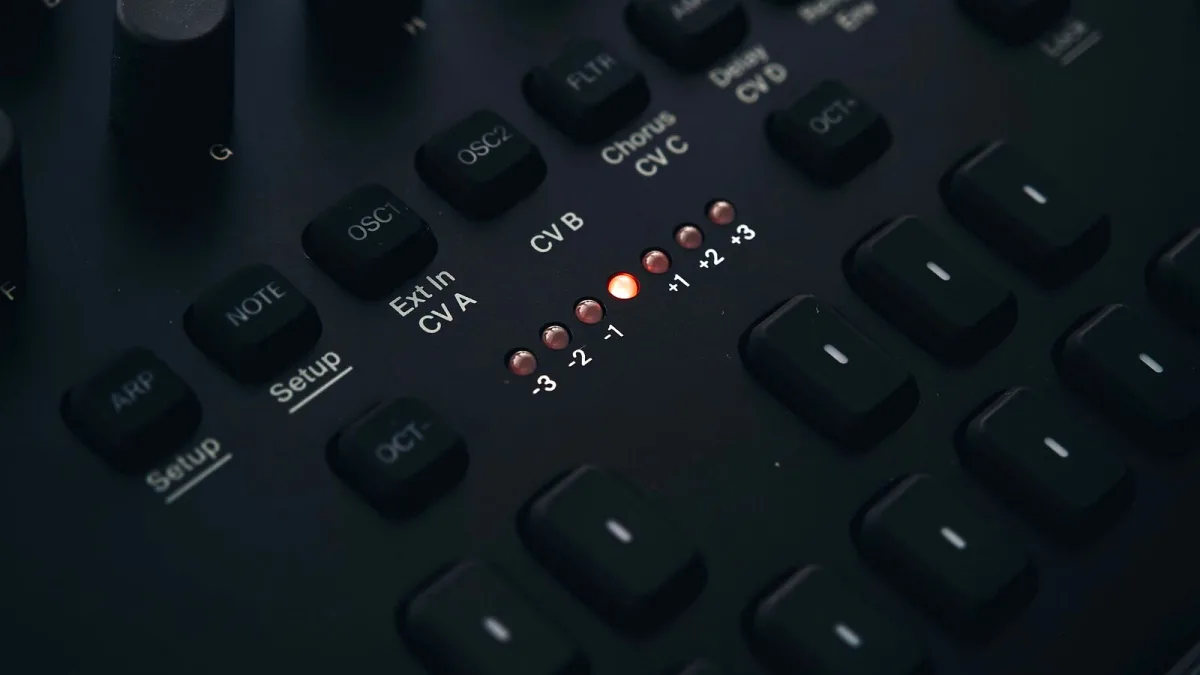
Sequential is one of the most respected names in modern synthesis — the American instrument maker whose lineage runs in an almost unbroken line back to the earliest programmable synthesizers of the 1970s. If you have seen the word “Sequential” on a synth’s control panel and wondered what it actually means for the sound under your fingers, this guide walks through the brand’s history, its current range, and the ideas that make its sequencers worth learning properly.
Where the Sequential Name Comes From
The company began life as Sequential Circuits, founded by Dave Smith in California in 1974. Fittingly for the name, its very first products were sequencers rather than synthesizers — the Model 600, an analog sequencer, and the Model 800, a digital one.
Sequential Circuits found its true voice in 1978 with the Prophet-5, a landmark instrument that combined polyphony, patch memory and hands-on control in a way few synths of the era could match. It helped define the sound of new wave, pop and electronic music through the late 1970s and 1980s, and Dave Smith himself went on to play a central role in developing MIDI, the standard that still lets every synth, sequencer and computer in a studio talk to one another.
Sequential Circuits closed in the 1980s, but Dave Smith later returned to instrument building as Dave Smith Instruments, reviving the Prophet name, before the company eventually took back the Sequential brand itself. That history is worth knowing, because it explains why current instruments feel like an evolution rather than a reinvention: the Prophet-6, Prophet Rev2 and their siblings are direct descendants of that 1978 design philosophy, brought up to date.
The Modern Sequential Range at a Glance
Today’s catalogue splits fairly neatly into a few families, each suited to a different way of working.
| Model | Type | What stands out |
|---|---|---|
| Prophet-6 | Analog polyphonic | Six-voice classic Prophet architecture with onboard effects |
| Prophet Rev2 | Analog polyphonic | 8- or 16-voice options, two-layer splits and stacks |
| OB-6 | Analog polyphonic | Voice architecture designed with Tom Oberheim |
| Take 5 | Hybrid analog | Compact five-voice design with a 64-step sequencer |
| Pro 2 | Hybrid mono/paraphonic | Deep multitrack parameter sequencing |
| Pro 3 | Hybrid mono/paraphonic | Analog oscillators plus a digital wavetable oscillator |
| Fourm | Modern performance | Polyphonic aftertouch keyboard with a built-in step sequencer |
Analog, Hybrid and Oberheim-Inspired: Three Families
Analog Polyphonic Instruments
The Prophet-6 and Prophet Rev2 use analog oscillators, filters and amplifiers throughout the sound path, with digital control layered on top for memory, MIDI and effects. This is the sound most players associate with the Prophet name: warm, slightly unstable in the most musical sense, and immediately recognisable.
Hybrid Analog and Digital Instruments
The Pro 3 pairs two analog oscillators with a single digital oscillator carrying 32 wavetables, each holding sixteen individual waves, so a patch can move between classic analog tone and more modern digital texture without switching instruments. The Pro 2 takes a related approach, leaning even harder into sequencing than into wavetable variety.
Oberheim-Inspired Design
The OB-6 was developed jointly with synth pioneer Tom Oberheim and borrows the voice architecture of his classic SEM-based designs, giving it a noticeably different character from the Prophet-6 despite sharing much of the same chassis and control layout.
What Makes Its Sequencers Different
It is worth being clear about a distinction that trips up a lot of newcomers. An arpeggiator automatically turns a held chord into a repeating pattern of notes; a step sequencer, by contrast, stores a specific pattern you have programmed yourself — particular pitches, rests, ties and, on the more advanced models, changes to the sound itself as the pattern plays.
Most current models offer a polyphonic step sequencer of up to 64 steps, meaning each step can hold more than one note — useful for chord stabs, ostinatos and bass lines that need to breathe rather than just repeat. The Pro 2 and Pro 3 go further with multitrack sequencing, where separate tracks can control filter cutoff, oscillator pitch or other parameters independently of the notes being played, and the Prophet Rev2 can run its sequencer purely as a modulation source in gated mode.
A Couple of Habits Worth Building Early
Two habits make a real difference once you are programming your own patterns. First, start with eight or sixteen steps rather than the full 64 — it is far easier to hear how pitch, rhythm and tone relate to each other in a short loop before you extend it. Second, use rests and ties on purpose: a pattern where every step sounds for exactly the same length quickly starts to feel mechanical, while a little space and the odd tied note brings real phrasing into what would otherwise be a stiff, repetitive loop.
Where to Go From Here
If you are weighing up which model actually suits you, the complete buyer’s guide goes through the specs worth checking before you commit, and if you are just getting started on the instrument altogether, the beginner’s guide is a gentler way in. Once you know the basics, it is worth reading the common mistakes to avoid so you do not have to learn them the hard way, and the roundup of the best options for the money can help narrow the field by budget and use case.
The Bottom Line
The current range covers genuinely wide ground, from focused analog polyphony to hybrid wavetable design and Oberheim-flavoured tone, all built on sequencing tools that go well beyond a basic arpeggiator. Understanding that lineage, and the differences between the families, makes it far easier to know which Sequential instrument, if any, deserves a place in your setup.



Comments