


Keytar roundup
The Best Keytars for the Money
Rather than crown one winner, here's how the keytar field actually breaks down by the kind of player you are — and which category to shop in.
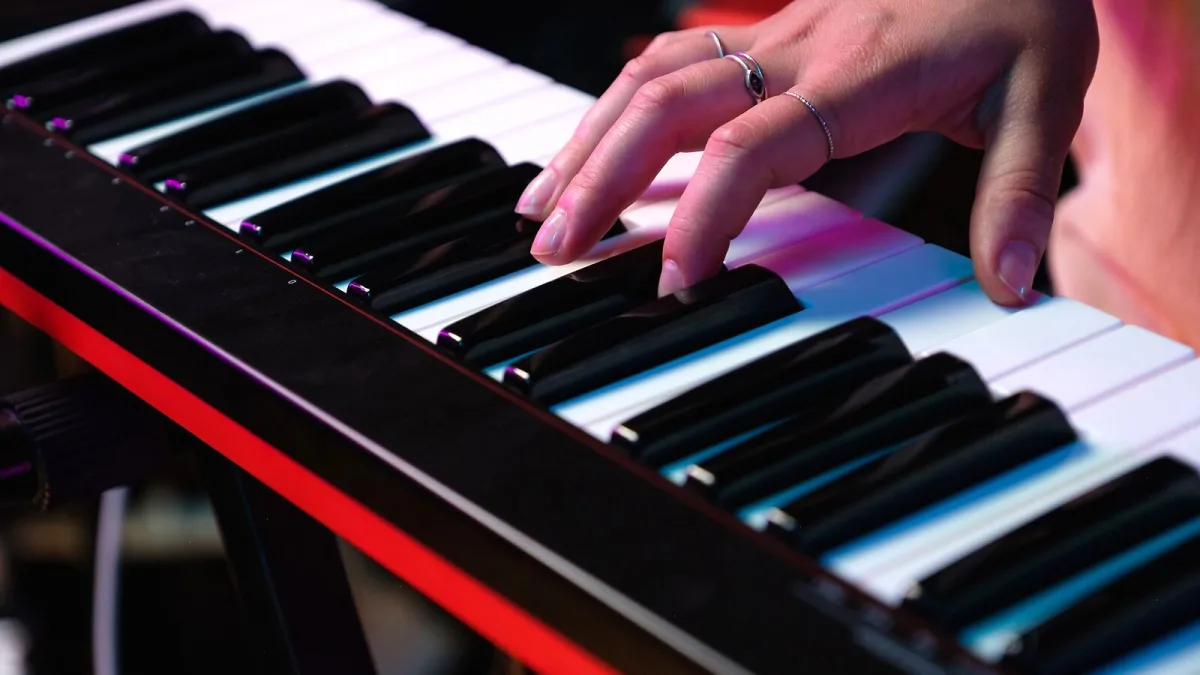
"Best" is a slippery word with an instrument this personal — the right keytar for a wedding-band keyboardist is nowhere near the right keytar for a bedroom synth enthusiast. Rather than crown one winner, here's how the field actually breaks down by the kind of player you are, so you can match yourself to a category rather than a marketing claim.
Best for Total Simplicity: A Self-Contained Keytar
If you want to switch something on and have it sound like a finished instrument, a self-contained design is your category. Korg's RK-100S 2 is a good example of this approach done well: a 37-key velocity-sensitive keyboard with its own internal synthesis engine, two ribbon controllers, a vocoder, and around eight hours of battery life from a set of alkaline cells. Nothing else to plug in, nothing else to configure mid-set.
Best for Serious Onboard Power: A Performance Keytar
At the more elaborate end sits Roland's AX-Edge: 49 velocity-sensitive keys, channel aftertouch, four simultaneous parts, a vocoder with microphone input, and more than 500 preset tones across 320 programs. This is the category for a player who wants one instrument doing a great deal of work on its own, with expressive controllers to match.
Best for Maximum Mobility: A 37-Key Model
Fewer keys means less weight and an easier instrument to swing, tilt and move with through an energetic set. If your priority is genuinely physical performance — striding the stage, pointing the neck at the crowd, kneeling for a solo — a lighter, 37-key design earns its keep in ways a spec sheet doesn't capture.
Best for Fuller Arrangements: A 49-Key Model
If you're covering real chord voicings and melody lines rather than short lead licks, the extra range of a 49-key layout is worth the modest weight penalty. It's the more musically flexible choice for anyone playing full band arrangements rather than short featured spots.
Best for Flexibility: A MIDI-Controller Design
Already own a favourite software synth or hardware sound module? A MIDI-controller keytar sends the performance data and leaves the sound-making to whatever you already trust. It's typically lighter than a self-contained instrument, though it does mean carrying — and trusting — an extra piece of the chain on stage.
Best for Vocal Showmanship: A Vocoder-Equipped Model
Both the RK-100S 2 and the AX-Edge include a vocoder with microphone input, letting you layer processed vocals over your playing. If robotic, synth-pop-style vocal effects are part of your act, this feature narrows the field considerably and is worth prioritising over almost everything else on the spec sheet.
Best for History Buffs: The Moog Liberation
You won't be buying a Moog Liberation new, but no discussion of the format is complete without it. Introduced around 1980–81, it's widely credited as one of the earliest commercially successful keytars, and it set the template — strap-mounted keyboard, controls near the left hand — that every modern keytar still follows. For a serious collector, an original remains a genuinely interesting piece of instrument history, quite apart from anything you'd actually gig with.
Best for Home Studio Use: A Controller You Already Trust
If most of your playing happens through headphones and a DAW rather than on a stage, the physical instrument matters less than what it's plugged into. A lighter, keytar-shaped MIDI controller paired with software synths you already know gives you the mobility and stage-ready feel without needing an onboard sound engine at all — useful for writing and demoing parts standing up, then swapping in whatever plugin suits the finished track.
How to Use This List
Match yourself to a category first — simplicity, onboard power, mobility, range, flexibility or showmanship — before you compare individual specifications. It's tempting to chase the longest feature list, but the categories above exist precisely because those features suit genuinely different playing situations rather than stacking up into one universally "best" instrument. Our buyer's guide walks through exactly those specifications in more depth, our overview explains how the instrument actually works, and if this is your first time shopping for one, our beginner's guide is the gentler starting point.
The Bottom Line
There's no single best keytar, only the best one for how you actually intend to play. Decide which category above describes you, and let that — not a spec sheet or a review score — be your starting point. Before you buy, it's worth reading our list of common mistakes to avoid, since several of them happen at the buying stage rather than on stage.





Comments