


Hammond Organ article
Hammond Organ Explained: Features, Types and Tips
Tonewheels, drawbars and that unmistakable swirl — here is what makes the instrument tick, in plain, friendly terms.
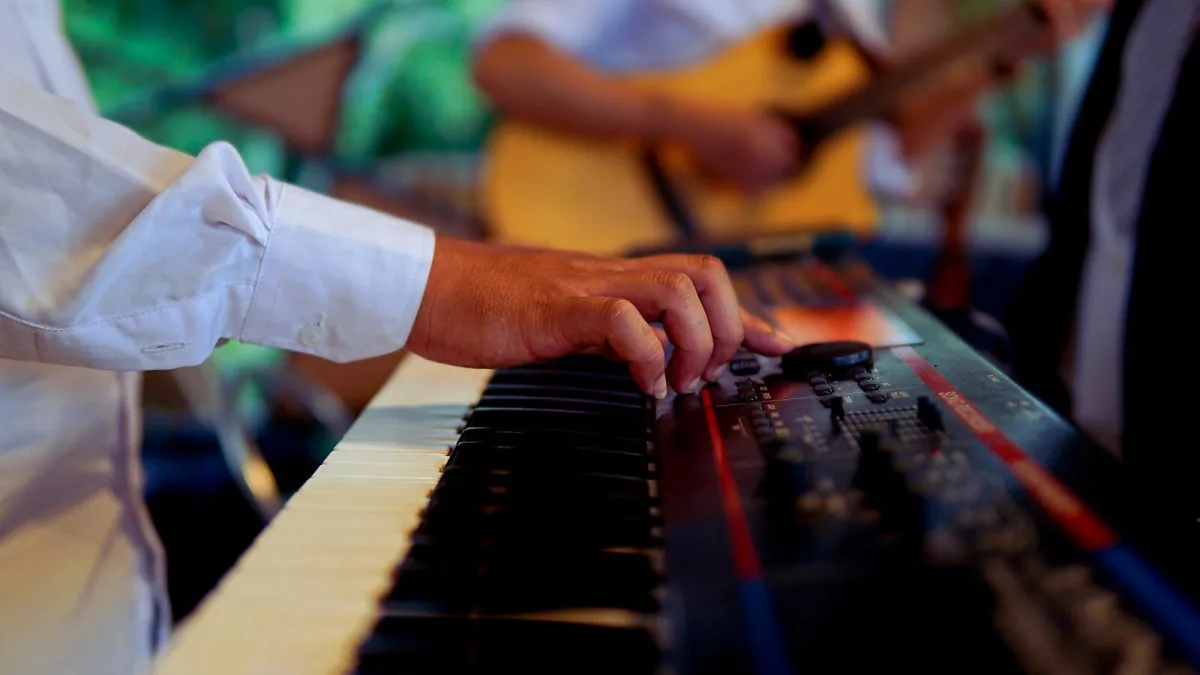
If you have ever heard a swirling, singing organ tone rise out of a gospel choir, a jazz trio or a classic rock record, there is a good chance you were listening to a Hammond organ. It is one of the few instruments that sounds instantly recognisable within a couple of notes. This guide walks you gently through what it actually is, how it makes that sound, the models you are likely to come across, and where the instrument fits in musical history — without assuming you already know your drawbars from your Leslie.
What Is a Hammond Organ, Exactly?
A Hammond organ is an electro-mechanical instrument invented by Laurens Hammond, with engineering help from John M. Hanert, and first built in 1935. Unlike a church pipe organ, it does not push air through pipes to make a note. Instead, it generates its tone electrically, using spinning metal "tonewheels" sat close to small magnetic pickups. As each wheel turns, it creates a tiny electrical signal, and those signals are mixed together to build the instrument's voice.
It was originally sold as a smaller, cheaper alternative to a pipe organ for churches and theatres. Musicians in gospel and jazz circles had other ideas, and over the following decades they turned it into one of the most expressive instruments in popular music.
How the Sound Is Made: Tonewheels and Drawbars
The Tonewheel Engine
Inside a traditional tonewheel instrument sits a bank of tonewheels — commonly said to number around ninety-one, though the exact figure varies a little by model. An electric motor spins them continuously. Each wheel, paired with its pickup, produces one pitch or harmonic. Nothing vibrates acoustically the way a piano string or guitar string does; it is closer to a very early form of electronic sound generation, decades before synthesisers became common.
Drawbars in Plain English
Every organ manual (that is simply the technical name for a keyboard on an organ) has a row of drawbars — usually nine per manual. Pull one out and you add more of that particular harmonic to the sound; push it in and you take it away. Each drawbar has eight positions, so players can build their own tone from scratch rather than picking a fixed preset. The numbers printed on them, such as 16′ or 8′, are inherited from old pipe-organ language describing pitch length, but you do not need to think about pipes at all to use them sensibly.
The Leslie Speaker: The Organ's Other Half
Much of what people think of as "the Hammond sound" actually comes from a separate cabinet: the Leslie speaker, developed by Donald Leslie. Inside is a rotating treble horn and a rotating bass drum, spun by a motor. As they turn, the sound moves around the room, creating a rich, swirling wobble that is quite unlike any studio effects pedal. Slow it down and you get a gentle shimmer; speed it up and the tone becomes urgent and vocal. Classic models such as the Leslie 122, 145 and 147 are still spoken of fondly by organ players today.
Classic Models You'll Come Across
| Model | What It Is | Known For |
|---|---|---|
| B-3 | Full-size tonewheel console | The most famous model, favoured in jazz, gospel and rock |
| C-3 | Same insides as the B-3, different cabinet | A more furniture-like case for churches and homes |
| A-100 series | Console organ with built-in speaker | Self-contained sound without a separate amplifier |
| M-series ("spinet") | Smaller, more compact model | Popular in homes and smaller venues |
| XK-5 / SK Pro / SKX Pro | Modern digital instruments | Recreate that classic tone without the mechanical parts |
Where You'll Hear a Hammond Organ
- Gospel and church music — where the instrument first found its true voice
- Jazz — especially the organ trio format, built around organ, guitar and drums
- Blues and soul — adding warmth behind a vocalist or horn section
- Rock and progressive rock — often pushed hard through a driven amplifier for a heavier tone
- Reggae and ska — using the organ's bubbling, rhythmic side
Few instruments cross so many genres so comfortably, which is part of why it has never really gone away.
Vintage or Digital? A Quick Word
A genuine vintage tonewheel Hammond organ has a mechanical character that many players still love, but it is heavy, needs occasional servicing and cannot simply be unplugged and carried upstairs. Modern digital instruments model that same behaviour — including the Leslie effect — in a much lighter, more travel-friendly package. Neither is "wrong"; they simply suit different players and different stages. If you are weighing that decision up seriously, our complete Hammond organ buying guide goes through it feature by feature, and our round-up of the best Hammond organs for the money looks at what different budgets tend to get you.
The Bottom Line
A Hammond organ is, at heart, a simple idea executed brilliantly: spinning wheels, magnetic pickups and a set of drawbars that let the player mix their own tone by hand. Add a Leslie speaker's rotating swirl, and you have an instrument capable of gospel warmth, jazz sophistication and rock power, often within the same song. If you are just starting out on one, our friendly beginner's guide is the natural next step, and once you have your hands on one, it is worth reading our piece on common mistakes newcomers make before you settle into bad habits.



Comments