


Stentor Violin article
The Ultimate Guide to Stentor Violins
Stentor has been the go-to student violin brand in UK schools and music centres for over a century. Here's how the range works and what to know before you buy.
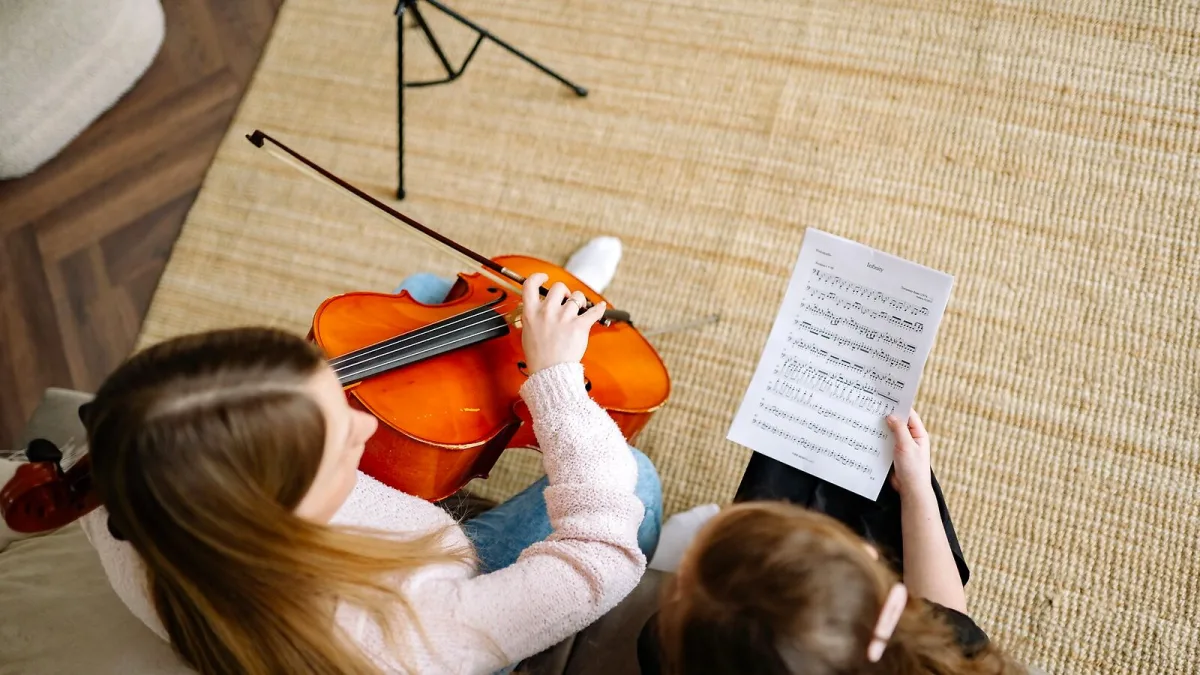
The Stentor violin is one of the most recognisable names in student string instruments in the United Kingdom, and for good reason: the company has been making accessible violins for learners since 1895, and its catalogue covers entry-level instruments all the way through to models capable of serious intermediate study. For a teacher, parent or adult beginner trying to navigate the market without spending conservatoire money on an instrument that may not be played in six months, understanding what Stentor actually makes — and what distinguishes one model from another — is genuinely useful.
Who Makes Stentor Instruments
Stentor Music Company is a British firm with roots going back to the late nineteenth century. The business is now headquartered in the UK and produces its instruments under close quality supervision, though manufacturing is carried out in factories that the company works with closely. The brand has built its reputation primarily in the student and early-intermediate market, where reliability, value and consistency matter more than the subtleties of tonal character that differentiate professional instruments.
The company does not position itself as a maker of concert violins. Its purpose is to provide instruments that are set up correctly, stay in tune, and reward practice — and at that it has an excellent track record. Teachers across UK schools and music centres have recommended the brand for decades, which counts for a great deal in a market where poorly made instruments can genuinely impede a child's progress.
The Model Range at a Glance
The Stentor violin range is organised into several distinct tiers, each aimed at a different level of player.
Student I
The Student I is the entry-level model — the most affordable instrument in the range and the one most often provided as an introductory outfit for young beginners. It includes a bow, case and rosin. The construction uses laminated tonewoods throughout, which reduces cost and improves durability in the hands of young players. The trade-off is tonal warmth: laminate construction doesn't produce the resonance of solid wood, and this is audible. For a child in their first year of lessons, this is rarely a meaningful limitation. For a player progressing beyond basics, it becomes one.
Student II
The Student II is a step up in construction quality. The top — the front face of the instrument — is solid spruce rather than laminate, and the fitting quality is improved. This makes a difference to the sound. The Student II is the model most commonly recommended for beginners who are likely to continue past the initial few months, as the better tonal response encourages the player and gives the teacher more to work with. It remains an affordable instrument but sounds noticeably better than the Student I in most playing situations.
Graduate and Conservatoire
The Graduate and Conservatoire models represent further steps in quality — better tonewoods, improved fitting, and the kind of tonal development that supports a player moving through grades and into more demanding repertoire. The Conservatoire in particular is well regarded by teachers as a capable intermediate instrument, with a sound that competes with instruments costing considerably more from other brands.
Messina and Higher-End Models
At the upper end of the Stentor violin catalogue sit models like the Messina, designed for more advanced intermediate players. These instruments use solid tonewoods throughout and better quality fittings, producing instruments that can genuinely support grade work at ABRSM Grade 5 and above.
Fractional Sizes
One of Stentor's particular strengths is its fractional size range. Children begin learning on smaller instruments — 1/4, 1/2, 3/4 sizes — before moving to a full 4/4 instrument as they grow. Stentor produces the full range of fractional sizes, and the consistent quality across sizes makes it practical to move a child through sizes within the same brand, with the same playing characteristics maintained throughout. This consistency is genuinely valued by teachers and parents alike.
The available sizes typically include 4/4 (full), 3/4, 1/2, 1/4, 1/8, 1/10 and 1/16, though not every model is available in every size. The Student I and Student II cover the widest range of fractional sizes.
What Comes with a Stentor Outfit
Most Stentor violins are sold as outfits — that is, as a complete package including the violin itself, a brazilwood bow (or better), a lightweight case, and a piece of rosin. For a beginner, this is the practical starting point: everything needed is included, and the components are matched appropriately. The bow quality varies by model tier: the Student I bow is basic, as expected; the higher-end models include better quality bows that are worth using rather than replacing immediately.
Beginners and parents should be aware that Stentor violin outfits are set up to be playable out of the box, but may benefit from a professional set-up — adjustment of the bridge height, string action and tuning — before sustained use. A good music shop will offer this service, and it can make a significant difference to playability.
How Stentor Compares to Alternatives
In the student violin market, a Stentor violin competes primarily with brands such as Primavera, Antoni and various own-brand school instruments. Against these, Stentor's track record, consistent quality control and teacher endorsement give it a genuine advantage. It is not the cheapest option in absolute terms, but it tends to be the best value at each price point within its range.
At the upper end of the Stentor catalogue — Graduate, Conservatoire, Messina — the competition expands to include more specialist intermediate brands. At that level, players with specific tonal preferences may find that alternatives suit them better. But for the majority of learners from beginner through early intermediate, the Stentor violin range covers the needs of most players well.
For detail on which specific model fits which budget and situation, the buyer's guide covers the decision in depth. For the best value options within the range, the best for the money article has the recommendations. And for those starting from the very beginning, the beginner's guide walks through what to expect.






Comments