


Stentor Violin article
Common Stentor Violin Mistakes to Avoid
Most beginner violin problems are predictable and preventable. Here are the mistakes that come up most often and what to do about them.
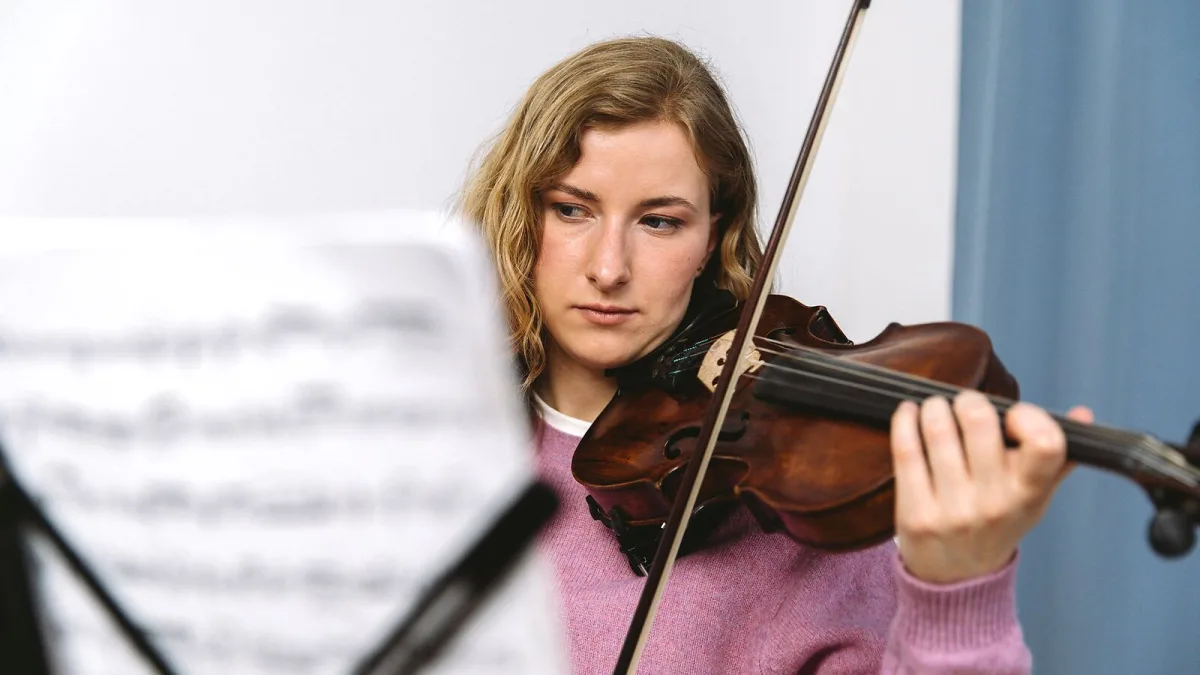
Most of the problems that stop beginners progressing on the violin are not mysterious. They are the same set of mistakes, made by the same kinds of people, for entirely understandable reasons. The good news is that being aware of them in advance makes them easier to avoid — or, if already embedded, to identify and address. These are the ones that come up most often with new players starting on a student instrument.
Buying the Wrong Model for the Stage
The first and most consequential mistake is buying a Stentor violin that doesn't suit the player's current level. The most common version of this is buying the Student I when the Student II would be more appropriate — a decision usually driven by price, understandable but often counterproductive. The Student I is designed for absolute first-time beginners who may not continue; the Student II's solid spruce top produces a noticeably better sound that supports learning more effectively.
The opposite mistake is also possible: buying a higher-tier instrument than the player can benefit from at their current stage. A Grade 1 student on a Conservatoire model is unlikely to use the capabilities the instrument offers. Match the instrument to the stage, and consider stepping up when the teacher suggests it.
Neglecting Setup
A Stentor violin comes ready to play, but "ready to play" and "optimally set up" are not always the same thing. The bridge height, string action and nut slot depth all affect how easy the instrument is to play and how well it sounds. Student instruments at the lower end of the price range sometimes benefit from a brief check by a luthier or specialist music shop — particularly the string action, which, if too high, makes the instrument harder to play and more physically demanding for a small child.
This is a one-time investment, usually inexpensive, and it can make a meaningful difference to the experience of playing the instrument. It is particularly worthwhile for instruments bought online that have not been set up by a specialist before shipping.
Forgetting to Rosin the Bow
New Stentor violin bows need rosining before they produce any sound. The bow hair is smooth; rosin creates the friction against the strings that produces the note. Without it, the bow slides silently across the string or produces almost no tone at all. This problem is common enough among new players that it is worth stating plainly: if the instrument is making no sound or very little sound, rosin the bow before concluding that something is wrong with the instrument.
Rosin should be applied before each practice session — a few strokes of the bow across the rosin cake, with moderate and even pressure. Over-rosining is also possible: too much rosin produces a harsh, dusty sound and leaves white powder on the instrument. A moderate, consistent amount is what to aim for.
Poor Bow Hold and Posture From the Start
Getting bow technique right on a Stentor violin from the beginning saves significant remedial work later.
The most persistent problems in violin playing are almost always established in the first few weeks of learning. Bow hold and left-hand position are the two areas where bad habits are easiest to develop and hardest to correct later. This is why teachers are so particular about them from the very beginning — not from fussiness, but because the habits set during the earliest stages shape the player's technique for years.
If learning without a teacher, the risk of establishing incorrect habits is high. Video tutorials can provide useful guidance, but they cannot see what the individual player is doing and correct in real time. If in-person teaching is possible, it is strongly worth considering — at least for the first few months of learning.
Not Practising Regularly Enough
Progress on any Stentor violin is built on consistent, short practice rather than infrequent long sessions. Twenty minutes every day produces noticeably better results than an hour and a half once a week. The muscle memory, bow arm development and intonation development that the instrument demands are built incrementally and require repetition spaced across time.
For children, this means building practice into the daily routine — before school or after school, at the same time each day — so it becomes a habit rather than a negotiation. For adult beginners, the same principle applies: find a time that can be kept consistently and protect it.
Skipping Tuning
Violins go out of tune regularly, particularly in the first months when the strings are new and settling. Practising on an out-of-tune instrument is harmful to ear training — it teaches the ear to accept wrong pitches as correct. Tune before every practice session, using a clip-on chromatic tuner or a tuning app. The standard tuning is G, D, A, E from lowest to highest string.
Learning to tune by ear over time is a worthwhile skill, but a tuner should be used as a reference at every session regardless — even experienced players check against an external reference regularly.
Not Caring for the Instrument
Basic instrument care is often overlooked by beginners, but it protects the investment and ensures the instrument stays playable. The main habits to establish: loosen the bow after each session to prevent the stick warping; wipe rosin dust from the strings and top of the instrument with a soft dry cloth after playing; keep the instrument in its case when not in use; and avoid temperature extremes and humidity changes where possible.
A Stentor violin is a proper instrument — not a toy — and treated well it will last for years without deteriorating.
For guidance on getting started correctly, the beginner's guide covers the essentials. For choosing the right model, the buyer's guide has the full breakdown. And for understanding the complete range and what each model offers, the ultimate guide covers everything in one place.





Comments