


Math Rock article
Math Rock for Newcomers: Where to Start
You don't need to count time signatures to enjoy this. Here's the honest, jargon-light way to start listening to math rock tonight.

Someone mentioned math rock to you, maybe with a slightly intimidating explanation involving time signatures and interlocking guitar parts, and now you're wondering if you need a music theory degree just to get in the door. You don't, and you never really did. Here's the honest, jargon-light way to actually start listening, written for someone who just wants to enjoy some good music without homework.
Forget the Maths for Now
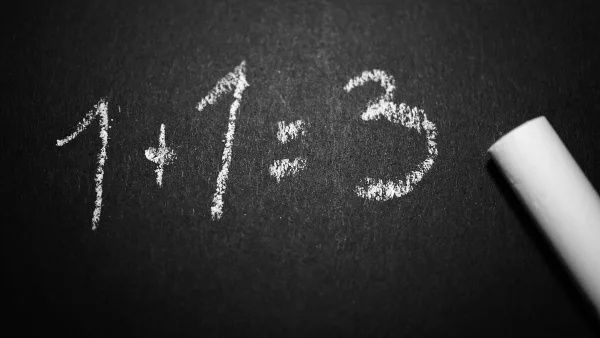
Nobody enjoying this music at a gig is quietly counting beats in their head. The name refers to how calculated the songs can sound, not to any actual arithmetic you need to do as a listener. Odd time signatures and interlocking parts are simply things you can learn to notice later, once the music has already grabbed you on a gut level. Start there instead.
If You Like This, Start Here
| If you already enjoy… | Start with… |
|---|---|
| Emotional, vocal-led indie rock | American Football's self-titled 1999 album |
| Tense, atmospheric, dynamic records | Slint's Spiderland |
| Pure technical guitar-and-drums intensity | Don Caballero or Hella |
| Melodic, spacious instrumental music | toe |
| Studio-built, loop-heavy production | Battles |
Pick whichever row matches your existing taste and follow that single thread first. There's no rule that says you need to explore every corner of this genre at once, or in any particular order.
My Honest Recommendation for a First Listen
If I had to point a genuine newcomer at one place to begin, it would be American Football's self-titled album. It's the gentlest entry point emotionally, the guitar interplay is intricate without ever feeling showy, and it connects naturally to indie rock and emo, which most people already have some familiarity with. From there, Slint's Spiderland is the natural next step once you're ready for something a little more unsettled.
Three Things You Don't Need to Worry About
- You don't need to identify the time signature. Feeling that something's rhythmically interesting is enough. Naming it comes later, if it ever needs to happen at all.
- You don't need to like every band under this label. The genre covers a genuinely wide range, from raw and aggressive to spacious and melodic. Loving one corner and disliking another is completely normal.
- You don't need to defend the label. Plenty of longtime fans still argue about what actually counts as math rock. Don't let that argument stop you enjoying the music itself.
A Simple Way to Train Your Ear
When something clicks and you want to understand why, try this: listen once just to the drums, then once just to the guitars, then all together again. You'll start noticing how the parts lock together without needing any theory at all — it's a genuinely satisfying "oh, that's what's happening" moment, and it works far better than reading a technical explanation first.
Seeing It Live
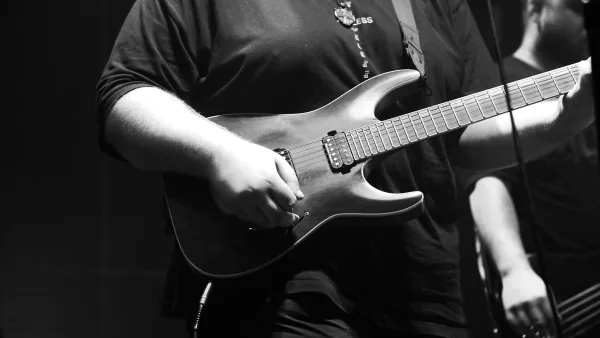
If you ever get the chance to catch a math rock band in a small room, take it. This is music built on musicians genuinely listening and reacting to each other in real time, and that's something a recording can only partly capture. You don't need to know anything going in — just watch how the players cue each other through the stop-start sections, and you'll pick up more about how the whole thing works in twenty minutes than any written explanation could manage. Local and touring DIY circuits are where a lot of this scene still lives, so a small venue near you is a genuinely good place to start looking. Ticket prices are usually modest, the crowds tend to be welcoming rather than cliquey, and nobody's going to quiz you on time signatures at the door.
Give It More Than One Listen
Math rock isn't music that always gives everything away on a first pass, and that's fine. A record that feels slightly awkward or unresolved on your first listen can click completely on the second or third, once your ear has settled into how the parts relate. Be patient with anything that doesn't immediately land — it's rarely a sign you're doing something wrong, just a sign the music is built to reward a bit of familiarity. Plenty of longtime listeners will tell you their favourite record on this list wasn't the one that grabbed them first.
When You're Ready to Go Deeper
Once a few of these records have properly landed, our full explainer covers the actual mechanics — odd meters, tapping, alternate tunings and the rest — in more depth. Curious about how the genre developed? Our history of math rock tells that story properly, and our guide to the genre's best artists introduces the wider cast once you're hooked.
The Bottom Line
You genuinely don't need any special knowledge to enjoy math rock — just an evening, a decent pair of headphones, and one album from the table above that matches what you already love. Everything technical can wait. The feeling comes first, and honestly, it always should.




Comments