


Soca article
The History of Soca
One musician, one decade, one clear intention — and five decades of evolution since. Here's how soca went from a 1970s studio experiment to Carnival's defining sound.
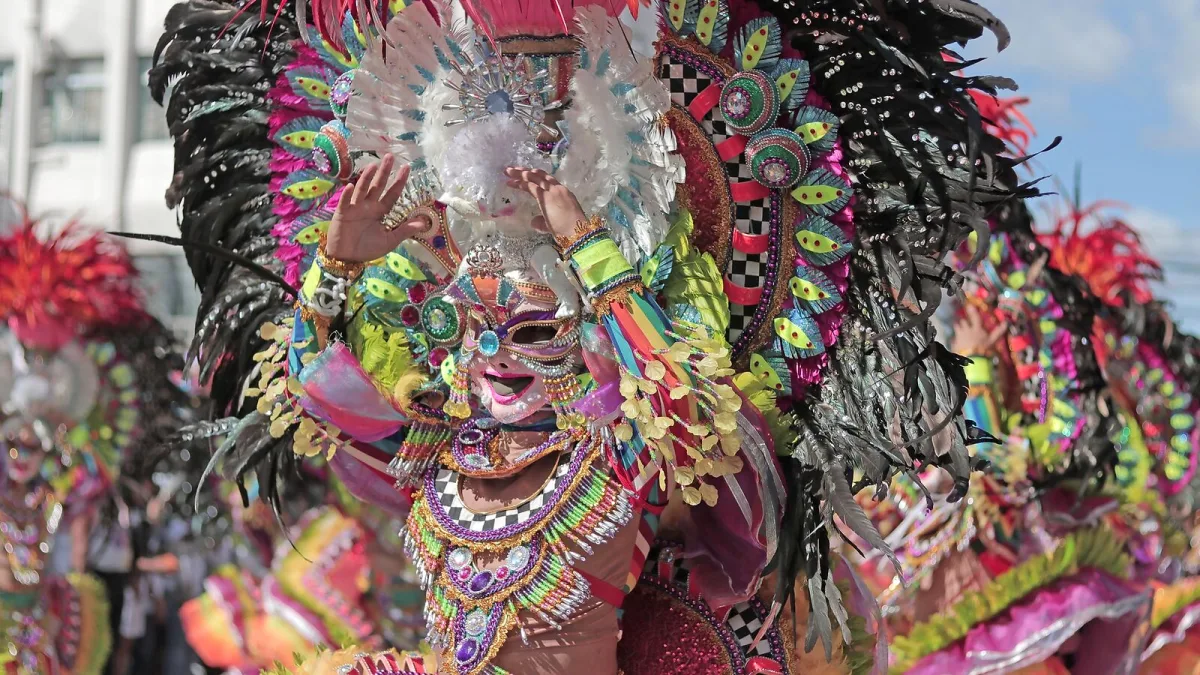
Every genre has an origin story, but soca's is unusually precise: you can point to one man, one decade and one clear intention. From there it splits into eras, each one adding a new layer — new instruments, new studios, new stars — while never losing the job it was built to do: keep Trinidad and Tobago's Carnival moving.
Before It Existed: Calypso's Long Shadow
To understand soca, you first need calypso, Trinidad's older tradition of witty, topical song built inside Carnival culture, with deep roots in African-derived work songs, praise songs and masquerade traditions. By the late 1960s, younger Trinidadian listeners were also absorbing Jamaican reggae and American soul and funk, and calypso's traditional sound was starting to feel dated to that audience. Something had to give.
The 1970s: One Musician Reshapes a Tradition
That something arrived courtesy of the calypsonian Lord Shorty, born Garfield Blackman, who later took the name Ras Shorty I. In the early 1970s, working out of Trinidad's KH Studios as multitrack recording became more accessible, Shorty fused calypso's melodic and rhythmic backbone with soul, funk and — crucially — instruments and rhythms from Trinidad's Indo-Trinidadian community, including the dholak (a hand drum), tabla and dhantal (a metal rod struck with a clip). Early recordings from this period, including his song "Indrani", captured the new sound taking shape. It reached a landmark with his 1974 album Endless Vibrations, whose title track and "Om Shanti" — which controversially wove a Hindu chant into a popular song — are still cited as the moment the new genre properly announced itself. The name itself is generally explained as a contraction of "the soul of calypso."
The Golden Age
Through the late 1970s and into the 1980s, a wider circle of musicians and arrangers built out what Shorty had started. Calypsonians and bandleaders including Maestro, Shadow, Lord Kitchener, Lord Nelson and Black Stalin, working alongside arrangers such as Pelham Goddard and Art De Coteau, pushed the sound into fuller studio productions. Superblue became a defining voice of this period, his 1980s recordings around "Soca Baptist" showing exactly how far a single, chant-led hook could carry a crowd. This was the era when the genre stopped being calypso's younger cousin and became its own, unmistakable thing — heavier on the low end, built for the road rather than the record player.
That golden-age period also marked a technological turning point. Early recordings leaned on live ensembles — calypso bands, brass sections and hand percussion — but producers gradually brought in synthesised melodic parts, electronic bass and kick drums, programmed percussion and layered crowd chants, mixed to hold up on the huge sound systems used at Carnival fetes. None of this replaced the live tradition; it simply gave artists and arrangers a wider sonic palette to work with, one that later generations would push much further.
Arrow and the Push Beyond Trinidad
Until the 1980s, the sound had largely stayed within Trinidad and Tobago's own Carnival circuit. That changed with Arrow, a singer from Montserrat, whose 1983 single "Hot Hot Hot" became one of the first tracks from this scene to travel widely outside the Caribbean. His albums from the period, including Knock Dem Dead and O'La Soca, showed a genre confident enough to reach for an international audience without losing its Carnival core. It's a shift worth understanding on its own terms, and our guide to essential soca albums covers Arrow's records, and the ones either side of them, in more depth.
Machel Montano and the Modern Era
No single artist has shaped the genre's recent decades more than Machel Montano, who released his first album, Too Young to Soca?, as a teenager in 1985 and has barely paused since. Through Soca Earthquake, Dr. Carnival and, decades later, G.O.A.T., Montano's catalogue traces a steady modernisation: fuller electronic production, bigger international collaborations and a clearer sense of soca as a brand as well as a sound. He wasn't working alone, either — artists such as Bunji Garlin, Fay-Ann Lyons and Destra Garcia carried the same momentum through the 1990s and 2000s. Our profile of the best soca artists to know covers this whole cast properly.
The Genre Today
Contemporary soca remains stubbornly single- and season-driven rather than album-led, built around the Carnival calendar: a song is released ahead of the season, tested in fetes and on the road, and lives or dies by how a crowd responds, rather than by chart statistics alone. Compilations such as Montano's Soca Universe series now gather each season's key tracks from artists including Bunji Garlin, Nailah Blackman, Patrice Roberts and Kes. Meanwhile the genre's reach keeps widening, from Barbados's Crop Over and Saint Vincent's Vincy Mas to London's Notting Hill Carnival and New York's Brooklyn Labor Day parade — each one still, at heart, chasing the same feeling Lord Shorty was after back in 1970s Trinidad.
If you want to hear that whole arc for yourself, our newcomer's guide suggests a practical listening path through it, era by era.



Comments