


Soca article
A Beginner's Guide to Soca
New to soca? Here's a friendly, no-pressure introduction to Trinidad and Tobago's Carnival sound — what it is, where it came from, and what to listen for first.
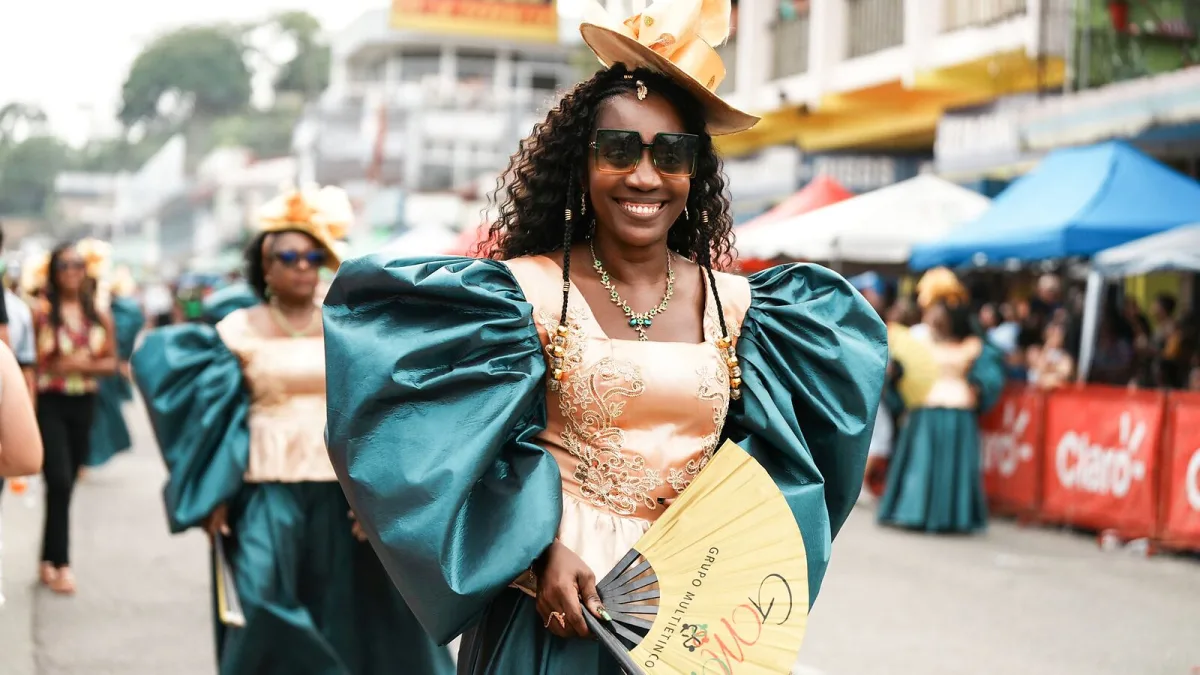
If you've ever heard a wall of drums and horns pull an entire street into a dancing, whistle-blowing crowd, there's a good chance you were listening to soca. It can sound like a lot to take in at first, so let's take it gently: what the genre actually is, where it came from, what to listen for, and a couple of names worth knowing before you press play.
What Is Soca?
Soca is a high-energy dance genre from Trinidad and Tobago, built above all for movement — for Carnival processions, parties and big communal singalongs rather than quiet listening. It grew out of calypso, Trinidad's older storytelling song tradition, but where calypso often leans on witty social commentary and narrative, this newer style puts rhythm, repetition and crowd participation first. Plenty of artists move between the two, and the lines blur constantly, but that's the simplest way to tell them apart as a newcomer.
Lyrically, it tends to stay close to the party: Carnival and masquerade, dancing, romance, community and national pride come up again and again, delivered as sung melody, chanting or direct, crowd-directed calls rather than long verses. A good song has to work both as a recording and as something a DJ can drop into a packed, noisy fete — Trinidadian for a Carnival party — and still get a reaction, which shapes almost every choice an artist makes.
Where It All Began
The genre was developed in Trinidad and Tobago in the early 1970s, and it's usually credited to one man: the calypsonian Lord Shorty, born Garfield Blackman (he later took the name Ras Shorty I). Shorty wanted to refresh calypso for a younger audience without losing what made it Trinidadian, so he combined it with soul and funk, and with rhythms and instruments from Trinidad's Indo-Trinidadian community — particularly the dholak (a hand drum), the tabla (a pair of tuned hand drums) and the dhantal (a simple metal rod struck with a clip, giving that bright, chiming pulse you can still hear underneath a lot of modern productions). The result is usually explained as a contraction of "the soul of calypso" — hence the name. If you'd like the fuller story, era by era, our history of soca traces it from Lord Shorty's first recordings to the present day.
What It Actually Sounds Like
Once you know what to listen for, this music is easy to spot. The tell-tale signs are:
- A strong, repetitive kick-and-bass pattern designed to keep a crowd moving for hours.
- Syncopated, layered percussion, often echoing that dholak-and-dhantal pulse even when it's been replaced by electronic drums.
- Call-and-response vocals, where the lead singer throws out a line and the crowd (or backing vocalists) answer it — a direct descendant of Carnival's communal singing traditions.
- Bright synthesiser or horn hooks and a chorus built to be shouted back, not just sung along to.
As a rough guide, one educational source places the tempo broadly in the 115–160 beats-per-minute range, though that's a loose steer rather than a rule — plenty of tracks fall outside it, and tempo alone won't tell you everything you need to know.
Power vs Groovy: The Two Moods You'll Hear
Almost every playlist in this genre splits, broadly, into two moods. Neither is a rigid category, but they're the most useful starting point for a beginner:
| Style | Feel | Best for |
|---|---|---|
| Power | Fast, percussive, physically intense | Carnival road marches and peak-energy fetes |
| Groovy | Slower, smoother, more melodic | Swaying, singing along, longer listening sessions |
Don't worry about memorising the difference straight away — a few listens and you'll start hearing it instinctively. Our guide to soca subgenres goes further still, into chutney soca, jab soca and the regional scenes that sit around these two big camps.
Carnival: Its Natural Habitat
Soca doesn't really exist apart from Carnival. It's the soundtrack to Trinidad and Tobago's road march, where sound systems and masquerade bands parade through the streets, and to the fetes that run alongside it. The same culture now travels well beyond Trinidad: it's central to Barbados's Crop Over, to Saint Vincent's Vincy Mas, and — closer to home for many of our readers — to London's Notting Hill Carnival and New York's Brooklyn Labor Day parade, both of which lean heavily on this sound to keep crowds dancing from morning to night. Wherever there's a Caribbean Carnival, you'll find it playing a starring role.
A Few Names to Start With
Beyond Lord Shorty, the name you'll bump into fastest is Machel Montano, its best-known international ambassador, whose long career has carried the sound from Carnival tents to global stages. He's far from the only one worth knowing, though. Contemporaries and successors such as Bunji Garlin, Kes and Destra Garcia each bring their own flavour to the party, and our rundown of the best soca artists to know introduces the pioneers and the current generation properly, with a little on what each one is known for.
You genuinely don't need any of this history to enjoy soca — it's built to be felt, not studied, and no one will test you on Lord Shorty's discography at a fete. But now that you know roughly what you're hearing and why, you're ready for the fun part. If you'd like a gentle, guided way in, our newcomer's guide suggests exactly where to start listening, six songs at a time.




Comments