


Sea Shanty article
The History of Sea Shanty
This is the real sea shanty history — working people's music, borrowed rhythms, and a genre that outlived the ships that ever needed it.
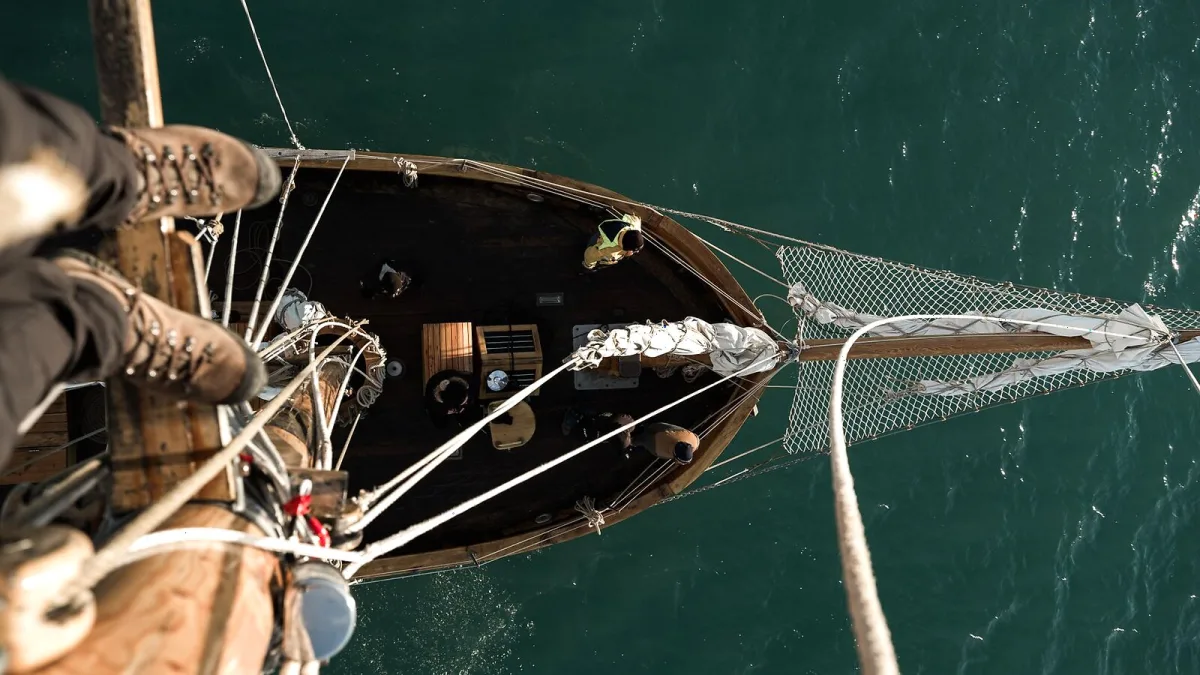
Every genre has a backstory, but few wear it as honestly as the sea shanty. Proper sea shanty history isn't a tale of stages or record deals — it's a story made by working people, for working people, to get an impossible job done on a moving deck. Trace it properly and you find sailors from half the world's ports, forgotten women's voices, and a culture built on borrowed rhythm long before anyone called it "world music". Here's how it actually happened.
Work First, Music Second
Start with the basics, because they explain everything else: shanties existed to move things. Rope, canvas, anchor chain, bilge water — nineteenth-century sailing ships shifted all of it by hand, and a crew pulling together on the same beat could out-muscle a crew pulling raggedly. A shanty was the metronome. Royal Museums Greenwich sums up the sound as a "regular, heavy rhythm", which is a polite way of saying: this music had a job to do, and it wasn't performance.
The lead singer, the shantyman, wasn't necessarily the best voice on board — he was the one who could hold a beat and think on his feet, spinning new verses about the weather, the captain or whoever owed him money, while the crew answered with the same steady chorus every time.
Golden Age of Sail, Golden Age of the Shanty
The next chapter of sea shanty history really took hold during the nineteenth century, aboard the big commercial sailing ships that dominated world trade before steam took over. Different jobs needed different songs — a short, hard pull wanted a short refrain, while turning a capstan for an hour wanted something with more patience in it — so a proper family of shanty types grew up: short-haul, halyard, capstan, stamp-and-go. That variety is a genre in itself, and one I've written about separately if you want the full breakdown.
Even the word itself is a mystery worth sitting with. Nobody can say for certain where "shanty" — or "chantey", if you prefer the older spelling — actually comes from. The English Folk Dance and Song Society calls it plainly "the prime example of the work-song in English", but admits the etymology is still disputed.
The Hidden Side of Sea Shanty History
Here's where the history gets properly interesting, and where a lot of tellings fall short. This music was never the product of one nation, one language or one crew. African American and Afro-Caribbean maritime communities made real, documented contributions to the wider work-song tradition that shanties grew out of — a debt the genre owes as much as it owes any English port town.
And the old picture of shanty singing as a strictly male affair doesn't hold up either. Historical collections include women singing these maritime work songs, which is a useful reminder that "authentic" history is often just the version somebody bothered to write down first. If you're new to all this and want the plain-English version before the deep dive, my colleague's beginner's guide to the sea shanty is the right place to start.
From the Deck to the Folk Club
Sail gave way to steam, and the working need for shanties largely disappeared with it. But the songs didn't die — they moved indoors. American folklorists spent the 1930s and 1940s recording retired seamen, preserving the tunes and, just as importantly, the stories behind them, in collections now held by institutions like the Library of Congress. From there, the material fed straight into the folk revival, kept alive in clubs, maritime museums and community singarounds long after anyone actually needed the songs to haul a sail.
Then TikTok Happened
January 2021 is the date you'll see quoted everywhere, and fairly so. Scottish singer Nathan Evans posted a version of "Soon May the Wellerman Come" that took off in a way nobody could have planned, and he signed to Polydor soon after. The British group The Longest Johns had actually recorded their own "Wellerman" back in 2018, on their album Between Wind and Water, and found themselves riding the same wave three years later. It's worth knowing, though, that "Wellerman" is really a nineteenth-century New Zealand whaling ballad rather than a strict work shanty — a lovely song, just not quite the same category as "Drunken Sailor" or "Haul Away". You'll find the artists behind this whole moment covered properly in our guide to sea shanty artists worth knowing.
Why This History Still Matters
I grew up somewhere that knows exactly what it means for working-class music to get written out of its own story, then written back in decades later once someone decided it mattered. The sea shanty's history is that pattern in miniature: functional music, made by people rarely credited properly at the time, rediscovered by an audience who'd never have called it "folk music" until a phone screen told them to. That's not a criticism of the revival — it's the whole reason this genre is still breathing. Explore its practical types further in our piece on sea shanty subgenres, or start listening straight away with our rundown of essential shanty songs and essential shanty albums.
Understanding sea shanty history properly means holding two facts at once: it's genuinely old, rooted in real, hard labour, and it's genuinely alive, still being reshaped by whoever picks it up next. Both things are true, and both are worth celebrating.




Comments