


Sea Shanty article
A Beginner's Guide to Sea Shanty
Never sung a sea shanty in your life? Start here — a clear, patient walk through what the songs are, how they work, and where they came from, with nothing assumed.
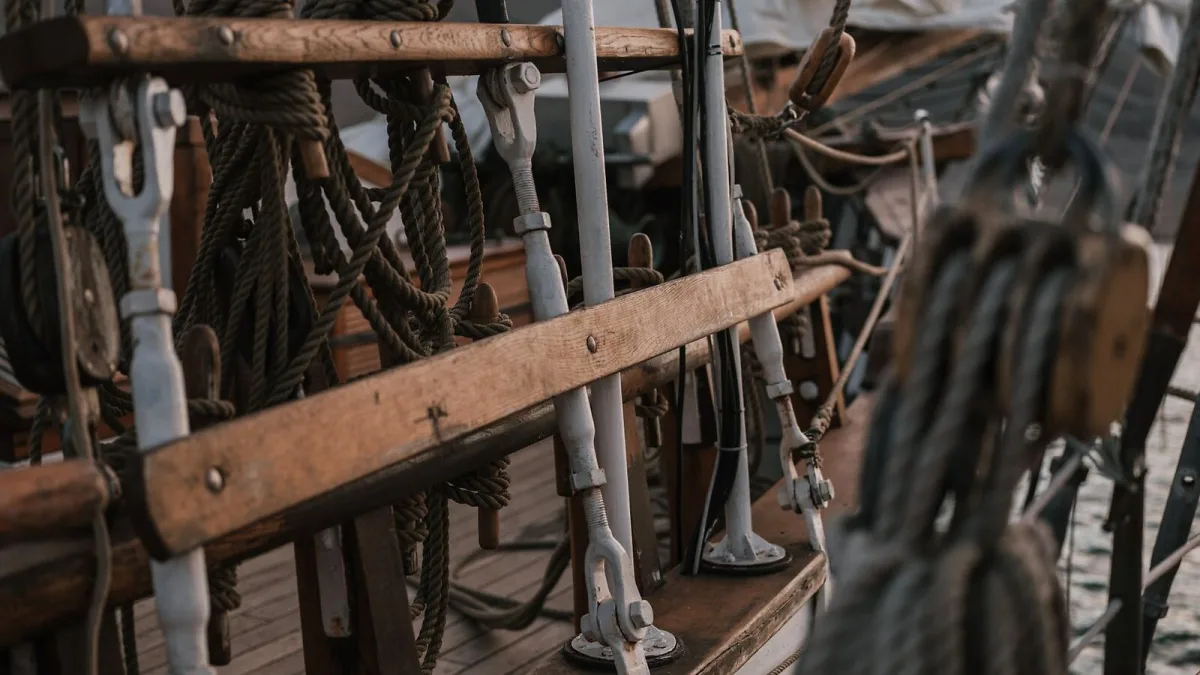
A sea shanty is a work song that sailors once sang together to keep time while hauling ropes, raising sails or turning a ship's capstan. If the recent wave of shanty singing online has left you curious but a little unsure of the basics, this guide starts from the very beginning. No assumed knowledge, and every unfamiliar term explained as it comes up — the way I'd talk a nervous student through a new piece, one clear idea at a time.
What Is a Sea Shanty, Exactly?
At its heart, this is a piece of practical music. Sailing ships in the nineteenth century relied entirely on human muscle to move enormous weights of rope, canvas and timber, and a shanty gave a crew a shared pulse to pull, push or heave against. According to the English Folk Dance and Song Society, the form is "the prime example of the work-song in English" — music written to get a job done, not simply to entertain.
A single singer, known as the shantyman, led the song. He set the pace, sang the changing verses, and the rest of the crew answered with a fixed refrain. That structure is the whole point: it is not designed to be sung alone.
The Building Block: Call and Response
Every shanty is built on call and response. The shantyman calls a line, often one he is making up on the spot to suit the mood, the weather or a grumble about the captain. The crew answers with the same short chorus every time. Royal Museums Greenwich describes the resulting sound as a "regular, heavy rhythm" — steady enough that a dozen tired men could pull in exactly the same instant without needing to think about it.
This is worth understanding before anything else, because it explains why the genre sounds so different from an ordinary folk song. The words matter less than the timing. A verse can be almost anything; the response has to land on the beat, every single time.
The Main Types of Sea Shanty
Not every job on a sailing ship needed the same kind of song. A short, sharp pull needed a different shape of music from a long, slow slog around a capstan, so shanties developed into a small family of related forms:
| Type | Job it was sung for | What it sounds like |
|---|---|---|
| Short-haul (short-drag) | A few sharp, powerful pulls | Short, punchy refrain, e.g. "Haul Away" |
| Halyard | Raising or lowering sails and yards | Longer phrases with a pause to reset grip |
| Capstan and pumping | Walking round a capstan, or working a pump | Slower, steadier, longer songs, e.g. "Away, Rio" |
| Stamp-and-go (walkaway) | Hauling while walking along the deck | Brisk, marching pace, e.g. "Drunken Sailor" |
You don't need to memorise this table to enjoy the music. It simply helps to know, when you hear one, why it moves at the speed it does — the tempo was never a stylistic choice, it was the job.
A Very Short History
The tradition, in the form we would recognise today, flourished aboard commercial sailing ships during the nineteenth century, though earlier maritime work songs may well have existed before that. The exact origin of the word "shanty" — sometimes spelled "chantey" — is still disputed among historians.
Crucially, the tradition was never the product of one culture alone. African American and Afro-Caribbean maritime communities contributed significantly to the wider work-song tradition, and historical collections show women singing these songs too, which quietly corrects the old assumption that shanty singing was strictly a male, all-white affair. If that side of the story interests you, our full history of the sea shanty goes into it properly.
Work Shanty or Sea Song? A Small but Useful Distinction
People often use the term as a catch-all for any old maritime song, but there is a real difference worth knowing. A true work shanty exists to coordinate labour. A sea song, sometimes called a forebitter, was sung for entertainment during off-duty hours and was never tied to a task.
This matters because the song most people associate with the genre today, "Soon May the Wellerman Come", is more accurately a nineteenth-century New Zealand whaling ballad than a traditional labour shanty — even though it is now sung, streamed and taught as one. It is a lovely song either way, and no less worth knowing for the technicality.
How the Genre Reached 2021 — and Beyond
The genre had a very public moment in January 2021, when Scottish singer Nathan Evans posted a version of "Wellerman" that spread rapidly online, later releasing an official recording with Polydor. The British group The Longest Johns, who had recorded their own "Wellerman" back in 2018, found themselves swept up in the same wave. For a fuller look at who is actually behind the music, our guide to sea shanty artists worth knowing covers both of them and more.
None of this came from nowhere, though. Folk clubs, maritime museums and community singarounds had been keeping the tradition alive for decades before any of it went viral, and they still are.
Where to Go Next
If this has whetted your appetite, there is plenty more to explore. Our piece on where newcomers should actually start is the practical, hands-on follow-up to this one. If you would rather dig into specific recordings, try our rundown of essential albums or our list of essential tracks. And if the four types in the table above intrigued you, our closer look at shanty subgenres is the natural next lesson.
The main thing to take away is this: a sea shanty is simple by design. A strong pulse, a call, a shared answer. Once you can hear that structure, you will never mistake one for an ordinary folk song again — and, honestly, that is most of the theory you ever need.




Comments