


Highlife article
The History of Highlife
From Ghana's coastal palm-wine circles to E. T. Mensah's golden-age dance bands: the full story of how highlife came to be.
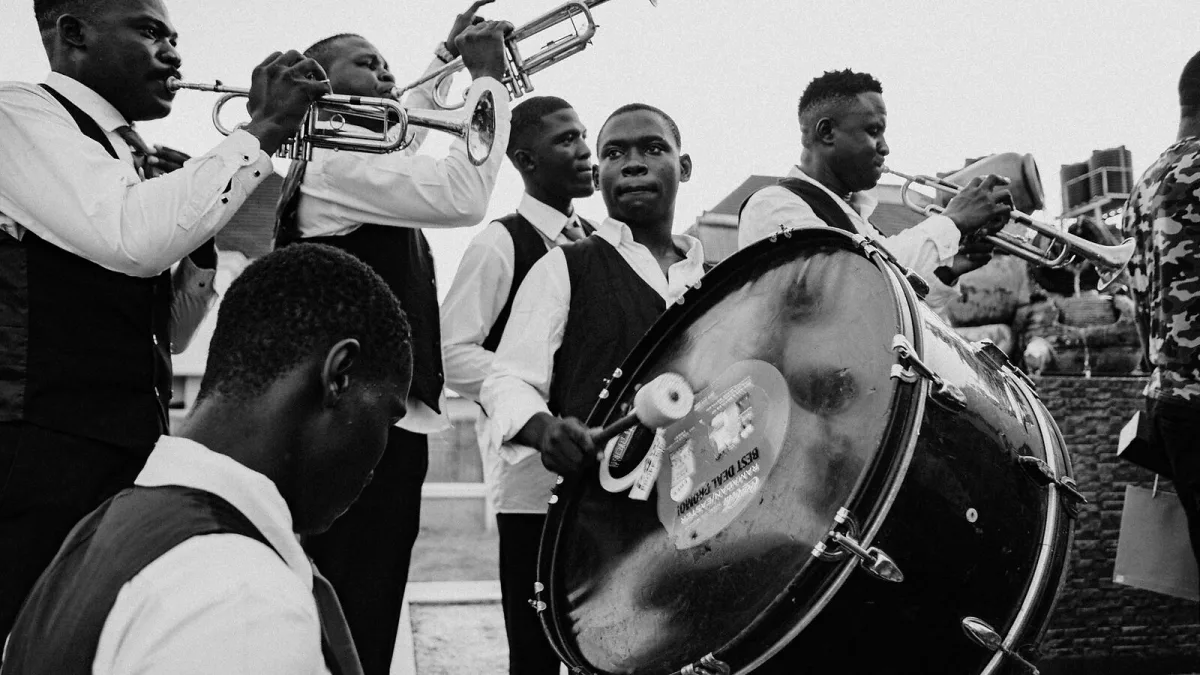
Most genres have a birth certificate of sorts — a single record, a single year. Highlife doesn't, and that's rather the point of it. It grew up gradually in the port towns of colonial-era Ghana, at the point where African rhythm met European brass and imported guitars, and it never really stopped absorbing new influences after that. This is the story of how that meeting happened, and where it led.
A Meeting Point on the Coast
Coastal Ghana in the late nineteenth and early twentieth centuries was an unusually cosmopolitan place for its time. Accra, Cape Coast and Sekondi were trading towns where African communities lived alongside European merchants, missionaries and colonial soldiers. That mix put local musicians within earshot of military brass bands, ballroom dances such as the foxtrot and waltz, imported guitars, and the beginnings of jazz and Caribbean sound. Rather than simply imitating what they heard, Ghanaian musicians reorganised it around their own rhythmic cycles, melodies and languages — and highlife began to take shape.
Palm-Wine Music, the Quiet Root
Before the big dance bands arrived, there was palm-wine music — small guitar-led groups performing in the informal social spaces where people gathered to drink palm wine, hence the name. It was intimate rather than showy: interlocking guitar parts, relaxed and conversational singing, and lyrics in local languages. Guitarists developed distinctive picking approaches with names such as dagomba, fireman and mainline, adapting a cross-fingering technique originally used on regional harp instruments to the imported guitar. Early recordings by Jacob Sam and the Kumasi Trio give a good sense of this smaller, older strand of highlife.
The Dance Bands Take Over
By the mid-twentieth century, a louder and more urban cousin had emerged: dance-band highlife. These larger ensembles brought together trumpet, trombone, saxophone, guitar, double bass (later electric bass) and drum kit into arrangements built for crowded dance floors rather than quiet gatherings. The sound could feel cosmopolitan and jazz-inflected while staying rooted in African rhythmic movement, and it quickly became the music of urban entertainment, celebration and social comment across Ghana.
E. T. Mensah and the Golden Age
No single name looms larger over this period than E. T. Mensah. Leading his band The Tempos through the 1950s and into the 1960s, Mensah helped turn a local urban style into something close to a pan-African phenomenon, carrying a polished, horn-led, swing-influenced sound well beyond Ghana's borders. It's not an exaggeration to call this Ghanaian dance-band music's golden age; for a closer look at Mensah and the artists who followed him, our guide to the genre's best artists goes into more detail than a history piece has room for.
Crossing Borders: Nigeria and Beyond
As highlife spread eastward into Nigeria, it was reshaped by Yoruba, Igbo and other regional traditions. Nigerian highlife developed its own strong identity, particularly through guitar bands and brass ensembles whose lyrics turned to community life, morality and everyday hardship as much as to dancing. The result is a genuinely transnational West African tradition, not a single national style exported unchanged — Ghana is generally recognised as the origin point of highlife, but the music that grew from it took on real local character wherever it travelled.
| Era / Strand | Roughly When | Sound |
|---|---|---|
| Palm-wine music | Early 20th century | Small guitar groups, relaxed vocals |
| Dance-band highlife | 1940s–60s | Full horn sections, jazz-influenced arrangements |
| Nigerian & Igbo highlife | 1950s onward | Guitar bands, regional languages and rhythms |
| Later hybrids | 1970s onward | Afrobeat, hiplife, international fusion |
What Came Next
The story doesn't end with the dance-band era. Its rhythmic language and guitar patterns fed directly into Afrobeat, the genre Fela Kuti built in Nigeria; into Ghana's own hiplife movement from the 1990s; and, more loosely, into the contemporary Afrobeats sound that has since travelled the world. Ghana itself marked a century of this influence with public celebration in September 2026, a reminder of just how long this music has shaped national identity. Anyone wanting to trace the different strands that make up the wider family should read our explainer on the genre's subgenres, which lays palm-wine, dance-band and later styles out side by side.
The Bottom Line
There's no tidy single origin story here, and that's part of the appeal of highlife. This is a tradition built by musicians constantly adapting borrowed tools — brass, guitars, ballroom harmony — to say something distinctly West African with them, over more than a century. If you're coming to this history fresh, our beginner's guide is a gentler place to start before diving back into the detail above.





Comments