


Gregorian Chant article
The History of Gregorian Chant
Centuries in the making, passed voice to voice long before anyone wrote it down. Here's where Gregorian chant actually came from, and how it survived.
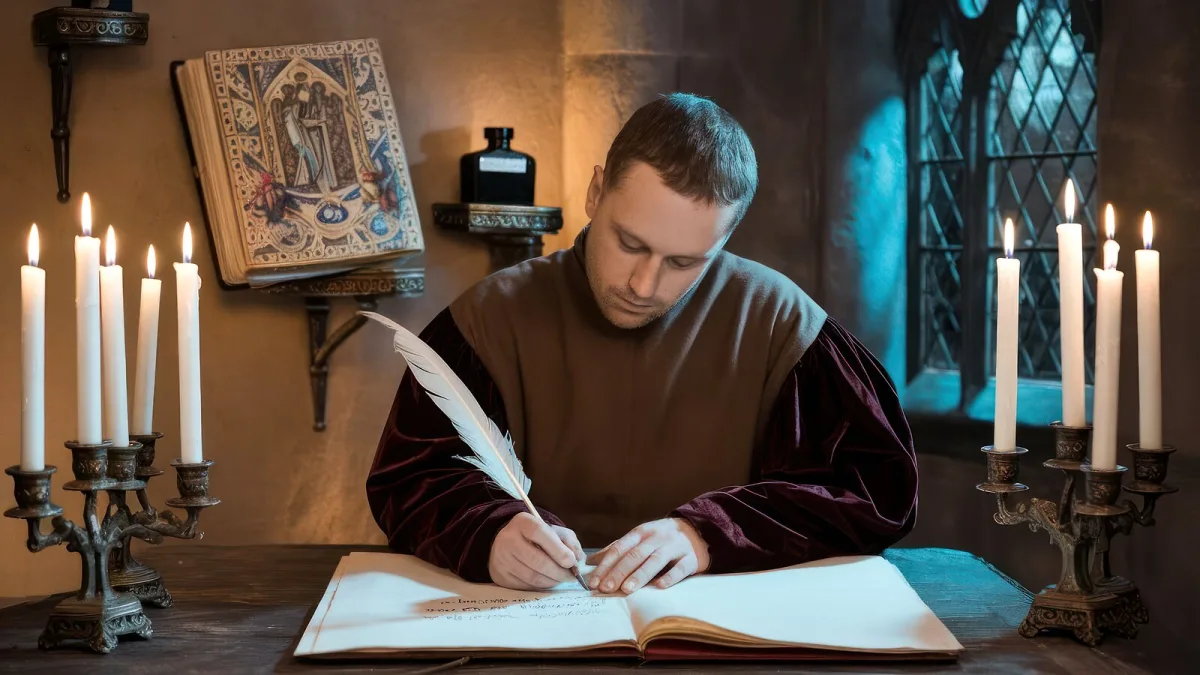
I love a music history that refuses to sit still, and this is one of the great ones — centuries in the making, passed voice to voice long before anyone thought to write it down, and still going strong today. Let's trace where it actually came from.
Not Written by Pope Gregory, Whatever the Name Suggests
Medieval tradition liked to credit Pope Gregory I, who died in 604, with composing this entire body of sacred song. It's a tidy story, but it isn't true. What we now call Gregorian chant took shape later, through the slow interaction of earlier Roman liturgical melody and the musical practices of the Frankish kingdoms further north. Nobody sat down and wrote the whole thing — it grew, the way real folk traditions do, through generations of singers passing it on by ear.
From Memory to Manuscript: Notating Gregorian Chant
For a long stretch, none of this existed on paper at all. Melodies lived in memory, taught directly from one singer to the next inside monasteries and cathedral schools. The earliest surviving written versions — using early symbols called neumes rather than anything resembling modern notes — only appear from around the 10th century onward, at centres including Laon and St Gall. Even then, those early neumes mostly showed the shape of a melody rather than exact pitches; you needed to already know the tune to read them properly.
The Move to Square Notation
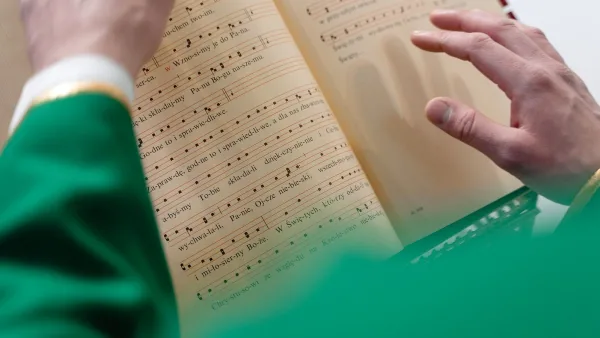
By around the 13th century, a clearer system had taken hold: square-shaped notes placed on a four-line staff, which let singers see actual pitch relationships rather than just melodic contour. That square notation is still printed in chant books today, a genuinely direct link between a modern singer and a medieval scribe.
Serving the Liturgy, Not the Concert Hall
It's worth remembering this music was never written to be admired from a seat. Every piece has a job — opening the Mass, sitting between the readings, accompanying Communion, running through the fixed texts of the Kyrie and Gloria, or structuring the daily round of prayer known as the Divine Office. That functional purpose shaped everything about how it sounds: rhetorical rather than tuneful in the pop sense, built to serve Latin text rather than a catchy hook.
The Solesmes Revival
By the 19th century, centuries of copying and reprinting had left the repertoire in a genuinely messy state, full of small errors and regional variations. The monks of the Abbey of Solesmes, in France, took on the enormous job of comparing old manuscripts and reconstructing something closer to the original melodies. Scholars there, including Dom André Mocquereau and later Dom Eugène Cardine, built an influential rhythmic approach and a whole discipline — called semiology — devoted to reading what those early neumes actually meant. Their editions and their gentle, unhurried singing style became the sound most people now picture when they think of Gregorian chant.
Surviving the Reforms of Vatican II
The Second Vatican Council, in the 1960s, opened the door to vernacular languages and much wider congregational singing at Mass. Rather than sweeping the older repertoire away, the Council actually called for its preservation, and Solesmes kept publishing — including modern volumes like *Antiphonale Romanum I*, completed in 2020, supporting the reformed Liturgy of the Hours right through to today.
Still Being Sung, Still Being Argued Over
Here's what I find genuinely lovely about this history: it isn't settled. Scholars still debate exactly how medieval singers handled rhythm, and whether the smooth Solesmes style truly reflects the earliest manuscripts or represents a 19th-century reconstruction all its own. That argument keeps the whole tradition alive rather than fossilised, and it's part of why new recordings and new scholarship keep appearing even now.
Related Traditions That Aren't Quite This One
It's worth knowing this wasn't the only game in town. Rome itself had an earlier, distinct chant tradition, sometimes called Old Roman chant, that ran alongside the Frankish developments. Milan kept its own Ambrosian chant, tied to Saint Ambrose's legacy. Christian Iberia had Mozarabic chant, largely suppressed as the Roman rite spread. These are cousins, not earlier drafts of the same piece — each has its own history, and lumping them all together under one label does them a disservice.
The Bottom Line
Gregorian chant is a genuinely collective inheritance, built by monasteries and scholars across more than a thousand years rather than any single composer. If you'd like to hear the communities who carried it this far, our guide to the best artists to know is a fitting next stop, and our beginner's guide is there if you'd like the fundamentals laid out first.



Comments