


Flamenco article
The History of Flamenco
From private Andalusian gatherings to UNESCO heritage status: the history of flamenco, told through the people and venues that shaped it.
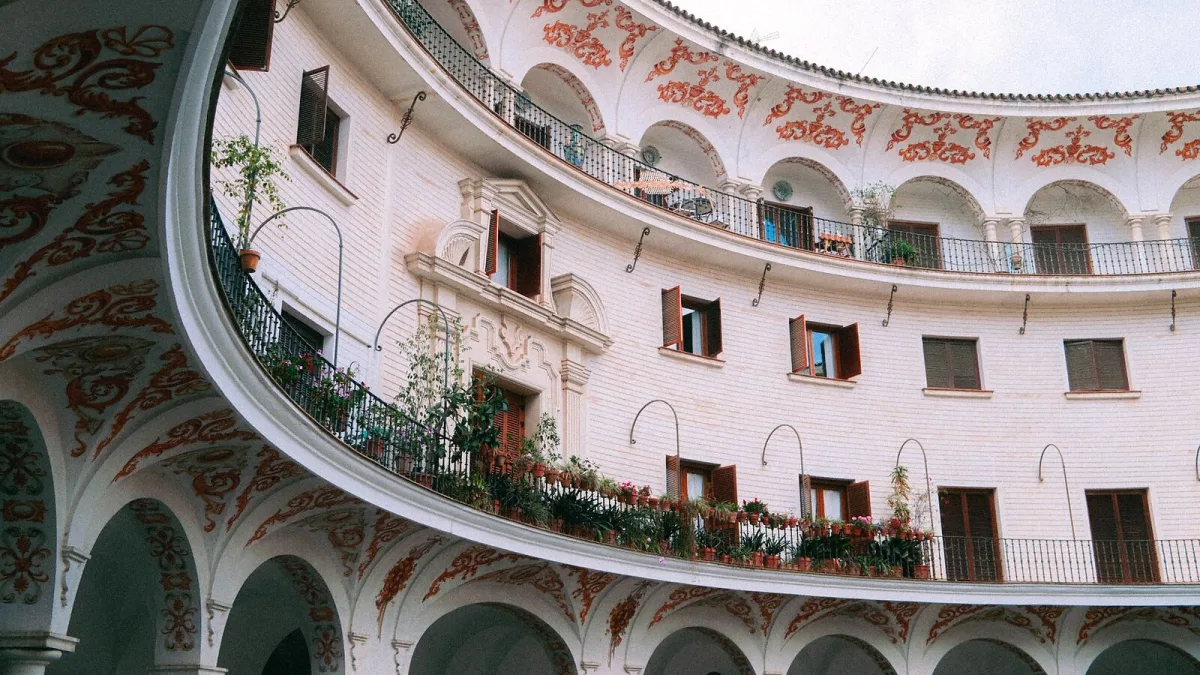
Most short explanations of the history of flamenco reach for a single tidy origin — Roma, Arabic, Jewish — and stop there. The real story is messier and more interesting than that: a few centuries of Andalusian communities singing, playing and dancing alongside one another until something distinct emerged. This is that longer story, from private courtyards to UNESCO recognition.
A Meeting Point, Not a Single Source
Southern Spain’s Andalusia region has long been a crossroads. The performance culture we now call flamenco took shape there through interaction between Andalusian Roma communities, existing Andalusian song and dance, Castilian Spanish traditions, and broader Mediterranean influences, including Jewish musical culture. No single community invented it alone, and no scholar has produced a single-origin account that holds up without heavy qualification. Any version of events that claims otherwise is simplifying for the sake of a good headline.
Even the word itself is contested. Theories have linked “flamenco” to Roma identity, to the Spanish word for “Flemish”, and to other historical associations, but none is proven beyond dispute. Treat the etymology as an open question rather than a settled fact.
From Private Gatherings to the Café Cantante
For a long stretch, this music lived mostly in private — family gatherings, informal celebrations, local communities passing songs and steps between generations. That changed in the nineteenth century with the rise of the café cantante, venues where singers, guitarists and dancers performed professionally for a paying public rather than for friends and neighbours. The singer Silverio Franconetti is closely associated with this shift, helping establish performance as a genuine profession rather than a purely domestic practice.
This is a pivotal chapter in the history of flamenco, because it marks the point where the tradition gained a stage, a ticket price and, eventually, a recording industry.
The Golden Age of Cante
The early twentieth century produced some of the most influential recorded voices in the tradition. Antonio Chacón became one of the most important early recorded singers, particularly in elaborate forms such as malagueñas. Manuel Torre represented an older, starker and more intensely expressive style. La Niña de los Peines stands as one of the most significant recorded singers of any era, male or female, and remains a reference point for cante today. Alongside them, guitarist Ramón Montoya expanded what the guitar could do as an accompanist and soloist, laying groundwork that later players would build entire careers on.
The Tablao Era and a Global Stage
The twentieth century brought both institutionalisation and international travel. The tablao — a dedicated flamenco venue, often aimed at tourist and theatrical audiences — became a major performance setting, and remains important today alongside peñas (member clubs), festivals and conservatories. Dancer Carmen Amaya became internationally celebrated for her powerful, athletic style, while choreographer and dancer Antonio Gades helped bring staged flamenco to audiences far beyond Spain through film and theatre. Guitarist Sabicas, working largely outside Spain, was instrumental in establishing flamenco as a concert-hall instrumental form in its own right.
Paco de Lucía and the Modern Revolution
No account of the history of flamenco is complete without Paco de Lucía, whose harmonic, rhythmic and ensemble innovations transformed what flamenco guitar could sound like while staying rooted in traditional forms. His long partnership with singer Camarón de la Isla reshaped modern cante and drew in listeners who had never previously paid attention to the tradition. Guitarist Tomatito, closely associated with Camarón, and later concert guitarist Vicente Amigo, carried that modern, harmonically adventurous strand forward. Singer Enrique Morente became known for connecting flamenco with rock and classical music, further widening its reach without abandoning its foundations.
UNESCO Recognition and the Present Day
In 2010, flamenco was added to UNESCO’s Representative List of the Intangible Cultural Heritage of Humanity — formal recognition of it as a living practice rather than a closed historical style. Today it continues to expand through conservatories, international festivals, online teaching and collaborations with jazz, classical music and pop production. Artists such as Rosalía illustrate that expansion clearly: her work draws on flamenco vocabulary but sits within contemporary pop, and it is worth keeping that distinction in mind rather than treating every flamenco-influenced record as traditional flamenco itself.
If you want to see how this history plays out in specific styles, our guide to flamenco subgenres covers the palos mentioned only briefly here, and the best flamenco artists to know goes much further into the individual figures named above. For a first orientation to the tradition as a whole, start with our beginner’s guide to flamenco.
Why This History Still Matters
Knowing the history of flamenco changes how you listen. A Camarón recording sounds different once you know it followed a century of café cantante professionalisation and the Golden Age singers before him. A tablao performance reads differently once you understand it sits alongside peñas and festivals, not in place of them. The tradition has always absorbed outside influence while keeping its own centre of gravity — and that push and pull is, if anything, the real throughline of its story.




Comments