


Flamenco article
A Beginner's Guide to Flamenco
Cante, toque, baile, compás and palos, explained simply: everything a newcomer needs to make sense of flamenco before diving deeper.
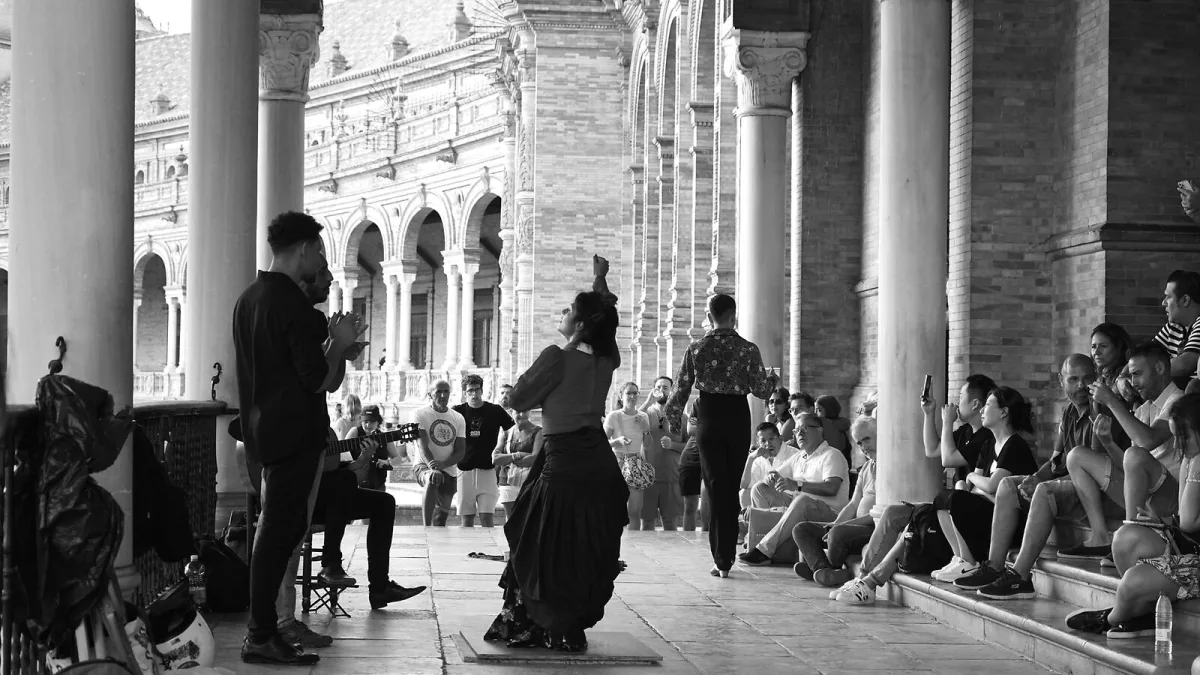
If you’ve ever watched a guitarist’s hand blur into a strum, heard a singer’s voice crack with feeling, or seen a dancer stamp out a rhythm you could feel in your chest, you’ve met flamenco. It can look intimidating from the outside, but underneath the intensity is a set of ideas that are genuinely easy to grasp once someone walks you through them. That’s what this guide is for — a friendly, no-jargon route into what it actually is, where it comes from, and how to start listening to it properly.
What Exactly Is Flamenco?
Flamenco is an Andalusian performance tradition built from three roles working together: cante (the singing), toque (the guitar playing) and baile (the dance). You don’t need all three at once — plenty of flamenco is guitar alone, or voice alone — but the tradition was shaped by musicians who thought of it as a conversation between these parts, not three separate acts sharing a stage.
A performer might also be joined by palmas (rhythmic handclapping), jaleo (shouted encouragement between phrases), and increasingly a cajón, a box-shaped drum the player sits on and taps. None of this is decoration. Here, the clapping and the calling out are doing real musical work, keeping everyone locked to the same pulse.
The Building Blocks: Compás, Palos and Duende
The single most useful word to learn early is compás. It’s usually translated as “rhythm”, but it really means the whole rhythmic framework — the cycle, its accents, and the shared understanding that lets a singer, a guitarist and a dancer stay together without a conductor. Get a feel for compás before you worry about anything else; it’s the gateway skill for everything that follows.
Each family of compás and mood is called a palo. Think of a palo as a style within the style — its own tempo, its own typical feeling, its own place in a performance. There isn’t one tidy, agreed list of how many palos exist, because regional variations blur into each other, but a beginner only needs a handful to get oriented.
A Few Palos to Meet First
- Tangos — a steady, binary-feeling groove that’s a gentle entry point (and not related to Argentine tango).
- Rumba flamenca — bright, direct and the most immediately catchy palo for new ears.
- Alegrías — lively and dance-forward, historically tied to Cádiz.
- Soleá — slower, spacious and serious; many teachers treat it as a central reference point.
- Bulerías — fast, flexible and often used to close a performance with real fire.
You’ll also hear people talk about duende, a word for the raw, spine-tingling quality a performance can have at its most powerful. It isn’t a technique you can measure or a box you tick — it’s a description of a feeling, and it means different things to different performers, so treat it as atmosphere rather than theory.
Where Flamenco Comes From
It grew out of southern Spain over several centuries, shaped by Andalusia’s Roma communities alongside existing Andalusian, Castilian, Jewish and wider Mediterranean traditions. No single, tidy origin story covers the whole picture, and you should be wary of any explanation that claims otherwise. Its public life took off in the nineteenth century through the café cantante, venues where singers, guitarists and dancers first performed for paying audiences rather than family and neighbours. For the full timeline, from those cafés through to UNESCO’s recognition of flamenco in 2010, our history of flamenco covers the story properly.
The Sounds and Instruments You’ll Hear
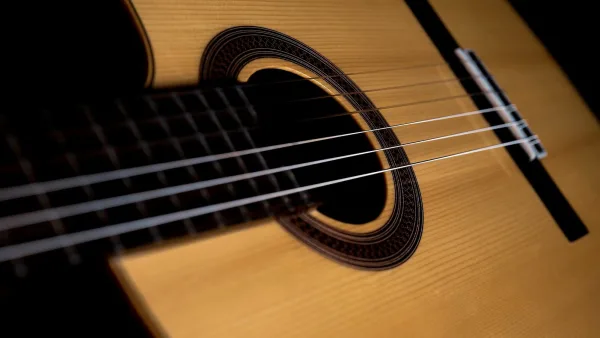
The flamenco guitar itself is a lighter, more percussive cousin of the classical guitar, built with lower action and a sharper attack so it can cut through singing and footwork. Many have a golpeador, a clear tap plate near the soundhole, because players strike the top of the instrument — a technique called golpe — as part of the rhythm. The rapid multi-finger strumming you’ll notice constantly is rasgueado, and fast melodic runs use picado, an alternating-finger technique. On the dance side, reinforced shoes with hard heels and toes are what produce that percussive footwork, alongside castanets in some performances.
Who to Listen to First
A handful of names come up again and again once you start digging deeper: the guitarist Paco de Lucía, who expanded what the instrument could do without abandoning its roots; the singer Camarón de la Isla, whose partnership with Paco de Lucía reshaped modern cante; and dancer Carmen Amaya, whose athletic, powerful style is still a reference point today. Our guide to the best flamenco artists to know goes much deeper into who shaped the tradition and why, and if you want actual recordings to press play on, essential flamenco albums and the best flamenco songs are both good next stops.
Taking It Further
Once the basics of cante, toque, baile and compás feel familiar, the natural next questions are which palo to explore first and how to actually start listening or learning without feeling lost. We’ve written a dedicated, practical route for that in Flamenco for Newcomers: Where to Start, and if you want the fuller map of styles beyond the five above, our breakdown of flamenco subgenres is the place to go.
The Bottom Line
Flamenco rewards patience more than speed. Understand the three roles, get compás into your body through listening and clapping, and pick one or two accessible palos before chasing the harder ones. Do that, and the rest of it — the history, the artists, the dazzling technique — starts to make sense from the inside rather than looking like a wall of Spanish terminology.


Comments