


Bhangra article
A Beginner's Guide to Bhangra
Heard a driving drum pulse under a Punjabi vocal and felt an urge to move? Here's what that tradition actually is, gently explained from the ground up.
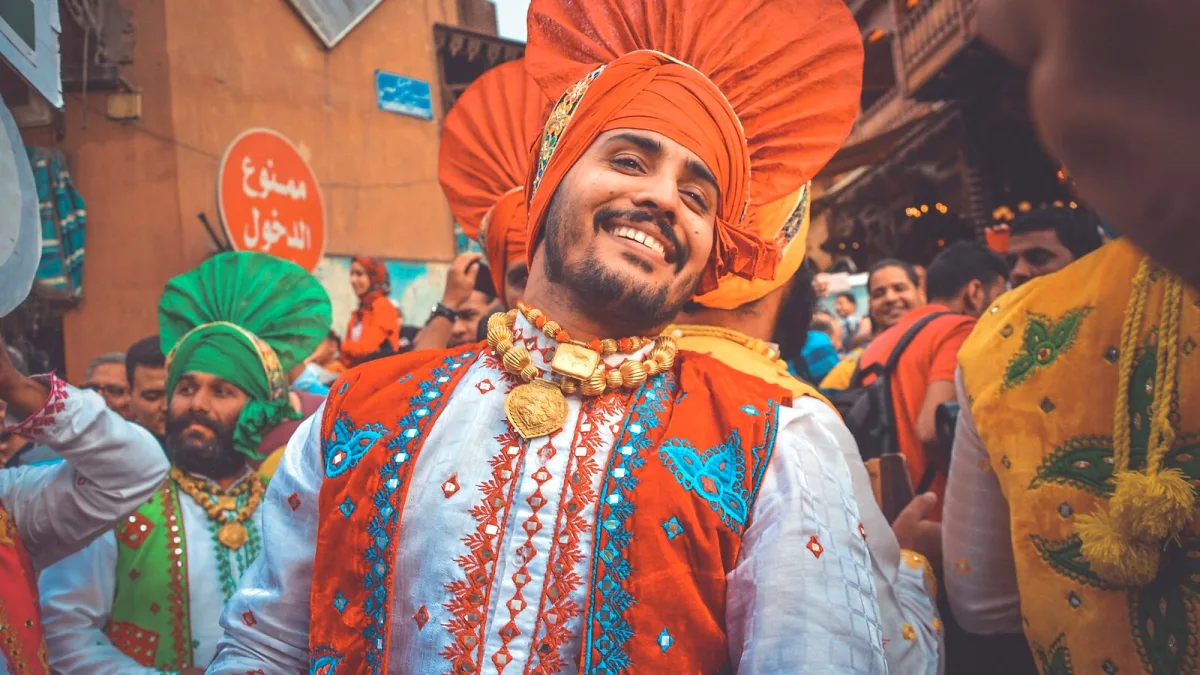
If you've heard a driving drum pulse under a Punjabi vocal and felt an urge to move, you've almost certainly heard bhangra at work. This guide takes it slowly: what bhangra actually is, where it began, the instruments that define its sound, and how it grew from a village celebration into a genre played at weddings and clubs around the world.
What Bhangra Actually Is
Bhangra is both a traditional Punjabi folk dance and the popular music genre that grew out of it. Its roots lie in Punjab, a region that today spans northwestern India and northeastern Pakistan, and specifically in agricultural celebrations tied to the harvest. Vaisakhi, usually marked in April, is one of the key occasions historically associated with this kind of communal dancing and music-making.
It helps to think of bhangra less as one fixed sound and more as a living folk tradition that kept absorbing new instruments and influences as it travelled — through Punjab's villages, into British Punjabi communities, and eventually onto the global stage.
The Instrument That Defines the Bhangra Sound
One instrument sits at the centre of almost everything: the dhol, a large double-headed barrel drum played with two different beaters, giving it a deep tone on one side and a sharper, higher one on the other. Traditionally it's supported by:
- The tumbi — a small single-string instrument with a bright, repetitive, plucked phrase
- The algoza — a pair of flutes played together for breathy melodic lines
- The chimta — metal tongs fitted with jingles, adding a rattling percussive texture
- The dholak — a smaller hand-played drum for lighter accompaniment
As the music moved from fields and community halls into recording studios, guitars, synthesisers, drum machines and samples were layered on top, but the dhol's pulse has never really left.
From Village Celebration to Global Genre
The clearest turning point in bhangra's story came with the British Punjabi diaspora. From the 1970s onward, Punjabi communities in cities like Birmingham and Southall built an entire music scene around this material — community halls, cassette labels, wedding bands and, eventually, nightclubs. That's where the sound picked up a more polished, dance-oriented production style, setting a template that later Punjabi pop would build on.
By the 1990s and 2000s, bhangra was intersecting with hip-hop, reggae, garage and electronic production, and reaching genuinely global audiences — Panjabi MC's "Mundian To Bach Ke," later remixed with Jay-Z as "Beware of the Boys," is the clearest example of that crossover moment. If any of these names and eras are new to you, our full history traces the whole arc properly.
A Word on Names and Boundaries
It's worth knowing bhangra isn't the only Punjabi folk form out there. Giddha, jhumar and boliyan are related but distinct traditions with their own histories, and "Punjabi music" is a much broader umbrella than bhangra sits under. A modern Punjabi pop song might borrow the dhol and a dance-floor energy without being a straightforward example of the traditional form, and that overlap is genuinely fuzzy even to people who've followed the scene for years.
Not Just a Men's Dance Anymore
Historical accounts often describe bhangra as a male-centred performance tradition, tied to male farmers celebrating the harvest. That context is real, but it's outdated as a description of today's scene. Contemporary performance includes women dancers, mixed-gender teams, female vocalists and choreographers, and audiences that span every background.
Where to Go From Here
Curious about the people who actually shaped the sound? Our guide to the artists worth knowing is the natural next stop, and if you're keen to start listening straight away, our beginner's listening guide gives you a genuine starting point rather than a reading list.
The Bottom Line
At its heart, bhangra is dhol-driven Punjabi music built for movement and celebration, shaped first by Punjab's harvest traditions and then by decades of diaspora creativity. Once you can hear that drum and know roughly where it came from, everything else — the fusion, the pop crossovers, the endless subgenres — starts making a lot more sense.



Comments