


Acid Jazz article
The History of Acid Jazz
From crate-digging DJs in London clubs to a global crossover moment — the real, label-by-label story of how the genre came together.
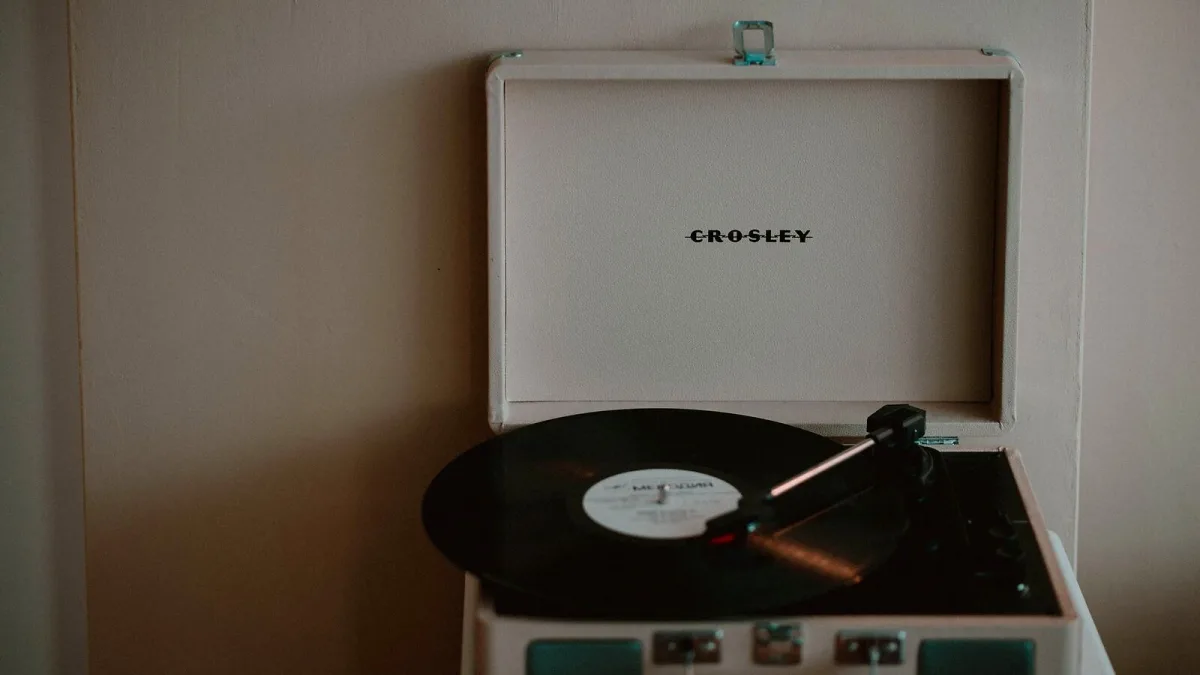
Every scene has an origin story that sounds too tidy in hindsight, and acid jazz is no exception — except this one's actually true. It wasn't dreamed up in a boardroom or built around one big single. It came from DJs playing dusty records in London clubs and slowly, almost accidentally, building a movement around them. Here's how it actually happened.
The Roots: London's Late-1980s Club Scene
Rewind to the mid-to-late 1980s. London's rare-groove, jazz-funk and soul nights were where the whole thing started, driven by DJs and selectors hunting through crates for records the mainstream had forgotten. Gilles Peterson, Eddie Piller and Norman Jay were among the most important of these diggers — playing overlooked jazz, funk and soul recordings from the 1960s and '70s alongside newer productions, and in doing so, bridging archival music with contemporary dance culture.
This is the bit that's easy to miss: the whole movement started as a collecting and club culture, not a compositional school. DJs shaped what got played, what labels signed, and eventually what audiences understood the connection between serious jazz musicianship and dance-floor function to be.
1987: A Label Gets a Name
Gilles Peterson and Eddie Piller founded Acid Jazz Records in 1987, and that label gave the whole scene something it hadn't had before — a recognisable identity. Most accounts point to 1987 as the founding year, though the scene's actual development stretched across a wider window either side of it, so it's more accurate to say the label crystallised something that was already brewing rather than inventing it from nothing.
Its catalogue quickly became a home for artists blending vintage influences with fresh, club-oriented production — including The Brand New Heavies, Mother Earth, Corduroy and The James Taylor Quartet.
Talkin' Loud and the Second Wave
When Peterson later moved on from Acid Jazz Records, he founded Talkin' Loud — and that label became home to a more expansive side of the scene, with acts like Galliano, Incognito, Young Disciples and Urban Species on its roster. Between Acid Jazz Records and Talkin' Loud, most of the artists now considered genre-defining had a label backing them by the early 1990s.
Breaking Through to the Mainstream
The early 1990s is when things properly crossed over. The Brand New Heavies released their self-titled debut in 1990. Jamiroquai's debut single, "When You Gonna Learn," came out on Acid Jazz Records in 1992, followed by the album Emergency on Planet Earth in 1993. Meanwhile, Incognito's 1992 album Tribes, Vibes and Scribes and Galliano's 1991 record In Pursuit of the 13th Note kept a stronger link to the scene's more experimental, club-focused roots.
Us3 added another layer entirely in 1993 with Hand on the Torch, bringing jazz sampling and hip-hop production together in a way that pulled the sound toward a completely different audience. Want the full artist-by-artist rundown? Our guide to the essential artists covers each of these names properly.
Clearing Up the Name
Here's a mix-up worth sorting out early: this isn't a jazz spin-off of acid house. The two scenes share a word, not a lineage. "Acid" here nods to something experimental and psychedelic about the club identity, rather than pointing at acid house's electronic, 303-driven basslines.
A Movement With Blurry Edges
Part of why this history is genuinely tricky to pin down is that success created its own classification problem. Once artists started selling records to a mainstream audience, they were often marketed as pop, funk, soul or straight jazz rather than under this specific banner. Jamiroquai, Us3, Incognito and The Brand New Heavies are all commonly filed under multiple genre tags depending on who's writing the description — and honestly, all of those tags are defensible.
The Legacy Today
The scene's direct commercial moment mostly belongs to the early-to-mid 1990s, but its fingerprints are all over what came after — nu-jazz, broken beat, and the current wave of jazz-funk revivalism all owe it something. If you want to see how those later strands actually branch out, our piece on its subgenres and neighbouring styles maps the family tree properly.
The Bottom Line
This history is really a story about DJs before it's a story about musicians — a scene built from crate-digging, club nights and two small independent labels that happened to catch a cultural moment. If you're only just getting into it, our beginner's guide is the natural place to start before diving deeper into the timeline above.





Comments