


Gangsta Rap article
The History of Gangsta Rap
The real timeline, region by region: Philadelphia's 1985 breakthrough, N.W.A's national leap, and the G-funk era that followed.
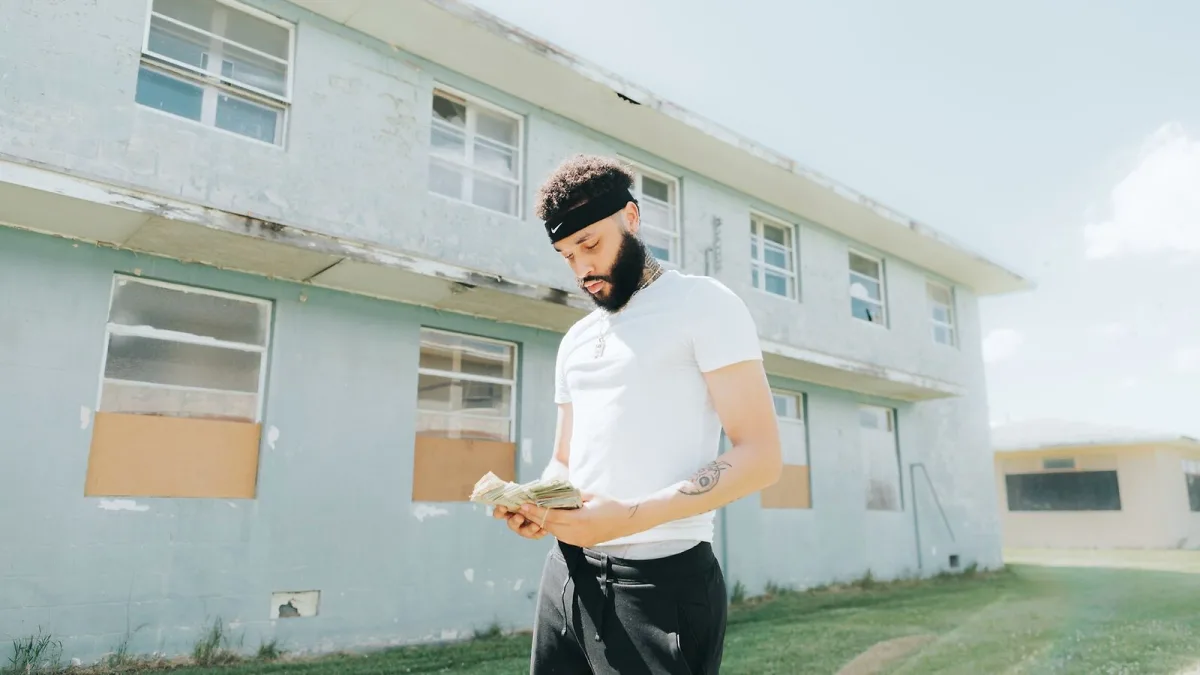
Four decades on, gangsta rap is still one of the most argued-over stories in modern music, and one of the most misunderstood. Here's the actual timeline, region by region, from Philadelphia's earliest recordings through to the sound's absorption into everything that came after it.
Before It Had a Name
Hip-hop itself came together in the South Bronx during the 1970s through DJing, breakbeats, MCing and graffiti, and its earliest records leaned heavily on parties, competition and community pride. But accounts of urban hardship, conflict and policing were already present in the margins. What changed in the mid-1980s, to produce what we now call gangsta rap, wasn't the subject matter appearing from nowhere; it was the subject matter becoming the whole point, told in sustained, explicit, first-person terms.
1985: Philadelphia Lights the Fuse
Schoolly D's "P.S.K. What Does It Mean?" is the record most historians point to as the true starting gun for gangsta rap. Released in Philadelphia in 1985, its title referenced the Park Side Killas, a local street gang, and its stark drum-machine beat paired with direct, unflinching street narration set the template that everything after it would riff on. It's a useful corrective, too: this sound did not begin on the West Coast, whatever the popular version of the story suggests.
1987: The Story Widens
Two years on, the genre gained real momentum on both coasts at once. New York's Boogie Down Productions released Criminal Minded, fusing battle-rap technique with crime imagery and sample-based production. Meanwhile in Los Angeles, Ice-T's Rhyme Pays combined electro-influenced beats with narratives of crime, danger and survival, building directly on singles like "6 in the Mornin'" that had already established his reportorial style. Between them, these two records proved the approach wasn't a one-off; it was a movement finding its feet in more than one city simultaneously.
1988: N.W.A Take It National
Then came the record that changed everything commercially. N.W.A — Eazy-E, Dr. Dre, Ice Cube, MC Ren and DJ Yella — released Straight Outta Compton on Eazy-E's own Ruthless Records, distributed through Priority Records, and it pulled the genre firmly into the mainstream. Its most incendiary track, a blunt, furious condemnation of police brutality, drew the attention of the FBI itself. The Library of Congress now describes the album as the standard-bearer for gangsta rap, careful to note that the style existed well before it. Standard-bearer is the right word: not first, but the record that made the rest of the country pay attention. Our guide to the essential albums covers exactly what made it, and the records either side of it, so important.
The Early 1990s: Death Row and G-Funk
By 1992, the sound of West Coast rap had shifted again. Dr. Dre's solo debut, The Chronic, introduced G-funk to a mass audience: slower grooves, deep bass, melodic synthesizer leads and a far more polished studio sheen than the genre's stark 1980s beginnings. Snoop Doggy Dogg's Doggystyle followed a year later, largely produced by Dre, and cemented G-funk as the genre's dominant commercial sound for the first half of the decade. Death Row Records, the label behind both, became the era's defining commercial powerhouse.
The Mid-1990s Peak
By 1996, 2Pac's All Eyez on Me showed just how far the genre's ambitions had grown — street identity, vulnerability, political anger and full-blown commercial spectacle, all inside the same double album. It's often treated as the moment the genre's 1990s commercial peak crested, arriving not long before the industry's centre of gravity began shifting elsewhere.
After the Peak: A Lasting Lineage
The genre never really disappeared so much as dispersed. Its narrative techniques, production instincts and visual codes live on in Southern trap, in drill, and in most contemporary street-oriented rap, even where the label itself has fallen out of everyday use. Gangsta rap is now better understood as a historical and stylistic lineage than a single current sound, which is precisely why the story is worth knowing properly rather than in outline.
Follow the Thread Further
For the people who built this history, our guide to the essential artists is the natural next stop, and our look at the subgenres it splintered into picks up exactly where this timeline leaves off. If you'd rather start from a broad definition than a chronology, our beginner's guide is the place to go back to first.
The Bottom Line
This is a history built in leaps — Philadelphia, then New York and Los Angeles together, then a national breakthrough, then a whole new commercial sound — rather than one straight line from one city. Knowing the actual order matters, because the popular shorthand version leaves most of it out.




Comments