


Jazz Music article
The History of Jazz Music
Jazz reinvented its own rules roughly once a decade for the best part of a century. Here's how it actually moved from dance halls to the avant-garde.
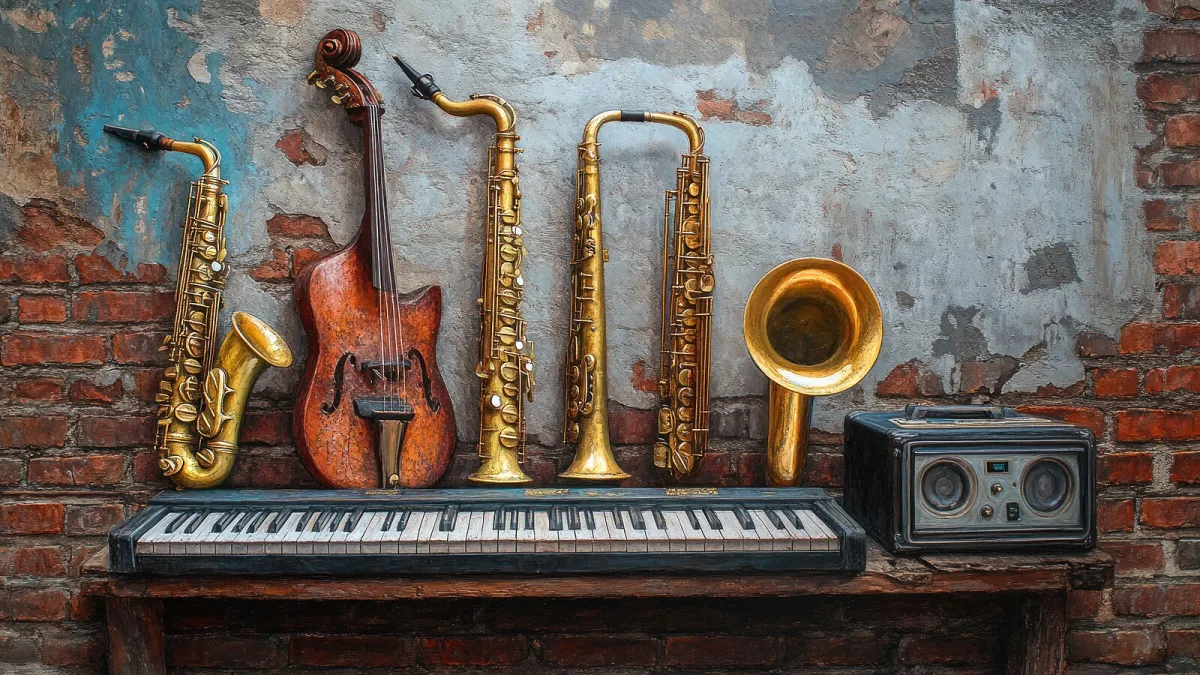
Every genre likes to claim it "never stood still," but jazz music genuinely didn't — it reinvented its own rules roughly once a decade for the best part of a century. Here's how it actually moved from New Orleans dance halls to some of the most experimental music ever recorded.
Origins: New Orleans, Not One Inventor
Jazz music formed in New Orleans in the late 19th and early 20th centuries out of African American musical traditions — blues, spirituals, ragtime, work songs and communal dance music — blended with European harmonic ideas. The city's multicultural population, its marching bands and its dance-hall economy created exactly the conditions for something new to take shape. It's a common oversimplification to credit jazz to one performer or one precise date; it really did emerge from multiple communities working in parallel.
Early Jazz: Collective Improvisation
The earliest recorded jazz favoured collective improvisation, with trumpet or cornet, clarinet and trombone all playing simultaneously but taking different roles within the texture. Louis Armstrong changed that balance, helping establish the idea of the featured improvising soloist that's shaped jazz ever since.
The Swing Era: Jazz Becomes Pop Culture
Through the 1930s and 1940s, large dance orchestras made jazz genuinely mainstream, not a niche interest. Duke Ellington, Count Basie, Benny Goodman and Glenn Miller became household names as bandleaders, and swing's strong rhythmic pulse, arranged sections and room for individual solos defined the sound of the era's biggest dancefloors.
Bebop: Jazz Stops Being Dance Music
Bebop arrived in the 1940s through musicians like Charlie Parker and Dizzy Gillespie, and it deliberately moved away from swing's dancefloor function. Faster tempos, denser melodies, more advanced harmony and smaller ensembles shifted jazz's whole context toward focused listening and musician-led artistic ambition rather than ballroom entertainment.
Cool Jazz and Hard Bop: Two Reactions to Bebop
Cool jazz pulled in the opposite direction from bebop's intensity — a more restrained tone, lighter attack and spacious arrangements, closely associated with Miles Davis's Birth of the Cool recordings and musicians like Gerry Mulligan and Chet Baker. Hard bop, meanwhile, kept bebop's harmonic sophistication but leaned hard into blues, gospel and rhythm and blues, with Art Blakey, Horace Silver, Clifford Brown and Sonny Rollins among its key figures. Both directions emerged from the same moment, pulling jazz in genuinely different ways.
Modal Jazz: Slowing the Harmony Down
Where bebop moved rapidly through dense chord changes, modal jazz used scales or modes as extended harmonic areas instead. Miles Davis's Kind of Blue is the genre's best-known entry point, while John Coltrane's My Favorite Things demonstrated another modal approach entirely, proving the idea wasn't just one artist's experiment.
Free Jazz: Loosening Every Rule
Free jazz went further still, loosening or removing conventional harmony, regular form and fixed roles altogether. Ornette Coleman, Cecil Taylor, Albert Ayler and Sun Ra expanded what collective improvisation, sound and structure could even mean, and it's often better approached after some familiarity with more conventional jazz, though there's no rule saying you can't start there directly.
Fusion: Jazz Meets Rock, Funk and the Studio
By the late 1960s and into the 1970s, jazz fusion combined improvisation with rock and funk instrumentation and modern studio production. Miles Davis's Bitches Brew, Weather Report, Mahavishnu Orchestra and Herbie Hancock's electric work are the major reference points, and the branches that followed — Latin jazz, soul jazz, jazz-funk, smooth jazz — kept multiplying from there.
Where That Leaves Things Now
Contemporary jazz music continues across acoustic, electronic, cross-cultural, vocal and genre-blending work, without one single dominant movement defining "now" the way swing or bebop once did for their eras. If you want a fuller sense of what actually separates each of these historical strands sonically, our guide to jazz's subgenres breaks it down properly.
Putting Names to Each Era
History is easier to hold onto through the people who actually lived it — our guide to jazz's essential artists puts names to every period covered here, and our guide to essential jazz music albums picks out specific full records worth hearing from several of them.
The Bottom Line
Jazz's history isn't a tidy line from simple to sophisticated — it's roughly a century of musicians reacting against whatever came immediately before them, sometimes gently and sometimes by tearing the rulebook up entirely. That restlessness is exactly why there's still so much of it left to discover.





Comments