


Folk Music article
Essential Folk Music Albums Explained
Not chosen by chart position, but by how much each one changed what an acoustic record could do. Five essential folk albums, explained.
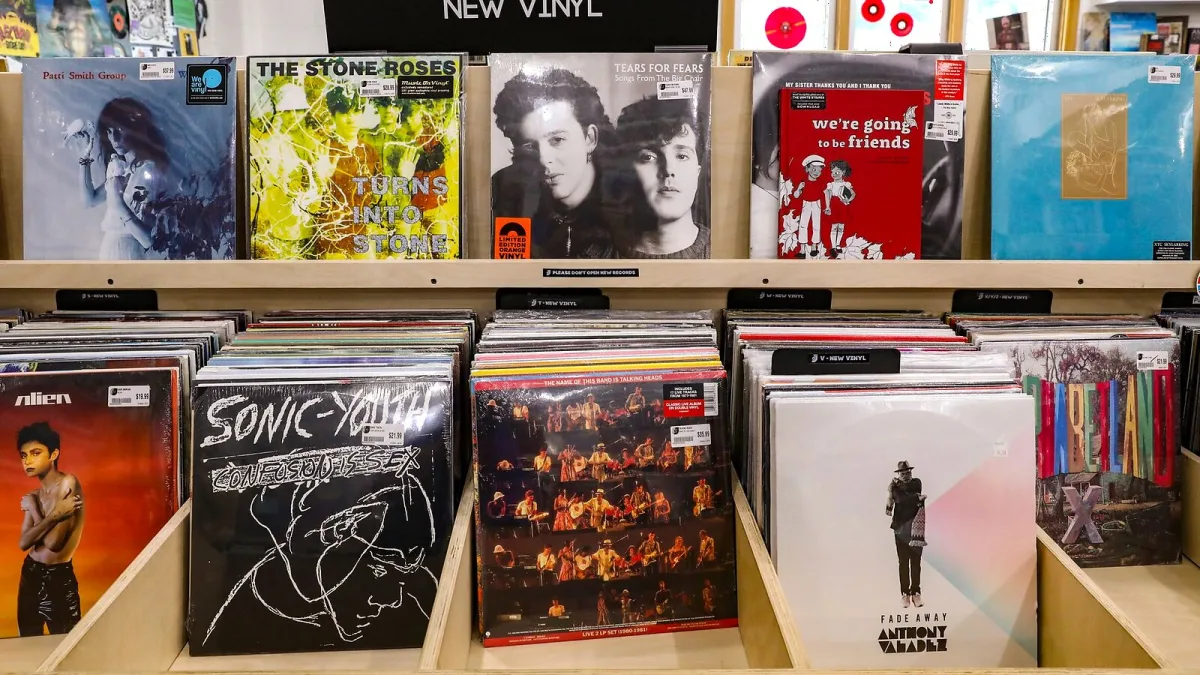
An album can do something a single song can't — it can hold a whole mood, a whole argument, long enough for it to actually sink in. The records below are widely regarded as landmarks of folk music, not because a chart said so, but because each one changed what people expected an acoustic record to do. Here's what makes each one matter, and what to listen for.
The Freewheelin' Bob Dylan (1963)
This is the record where Bob Dylan's songwriting properly announced itself, built almost entirely around voice, guitar and harmonica. Songs like "Blowin' in the Wind" showed how a simple arrangement could carry real political and social weight without ever sounding like a lecture. It's often treated as the moment contemporary songwriting in this vein became a serious art form in its own right, separate from the traditional repertoire it grew out of.
Blue by Joni Mitchell (1971)
Sparse, direct and unflinchingly personal, this record is frequently cited as one of the finest examples of confessional songwriting in folk music, full stop. Mitchell's guitar and piano work is intricate without ever getting in the way of the songs themselves, and the whole album still sounds remarkably unguarded for a record made in the full glare of fame.
Pink Moon by Nick Drake (1972)
Recorded quickly and quietly, with almost nothing beyond Nick Drake's voice and guitar, this is about as stripped-back as folk music gets. It found only a small audience on release, but its patient, unhurried intimacy has made it one of the most quietly influential records in the genre, still being discovered by new listeners decades later.
Liege & Lief by Fairport Convention (1969)
Where the records above stay largely acoustic and solo, this one plugs traditional British material into a full electric band, and in doing so helped define British folk rock as its own distinct branch. Traditional ballads sit alongside newly written songs in the same idiom, treated with the same seriousness — a genuinely different way of asking what "folk" could sound like.
Fleet Foxes by Fleet Foxes (2008)
Decades after the records above, this self-titled debut showed that folk's harmony-driven, acoustic-leaning sound still had somewhere new to go. Dense vocal harmonies and unhurried arrangements nodded openly to earlier folk tradition while sounding thoroughly contemporary, and the record is widely credited with helping spark a broader indie-folk revival in the years that followed.
| Album | Artist | Year |
|---|---|---|
| The Freewheelin' Bob Dylan | Bob Dylan | 1963 |
| Blue | Joni Mitchell | 1971 |
| Pink Moon | Nick Drake | 1972 |
| Liege & Lief | Fairport Convention | 1969 |
| Fleet Foxes | Fleet Foxes | 2008 |
A Few More Worth Hearing
Five records can only ever be a starting point, and a handful of others are worth seeking out once you've worked through the list above. Simon & Garfunkel's Bridge Over Troubled Water (1970) sits closer to folk-pop than the stripped-back records here, but its vocal arrangements and acoustic foundations owe the tradition a clear debt. Leonard Cohen's debut, Songs of Leonard Cohen (1967), brought a poet's ear for language to the same basic voice-and-guitar template Nick Drake would later take somewhere even quieter. None of these need to be worked through in order — treat the list as a map, not a syllabus.
How to Actually Listen to These
Resist the urge to skim a track or two from each and move on. Every record here rewards a full, uninterrupted listen far more than a shuffled playlist does — several were sequenced deliberately, with quieter or heavier moments placed for a reason. Headphones, no phone in hand, start to finish. It sounds like an old-fashioned way to listen, and it is, but these particular albums were built for exactly that kind of attention.
Listening in Context
These five records span roughly half a century and cover a genuinely wide range of what folk music has sounded like along the way — solo and stripped-back, full-band and electric, decades-old and comparatively recent. If you want to understand how the genre got from one end of that stretch to the other, our history of folk music fills in the gaps between these records, and our guide to the best folk artists to know puts fuller careers around the names here. For individual songs rather than full albums, our list of essential folk tracks is the natural companion piece to this one.






Comments