


Folk Music article
A Beginner's Guide to Folk Music
Not one sound but a way music moves through a community. Here's what genuinely makes folk music folk, and a quick sweep through its history.
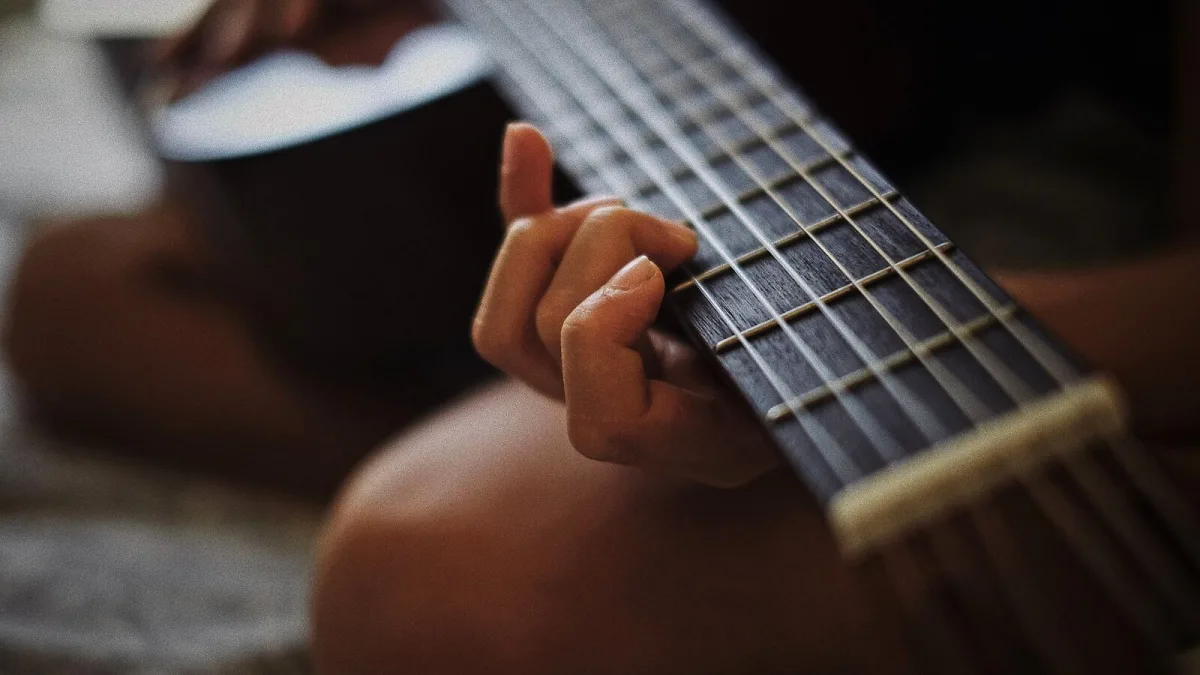
Ask ten people to define folk music and you'll likely get ten different answers, and honestly, that's rather the point. It isn't one sound so much as a way music moves through a community — learned by ear, passed hand to hand, changed a little with every telling. This guide lays out what actually makes it "folk," the shape of its history, and where you might start listening.
What Makes Folk Music "Folk"?
There's no single feature that defines every folk song, but a few threads run through most of them. The music is usually learned informally, often by ear rather than from a page. It varies — the same ballad might exist in dozens of regional versions, each shaped by the singer who carried it. It's tied to a particular community, occupation, region or tradition, and it tends to serve a function: accompanying work, dance, worship, storytelling or protest. Perhaps most importantly, a great deal of traditional repertoire has no known original composer at all — it belongs to whoever's singing it this time.
None of these are hard rules. Some folk music has well-documented writers, and plenty of modern folk recordings are as carefully arranged and produced as anything else on the radio. The category is a tendency, not a checklist.
Traditional Folk and Contemporary Folk
It helps to hold two ideas apart. Traditional folk is orally transmitted repertoire with deep roots in a community — British ballads, Appalachian fiddle tunes, sea shanties, regional dance tunes. Contemporary folk grew out of the 20th-century revivals and includes newly written songs by identifiable singer-songwriters and bands, sometimes using traditional melodies and instruments, sometimes not. Where exactly one ends and the other begins is genuinely disputed among folk fans, and that's fine — the boundary was never meant to be tidy.
A Quick Sweep Through Its History
Concern about vanishing oral traditions drove much of its early documentation. In the late 19th century, the scholar Francis James Child collected the texts of more than 300 English and Scottish ballads, helping establish a canon still studied today. Portable recording technology in the 1930s let folklorists like Alan Lomax capture American regional music directly, work that shaped the Archive of American Folk Song and the collections now held by Smithsonian Folkways. That documentation fed directly into the mid-20th-century folk revival, when performers such as Woody Guthrie, Pete Seeger, Lead Belly and Joan Baez brought older songs — and new ones written in their spirit — to concert stages, records and political movements. Bob Dylan emerged from that same scene before pushing folk songwriting somewhere else entirely, into folk rock.
The Instruments You'll Keep Hearing
Instrumentation varies enormously by tradition, but a handful of instruments turn up again and again in folk music: voice, acoustic guitar, banjo, fiddle, mandolin, harmonica, accordion, flute and whistle. British and Irish traditions add pipes, bodhrán and tenor banjo to that list; other regions bring their own. It's worth remembering that instruments like the banjo and fiddle belong to multiple cultures at once, often with quite different construction and technique from one tradition to the next — nothing here is exclusive property.
Where Folk Overlaps With Other Genres
Folk rarely stays in its own lane. It has repeatedly crossed into folk rock, bluegrass, Americana, contemporary Celtic music and folk-punk, and the lines between folk and plain acoustic singer-songwriter music are blurry at best. That's not a flaw in the definition — it's a sign of a living tradition still absorbing new influences, which is exactly what it has always done.
Where to Go From Here
If you want the fuller story of how folk got from field recordings to festival stages, our history of folk music covers that in depth. Curious who actually made this music? Our guide to the best folk artists to know is the natural next stop, and our breakdown of folk's many subgenres untangles exactly how folk rock, bluegrass and Americana relate to each other. If you'd rather just start listening, our piece on where to start as a newcomer is a gentler entry point than this one.



Comments