


Electronic Music article
A Beginner's Guide to Electronic Music
It's not one sound, it's a method — here's what actually defines electronic music, and why the umbrella is so much bigger than people assume.
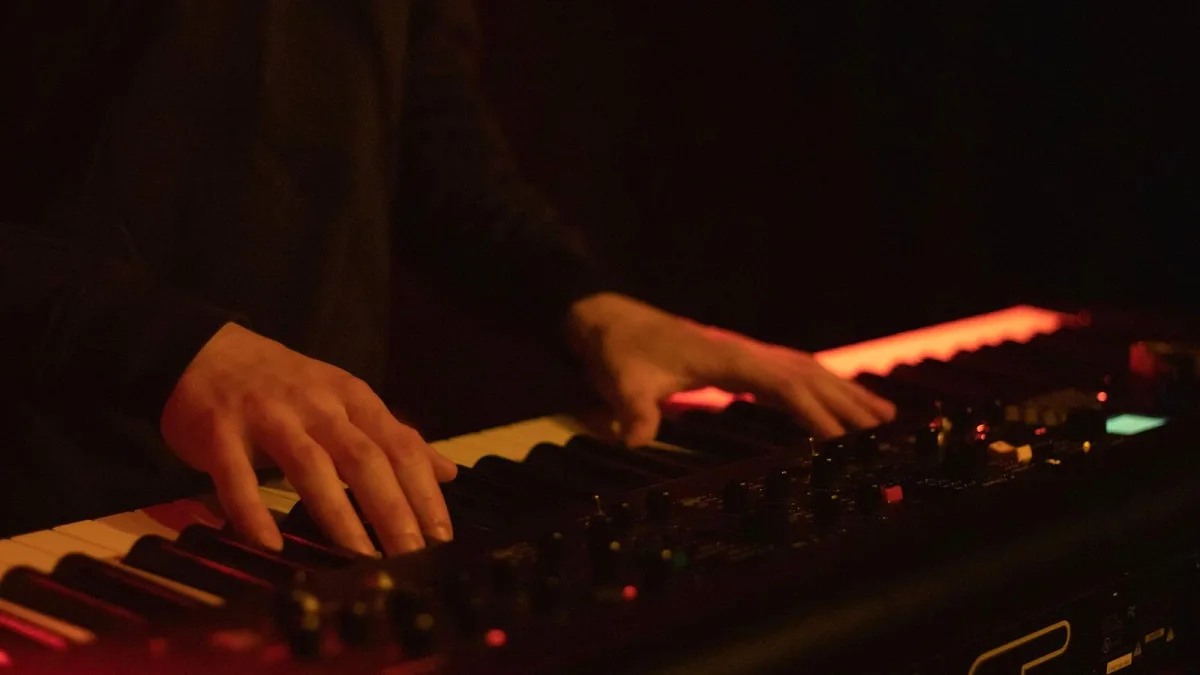
Right, let's clear something up straight away. Electronic music isn't a genre. It's a method. Once that clicks, everything else about it makes a lot more sense.
It's Defined by How It's Made, Not How It Sounds
Electronic music is music created, shaped or performed primarily with electronic technology — synthesizers, drum machines, samplers, turntables, computers. That's it. That same toolkit can make a pounding techno record, a gentle ambient wash, a chart-topping pop single or an experimental art piece. Judging it by "sound" alone is like judging every book written on a typewriter as the same genre.
The Umbrella Is Enormous
| Branch | Feel |
|---|---|
| House / Techno | Four-on-the-floor, club-built, machine-driven |
| Trance / Drum and Bass | High-energy, rave-descended, tempo-focused |
| Ambient | Textural, patient, often beatless |
| Synth-Pop / Electropop | Song-based, hook-first, electronic backbone |
| Experimental / IDM | Sound-design-led, deliberately unconventional |
None of those sound remotely alike. All of them are electronic music. Get comfortable with that contradiction now and you'll save yourself a lot of pointless arguments later.
Where It Actually Came From
This didn't start in a club. Early electronic instruments like the theremin and the Ondes Martenot showed up in the early 20th century, Pierre Schaeffer was cutting up tape in Paris by the 1940s, and Karlheinz Stockhausen was treating electronic sound as serious composition through the 50s and 60s. Synthesizers hit the pop mainstream properly once Wendy Carlos's Switched-On Bach landed in 1968. Everything from disco to house to techno grew out of that same lineage. Our full history tells that story properly.
You Don't Need a Studio Full of Gear
Here's the bit that surprises people: a laptop, one decent piece of software and a pair of headphones is a genuinely complete starting kit. Modern software reproduces synthesizers, samplers, drum machines and mixing tools in one place — no hardware required, though plenty of people enjoy it anyway. If you want the actual step-by-step version of getting started, our newcomer's guide walks through it properly.
A Couple of Terms Worth Knowing Early
MIDI is just performance instructions — pitch, timing, velocity — not actual recorded sound, which is why you can change an instrument after the fact without re-recording anything. A DAW (digital audio workstation) is the software where all of this actually gets built — recording, editing, mixing, the lot. Neither term is complicated once you've used them for five minutes, but they're thrown around constantly, so it helps to know them before you feel lost in a forum thread.
Right, Where Do You Actually Start Listening?
Don't try to "get into electronic music" as one thing — pick a branch and go deep. Curious who actually built this sound? Our guide to the key artists is the honest starting point, no filler. Want the records that matter? Our essential albums guide is next. And if the sheer number of subgenre names is doing your head in, our subgenre breakdown sorts it out properly.






Comments