


Breakbeat article
The History of Breakbeat
The history of breakbeat is the story of one good idea getting passed from person to person across fifty years. It starts in the Bronx and is still evolving now.
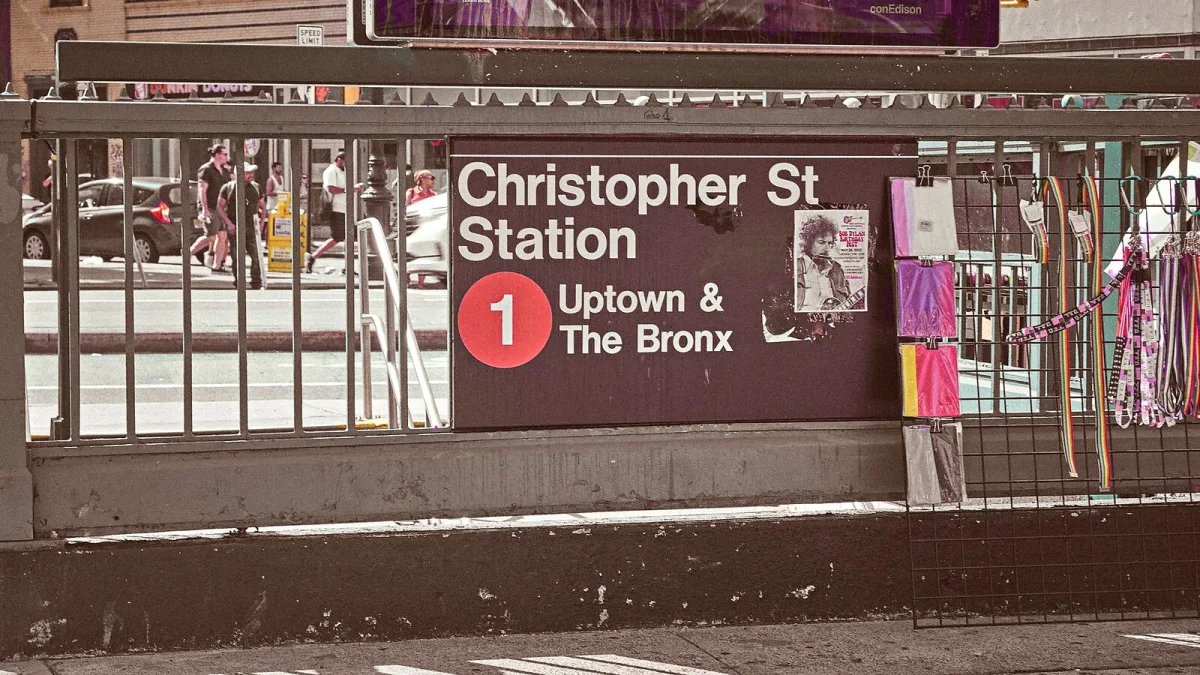
The history of breakbeat is the story of one good idea getting passed from person to person across fifty years, each generation finding something new in it. It starts in the Bronx in the early 1970s, moves through the warehouse raves of Britain in the late eighties and early nineties, and is still evolving now. What connects all of it is a drum pattern that refuses to sit still.
The Bronx, the Break and DJ Kool Herc
In the early 1970s, the Bronx was a borough in crisis — poverty, abandonment, social breakdown. Out of that environment came block parties, and out of those parties came a new kind of DJ culture. DJ Kool Herc, a young man from Jamaica who had moved to the Bronx, noticed something important about the records he played: the drum-heavy instrumental sections, the breaks, got the most response from dancers.
His innovation was to extend those moments. Using two copies of the same record on two turntables, he could switch from one to the other just as the break ended, looping it indefinitely. The dancers — b-boys and b-girls, who were developing their own physical vocabulary in response to this music — got more of what they needed. The technique spread quickly. Other DJs — among them Grandmaster Flash and Afrika Bambaataa — developed it further, and hip-hop culture began to take shape around it.
The records that provided the breaks were largely funk and soul: James Brown's "Funky Drummer," Jimmy Castor's "It's Just Begun," Sly and the Family Stone. Their drummers had played loosely and humanly, with swing and ghost notes and the kind of natural imperfection that makes a rhythm feel alive. Those qualities were exactly what made the breaks valuable.
Samplers and the 1980s
The turntable technique let DJs loop breaks live in performance. But new hardware in the 1980s let producers take the concept into the studio. The Akai MPC60, the E-mu SP-1200 and the Ensoniq Mirage gave producers a way to capture a drum break, trim it, loop it and manipulate it in entirely new ways — pitching hits, reversing sections, layering sampled sounds over programmed drums.
Hip-hop production became the crucible for all of this. Producers in New York were building tracks almost entirely from sampled breaks, layered bass lines and fragments of other records. The rhythm was still at the centre, and the breaks were still its most important raw material.
The Ultimate Breaks and Beats compilation series — curated by Louis "BreakBeat Lou" Flores and released between 1986 and 1991 — was enormously important in circulating the source material. It collected and catalogued the breaks that producers and DJs most relied on, making them accessible to a new generation who didn't have the record-digging knowledge to find the originals.
The Amen Break
Somewhere in all of this, a roughly six-second drum passage from The Winstons' 1969 recording "Amen, Brother" took on a life of its own. The drummer's performance — a short, energetic section of kicks, snares and cymbal work — was looped and sampled across decades of recordings. It appeared in hip-hop, then in jungle, then in drum & bass, then in drum & bass remixes that were themselves sampled. It became shorthand for the entire culture of break sampling: the Amen Break is one of the most sampled pieces of music ever recorded, and it was never intended to be anything more than an instrumental passage in a B-side.
From New York to the UK: Breakbeat Hardcore
By the late 1980s, breakbeat rhythms had crossed the Atlantic. British producers and DJs absorbed hip-hop culture and fed it into their own scene: the UK rave movement, which was simultaneously taking in house music from Chicago and techno from Detroit. What emerged around 1990–91 was breakbeat hardcore — breakbeat rhythms at higher tempos, beneath warehouse synthesizer stabs, piano riffs, vocal samples and an overwhelming sense of communal euphoria.
The venues were raves and warehouse parties across the M25, the rhythm came from American hip-hop, and the energy was entirely British. Labels like Reinforced, Moving Shadow and Suburban Base were central to the scene, releasing records that would define the next few years of UK dance music.
Jungle and the Amen Break Comes Home
By 1993, producers were pushing the tempo higher and chopping the drums more aggressively. The Amen Break in particular was pitched up, stuttered and rearranged in ways that turned a live drummer's groove into something robotic and ecstatic at the same time. Sub-bass came forward. The piano riffs receded. Jungle was born.
The jungle scene was primarily urban, primarily Black British, and it reflected the communities in which it developed. Its sound was faster, more complex and more viscerally physical than almost anything else in British music at the time. It was also largely ignored by the mainstream music press until it was too late to dismiss.
Drum & Bass, Big Beat, Trip-Hop
From the mid-1990s, the breakbeat family fragmented into related but distinct forms. Drum & bass developed from jungle, retaining the fast tempo and bass-heavy production but broadening in mood and technique. Big beat slowed things down and made them louder — The Chemical Brothers and Fatboy Slim created a version of the breakbeat designed to work on festival stages and in rock venues, bringing the rhythm to audiences who wouldn't have heard jungle or drum & bass. Trip-hop took the breakbeat into entirely different emotional territory: slow, atmospheric and introspective, anchored in Bristol.
Breakbeat Now
The term "breakbeat" is still used today to describe both the general technique and a current strand of dance music that deliberately revives the rhythmic aesthetics of the early 1990s. The rhythm never went away — it just shifted in how it was applied. Producers still chop breaks, sample funk records and search for that particular quality of human imperfection that makes a drum loop feel alive.
For more on the music itself, the essential breakbeat artists lists the key names across the genre's history. If you want to understand the different strands, breakbeat subgenres explained covers the branches in detail. And for a broader introduction to what the music actually sounds like, the beginner's guide is a good starting point.



Comments