


Breakbeat roundup
The Best Breakbeat Songs Right Now
The best introduction to the genre is often a single track. These are the defining songs — chosen because each one reveals something essential about what this music can do.
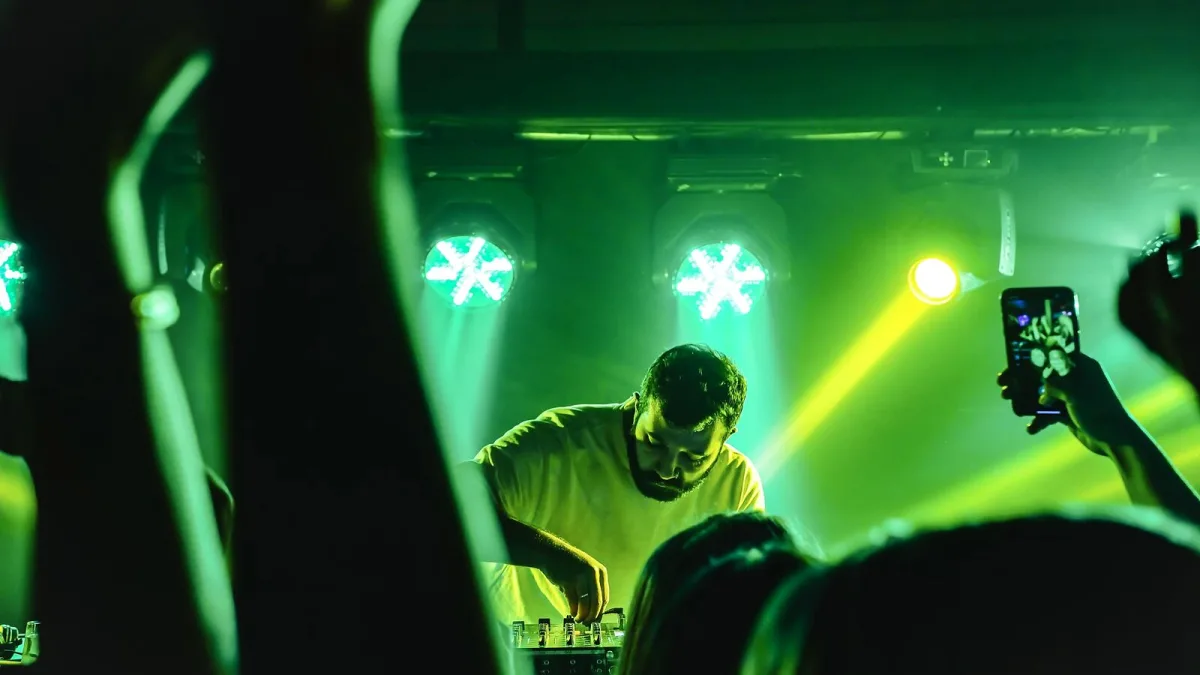
The best introduction to breakbeat music is often a single track rather than an album — something that makes the rhythm's character immediately clear, that demonstrates why a syncopated drum pattern has sustained entire genres for decades. These are the defining breakbeat songs: not ranked by chart position, but chosen because each one reveals something essential about what the music can do.
"Funky Drummer" — James Brown (1970)
The rhythmic source material for decades of production. Recorded in 1969 and released in 1970, "Funky Drummer" features a drum break played by Clyde Stubblefield that would become one of the most sampled percussion performances in history. It is loose, swinging and full of ghost notes. Hearing the original in full, with the repeated outro where Brown calls out the drummer, is a different experience from hearing it looped in a hip-hop track — though that context is also worth understanding, because it explains why the pattern became such a touchstone.
"It's Just Begun" — Jimmy Castor Bunch (1972)
Another foundational source record that became crucial to early hip-hop. The opening drum break is one of the most recognised in the culture. As a song, "It's Just Begun" is joyful, energetic funk — the kind of record that explains why DJs kept pulling the break back again and again. Hearing it as a complete piece rather than just a sample gives you a clearer picture of what the break was lifted from, and why the energy transferred so completely.
"The Rockafeller Skank" — Fatboy Slim (1998)
About as immediate a breakbeat track as exists. Norman Cook built it around a loop from "Sliced Tomatoes" by The Just Brothers, filtered and pitched, and then drove it forward with relentless energy. The structure is simple — build, break, build again — but the execution is exceptional. It is hard to listen to this and sit still. That is the point.
"Block Rockin' Beats" — The Chemical Brothers (1997)
A defining moment for big beat. The opening sample, the building rhythm, the explosive drop — "Block Rockin' Beats" earned its Mercury Prize because it made something as familiar as a drum loop feel genuinely new. The Chemical Brothers' production on this track is all about control of energy: holding back, then releasing, repeatedly. It is as much architecture as music.
"Inner City Life" — Goldie featuring Diane Charlemagne (1994)
One of the most emotionally affecting drum & bass tracks ever recorded. Diane Charlemagne's vocal over Goldie's production creates something unusual for the genre: genuine, specific feeling rather than pure physical sensation. The break is fast and edited, but it's held in check, in service of a song rather than a dancefloor event. "Inner City Life" demonstrated that the fast syncopated break could carry real emotional weight without slowing down.
"Unfinished Sympathy" — Massive Attack (1991)
The orchestra, the sample, Shara Nelson's vocal — "Unfinished Sympathy" is often described as one of the greatest British singles ever recorded, and it earns that description. The breakbeat production is subtle here: the drum loop sits under layers of strings and synthesizer without dominating. That restraint is part of what makes it work. It is also a reminder that the rhythm doesn't need to be the loudest thing in the room to do its job.
"Sour Times" — Portishead (1994)
Portishead's first single is built around a sample from Lalo Schifrin's "The Danube Incident" (a piece of 1960s film score music), rearranged and distorted into something altogether more unsettling. Beth Gibbons sings as if from inside a nightmare. The breakbeat rhythm here — slow, cracked, slightly off-tempo-feeling — is in service of pure atmosphere. There is nothing like it anywhere else in British music from that period.
"Music Sounds Better with You" — Stardust (1998)
Thomas Bangalter (of Daft Punk), Alan Braxe and Benjamin Diamond recorded this as a one-off single, and it was one of the tracks of the year. The filtered guitar loop over a broken kick and shuffled hi-hat is pure craftsmanship. It is not strictly breakbeat in the way big beat or drum & bass is — it sits closer to French house — but it demonstrates the principles: loop, break, forward momentum, groove. It is also simply joyful in a way that makes it worth including in any conversation about what the rhythm can do for a listener.
"Teardrop" — Massive Attack (1998)
Seven years after Blue Lines, Massive Attack produced one of their most recognisable and enduring tracks. Elizabeth Fraser of the Cocteau Twins sings over a production that uses its drum programming with extraordinary precision. The breakbeat element here is restrained to the point of being almost imperceptible, but the rhythmic tension it creates is what holds the entire piece together. It is a track that rewards repeated listening, because the engineering is as important as the performance.
Why These Tracks?
These songs span genres and decades, but they all share the quality of making the rhythm central to the emotional or physical experience. Whether the aim is to move a crowd, create an atmosphere or tell a story, the underlying principle is the same: a pattern that refuses to sit perfectly on the grid, that breathes and swings and creates space for something human.
For the albums these tracks belong to, see essential breakbeat albums. For the artists, the best breakbeat artists covers their full context. The history behind all of it is in the history of breakbeat.




Comments