


Tuning Fork article
Tuning Fork Explained: Features, Types and Tips
A plain-spoken look at what a tuning fork actually does, how A440 became the standard, and which type belongs in your case.
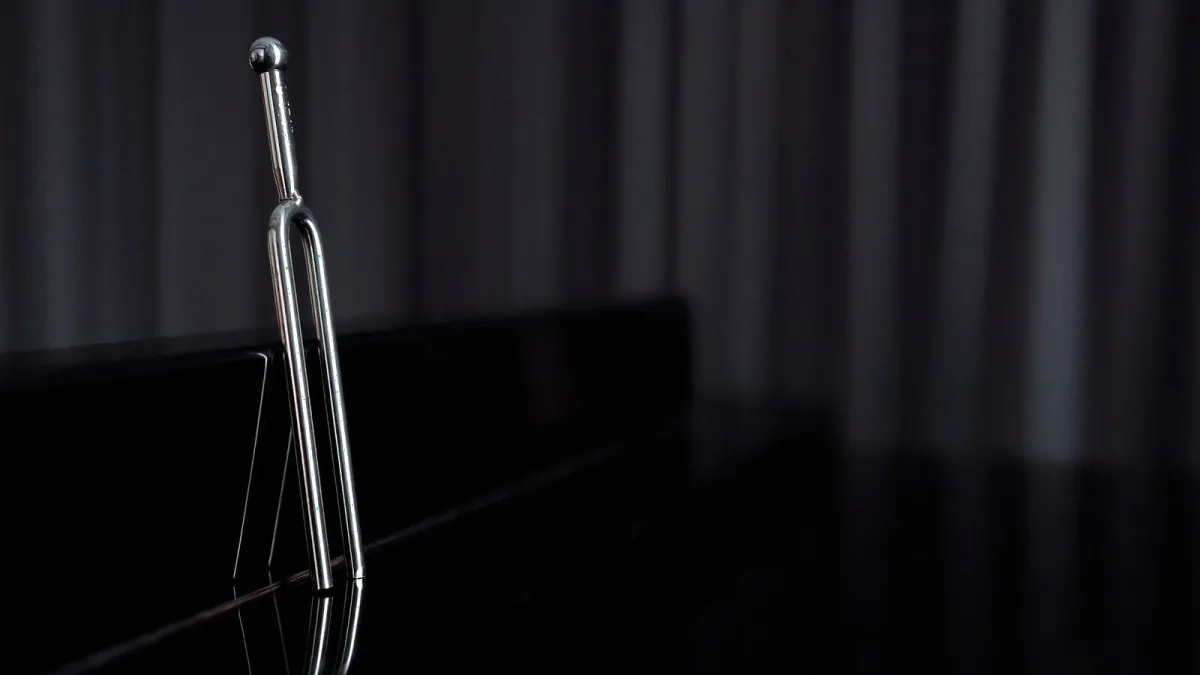
A tuning fork looks like nothing much — a bent bit of metal with two prongs and a handle. Strike it, though, and it gives you one of the steadiest, purest reference pitches you'll find anywhere, no batteries required. Here's what one actually is, how it produces that sound, and which type is worth having in your case.
What a Tuning Fork Actually Is
It's a U-shaped bar of springy metal with two prongs, called tines, and a stem you hold it by. Strike a tine gently and the two prongs flex back and forth in opposite directions. That opposing motion is the clever bit: it cancels out most of the shake you'd otherwise feel in your hand, which is why one held loosely in the air sounds fairly quiet, but rings out much louder the moment its stem touches something resonant, like a guitar body or a tabletop.
The tone it produces is unusually clean. Most instruments layer a fundamental note with a stack of louder overtones on top, which is part of what gives them their character. It does the opposite — it's built to suppress those overtones and hand you something close to a single, steady frequency instead.
Where A440 Comes From
Most tuning forks you'll come across are stamped A440, meaning the fork rings at 440 Hz — 440 vibrations per second — which is the standard pitch for the note A above middle C. It's the reference point most modern tuning is built around, though it's worth knowing it's not the only one out there: some orchestras tune a touch sharper, to A442 or A443, for extra brightness and projection, while period-instrument groups playing Baroque repertoire often drop to A415 instead.
It goes back further than you'd think. It was invented in 1711 by John Shore, an English trumpeter working for the royal court, who needed a repeatable pitch reference at a time when tuning varied wildly from town to town and instrument to instrument. A440 didn't become the dominant American standard until the American Federation of Musicians formally adopted it in the early twentieth century, and even that never fully wiped out the alternatives.
The Main Types You'll Find
Not every fork is aimed at the same job. Here's the practical breakdown:
| Type | Best for | Trade-off |
|---|---|---|
| Single-note (A440) | General instrument tuning | Only gives you the one reference note |
| Chromatic set | Teaching, ear training | Bulkier and pricier than a single fork |
| Instrument-specific | Guitar, violin, piano | Less flexible outside that instrument |
| Weighted/resonant | Louder rooms, easier hearing | Slightly less convenient to carry |
| Medical fork | Hearing tests, not music | Wrong frequencies for tuning |
That last row matters more than it looks: medical forks are pitched for clinical use, often at frequencies like 128 or 256 Hz, and aren't meant as a musical reference at all. If you're shopping specifically, our buyer's guide covers what separates a genuinely useful musical fork from one that just looks the part.
Why Bother When Everyone Has an Electronic Tuner?
Because it teaches your ear something a screen never will. With a fork, you tune by listening for beats — a wobbling, pulsing effect that happens when two pitches are close but not quite matched. As you adjust your instrument, the beats slow down; get it dead on, and they vanish. Learning to hear that is a genuinely useful skill, and it works even when your batteries have died or your phone's in another room.
Getting Sound Out of It Properly
Hold it by the stem, never the tines, and strike it gently against something firm and non-metallic, or use a purpose-made rubber activator. Bashing it against a hard metal surface risks damaging it and adding unwanted noise to the tone. If you want the full walk-through, including how to apply this to guitar and to bowed strings, our step-by-step setup guide covers it properly.
The Bottom Line
It's a simple, durable little tool that does one job extremely well: giving you a steady, trustworthy pitch you can trust for years, with nothing to charge and very little to go wrong. Pick the right type for what you actually play, learn to hear the beats, and it'll earn its place in your case. And if you want to make sure you're not falling into any of the usual traps, our guide to common mistakes is worth five minutes of anyone's time.




Comments