


Tuning Fork roundup
The Best Tuning Forks for the Money
There's no single best tuning fork, only the right type for how you play. Here's the market sorted by player, not marketing hype.

Nobody's running lab tests on tuning forks and publishing a definitive league table, so any list claiming one exact model beats all the rest is selling you a story, not a fact. What actually matters is picking the right type for how and where you play. Here's the market broken down by the player you actually are, tier by tier.
The Everyday Guitar and Bass Player
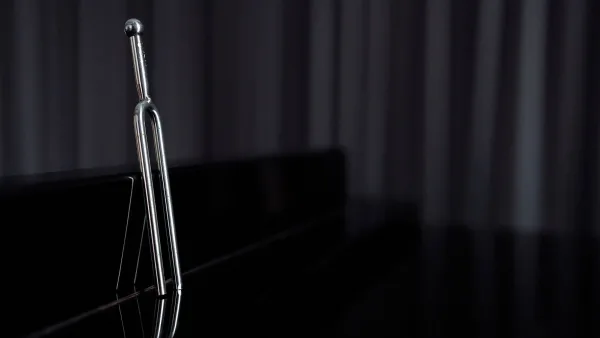
If you just want something reliable in your gig bag for tuning by ear, a single A440 fork from an established maker is genuinely all you need. D'Addario and Wittner both produce straightforward, clearly labelled A440 forks aimed exactly at this job, with no bells, whistles or unnecessary extras. Strike it, touch the stem to your guitar's body to bring the sound up, and tune your fifth string to it before working out from there. It costs next to nothing, needs no batteries, and will genuinely outlast most of the electronic tuners on your pedalboard.
The Teacher or Serious Ear-Training Student
Once you're working with pitch professionally, or teaching students to actually hear intervals instead of just watching a needle, a chromatic set earns its keep. Having every note available means you can drill ear training properly, demonstrate intervals on the spot, and reference any pitch a student needs without hunting for an app. It's a bigger investment and a bulkier thing to carry than a single fork, but for this use case, it genuinely pays for itself.
The Orchestral or Classical Player
Here the "best" answer depends entirely on your ensemble's own tuning convention. Most modern orchestras still centre on A440, but some tune sharper, to A442, for extra brightness and projection, and period-instrument groups performing Baroque repertoire may drop to A415. Before buying, check with your section leader or conductor rather than assuming standard A440 will match what the rest of the room is doing — a beautifully accurate fork pitched to the wrong standard is worse than useless in rehearsal.
The Player Who Rehearses in Loud Rooms
A weighted or resonant fork is worth the small extra cost here. The added mass makes it ring longer and louder once you couple the stem to a resonant surface, which matters a great deal when you're trying to hear a delicate reference pitch over a drummer warming up three feet away. It's a small, practical upgrade rather than a gimmick.
Musical vs Medical Tuning Fork: Don't Mix Them Up
This isn't really a "best for" category so much as a warning worth its own section. Medical tuning forks, pitched to clinical frequencies like 128 or 256 Hz for hearing tests, are sold right alongside musical ones online and look almost identical. None of them will help you tune anything. If a listing doesn't clearly state a musical note like A440, walk away and find one that does.
Quick Comparison by Player Type
| Player | Best pick | Why |
|---|---|---|
| Everyday guitarist/bassist | Single A440 fork | Cheap, reliable, does exactly one job well |
| Teacher / ear-training student | Chromatic set | Every reference note on hand at once |
| Orchestral / classical player | Fork matched to your ensemble's pitch (A440, A442 or A415) | Standard pitch varies by group |
| Loud rehearsal rooms | Weighted/resonant fork | Rings longer and louder once coupled to a surface |
Don't Overthink the Purchase
It's one of the cheapest, longest-lasting bits of gear you'll ever own, so the real risk isn't wasting money — it's buying the wrong type for what you actually do. If any of the terms above are new to you, our full explainer on how it works lays out the fundamentals properly, and our complete buyer's guide covers what to check on the fork itself before you pay.
The Bottom Line
Match the fork to the room and the repertoire, not to a marketing claim about being "the best." A single A440 fork covers most players brilliantly, a chromatic set is a genuine professional tool, and everyone should double-check they're buying a musical fork and not a medical one by accident. Get that right, and any decent fork from a real manufacturer will serve you for years without a second thought.



Comments