


Strobe Light article
Everything You Need to Know About Strobe Lights
The honest, no-nonsense rundown of what a strobe light actually does, xenon vs LED, DMX control, and the safety guidance you genuinely cannot skip.
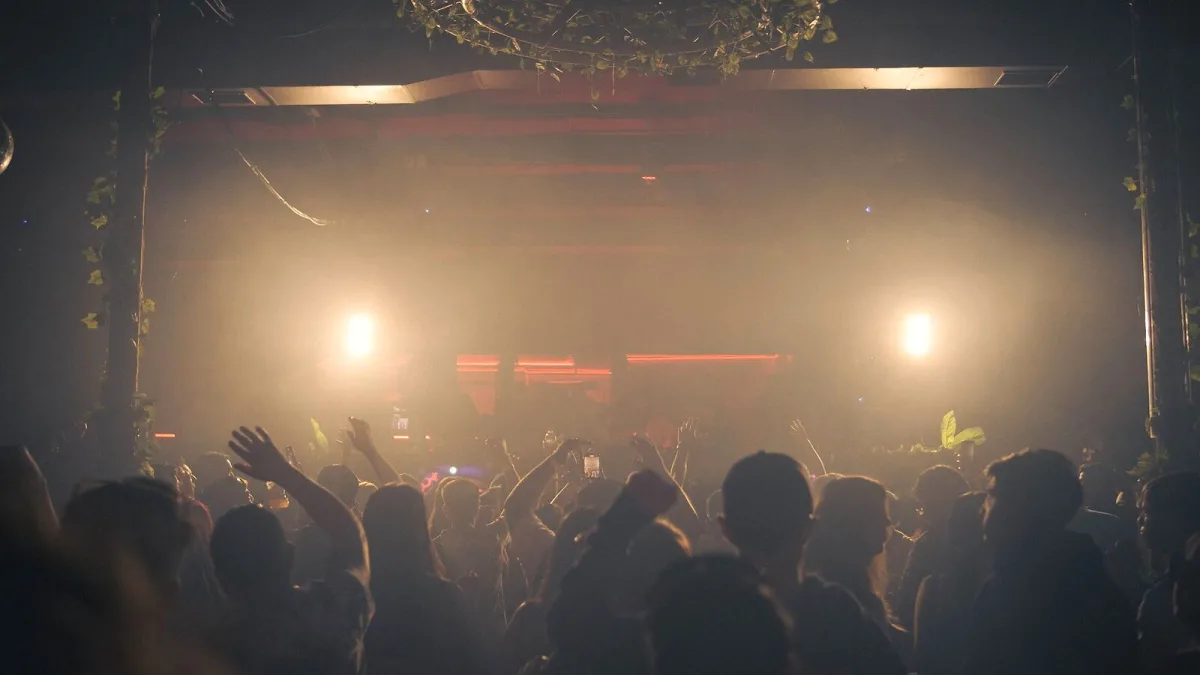
A strobe light is one of the simplest tricks in live production — switch a light on and off fast enough and the audience's brain does something strange with it. Get it right and you have freeze-frame drama on the drop; get it wrong and you have an uncomfortable room or, worse, a genuine safety problem. Here's the honest, no-nonsense rundown of what these fixtures do, how they work, and what actually matters before you use one.
What a Strobe Light Actually Does
Rather than dimming smoothly, the fixture fires short, discrete bursts of light separated by darkness. Because your eye receives separated visual samples instead of a continuous view, a moving performer can appear to jump between positions, or seem to freeze mid-move. The exact look depends on the flash rate, how long each pulse lasts, brightness, and how dark the room is around it.
- Motion interruption — a dancer or drummer appears to jump between poses rather than move smoothly.
- Rhythmic emphasis — flashes timed to kick drums, drops or snare hits.
- Audience blinders — a big white burst aimed out at the crowd for a climactic moment.
- Beam definition — combined with haze, so you actually see the light path, not just the source.
Xenon vs LED: What Changed
Older fixtures almost always used xenon flash tubes — the same basic technology as a powerful camera flash, built to fire repeatedly. Most fixtures sold today use high-power LED arrays instead. Neither is objectively "better" across the board; they suit different jobs, and plenty of touring rigs still carry both an LED strobe light and an older xenon unit for different moments in the show.
| Feature | Xenon | LED |
|---|---|---|
| Light source | Gas-discharge flash tube | High-power LED array |
| Colour | Usually intense white | White, RGB or mixed colour systems |
| Maintenance | Tube replacement eventually needed | Long rated life, low upkeep |
| Character | Very sharp, high-intensity flash | Rapid flashes plus dimming and pixel effects |
| Typical use | Touring and high-impact theatrical work | Concerts, clubs, festivals, general production |
Worth saying plainly: LED being newer doesn't make it inherently safer for anyone sensitive to flashing light. It just gives the operator finer electronic control.
Control: DMX and Getting Fixtures to Talk to Each Other
A professional strobe light is almost always run over DMX512, a lighting-control protocol that lets one console address intensity, flash rate, pulse width and colour on multiple fixtures at once. Bigger rigs sometimes layer networked protocols like Art-Net or sACN on top, which push the same kind of data over standard Ethernet cabling instead of individual DMX runs. When several units flash independently rather than in sync, the audience can end up seeing a far busier, more intense pattern than any single fixture is actually producing — which is exactly why synchronising them through the console matters.
Why Haze Usually Comes With It
Point one of these at an empty stage with clean air and you mostly see the source, not the beam. Add haze — fine, suspended atmospheric particles — and suddenly the flash path itself becomes visible, which is most of what makes strobe-heavy shows look the way they do. Fog is denser and more cloud-like; haze is meant to hang in the air and stay mostly invisible except where it's lit.
Where You'll Actually See One
No single genre owns the effect, but it turns up heavily in electronic dance music and techno, timed hard to drops and builds; in industrial and metal, for a harsher, more disorienting look; and in arena rock, where it's often paired with pyro or video for the big audience-blinder moment. Pop tours tend to run it as part of a precisely timed automation cue rather than triggering it live, while clubs and festivals typically layer it in with moving heads, lasers and haze rather than using it alone.
The Part You Cannot Skip: Safety
This is the one section worth reading properly. Rapid flashing light can trigger seizures in people with photosensitive epilepsy, and can cause real discomfort, disorientation or nausea in others who aren't photosensitive at all. The BBC's production safety guidance recommends keeping the flash rate at or below four flashes per second, warning audiences and crew in advance, mounting fixtures above head height, avoiding continuous long runs, and never using them near stairs or walkways where a disoriented person could be hurt. None of that is box-ticking — a flash rate under four per second is a risk-reduction measure, not proof that anything below it is automatically harmless, since individual susceptibility genuinely varies. Only competent, briefed operators should be running this kind of effect, and every rig needs an immediate blackout control within easy reach.
The Bottom Line
Used deliberately, a strobe light is a genuinely powerful bit of production kit — it just demands a bit more respect than a wash or a par can. If you're shopping for one, our buyer's guide walks through the specs and safety features worth checking, and our round-up by price tier is a sensible next stop. New to this side of production entirely? Our beginner's guide starts from scratch, and it's well worth reading our list of common mistakes before your first show with one.



Comments